
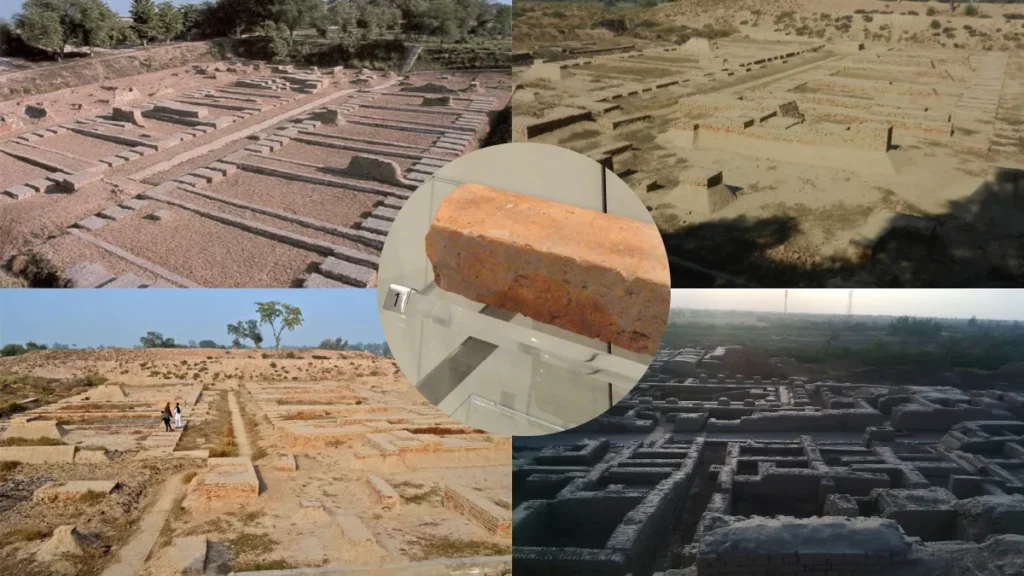
The town planning of Harappan civilization stands as one of history’s most sophisticated examples of early urban development. From the moment archaeologists first uncovered the ruins of Harappa and Mohenjo-daro, the layout of their streets, drainage networks, public buildings, and residential clusters revealed the extraordinary intelligence of a Bronze Age society that flourished more than 45,00 years ago. The first look at these sites makes it clear that the town planning of Harappan civilization was not random or organic; it was deliberate, standardized, and rooted in a vision of order, hygiene, and civic functionality.
The Harappans created well-organized cities at a time when many other parts of the world were still developing small rural settlements. Their commitment to uniformity across vast distances-from present-day Pakistan to western India—demonstrates a centralized civic consciousness rarely seen in ancient times. The town planning of Harappan civilization continues to be admired by historians, architects, and urban planners even today, not only for its clarity but also for its practicality.
Urban Grid and Systematic Layout
One of the defining features of the town planning of Harappan civilization was its grid-based layout. Almost every major city was divided into neatly arranged blocks formed by straight, intersecting streets. These streets were oriented mainly along north–south and east–west directions, ensuring maximum environmental harmony and consistent airflow.
The cities were usually divided into two major parts: the elevated Citadel area and the Lower Town. The Citadel, built on a platform of mud bricks, housed important administrative buildings, granaries, and ceremonial structures. The Lower Town, where most people lived, was equally planned and organized.
Standardization was the backbone of this town planning. Whether the settlement was large like Mohenjo-daro or medium-sized like Kalibangan, the underlying principles remained the same. This level of uniformity indicates that the Harappans valued consistency, regulation, and efficiency.
Drainage System: A Masterpiece of Civic Engineering
No discussion about the town planning of Harappan civilization is complete without highlighting its advanced drainage system. Underground drains made of baked bricks lined the sides of the streets and connected to household drains. These drains were covered with slabs or fitted with removable bricks for cleaning.
Households were connected to the city-wide drainage grid, ensuring that wastewater did not accumulate within residential areas. The existence of soak pits and inspection holes further shows attention to detail. The Harappan drainage system was so well-designed that it compares favorably with many modern drainage systems around the world.
This careful attention to sanitation reflects the Harappans’ commitment to public health and cleanliness-values that are surprisingly modern for a Bronze Age society.
Public Buildings and Civic Infrastructure
The town planning of Harappan civilization also included large public structures that served administrative, economic, or ritual purposes. Among the most famous examples is the Great Bath of Mohenjo-daro, an impressive pool-like structure built using tightly fitted bricks and sealed with natural tar to make it waterproof. This building reflects both architectural expertise and the importance of community activities.
Other significant structures include granaries with ventilation systems, warehouses, guard rooms, and platform-based halls. These buildings reveal a city administration capable of managing food storage, taxation, and large-scale trade.
Residential Architecture
Homes in Harappan cities showcased remarkable uniformity. Built with standardized baked bricks, houses typically had an open courtyard surrounded by rooms. Many homes included private wells, bathing platforms, and drains connected to the main sewer system.
Small, medium, and large houses existed, suggesting social diversity. However, even the smallest homes maintained basic sanitation facilities—a rare achievement in ancient societies.
Windows rarely opened toward the crowded streets, ensuring both privacy and security. Instead, most homes opened into inner courtyards, creating well-ventilated and peaceful living spaces.
Use of Standardized Building Materials
The uniformity of bricks is one of the most notable features of the town planning of Harappan civilization. Bricks across different cities were made using a consistent ratio, typically 1:2:4 (height:width:length). This kind of standardization implies central control or shared engineering principles across the region.
Such uniformity also helped maintain structural strength and architectural harmony across different urban centers.
Economic and Trade-Oriented Planning
The Harappans were active traders, exchanging goods with regions as far as Mesopotamia. Their cities reflected this commercial mindset. Wide streets allowed carts to pass easily, and warehouses and dockyards facilitated trade storage and shipment.
Lothal, for example, featured a well-built dockyard-the earliest known in the world-connected to the Sabarmati River. This dockyard reflects the maritime skill and urban planning brilliance of the Harappans, making the town planning of Harappan civilization not just local but global in reach.
Table: Key Features of Town Planning in Harappan Civilization
| Feature | Description |
|---|---|
| City Layout | Grid-based pattern with straight, intersecting streets |
| Building Materials | Standardized baked bricks with uniform ratios |
| Drainage System | Underground covered drains connected to every home |
| Public Buildings | Granaries, Great Bath, assembly halls |
| Residential Design | Courtyard houses with private wells and bathing areas |
| Zoning | Division into Citadel and Lower Town |
| Trade Structures | Warehouses, dockyards, and storage platforms |
| Water Management | Wells, reservoirs, drainage outlets, and soak pits |
Zoning, Organization, and Social Management
The division of cities into separate zones reflects not just architectural intelligence but social foresight. Important structures such as administrative buildings were kept away from residential clusters, ensuring order and security.
The Citadel served as the center of governance, while artisans, merchants, and workers lived in the Lower Town. Even industrial areas—like pottery kilns, bead-making workshops, and metal-smelting zones—were placed strategically to avoid pollution and fire hazards.
This level of urban zoning highlights a deep understanding of civic organization.
Water Management and Public Wells
Water was central to Harappan life. Almost every house had access to a private or shared well. Public wells were located at street corners, ensuring that residents could access clean water easily.
Many cities also had drainage outlets leading rainwater away from streets to prevent flooding. The town planning of Harappan civilization demonstrates an incredible sensitivity to environmental conditions and resource conservation.
Security and Fortifications
Though Harappan cities were not heavily militarized, many featured well-built city walls. These walls likely served purposes such as flood control, trade regulation, or protection from wildlife rather than warfare.
The presence of gateways and fortified areas within the Citadel points to organized control and administrative oversight.
Also read: The Enigmatic Script of Harappan Civilization: Unraveling One of History’s Greatest Mysteries
A Culture of Order and Civic Responsibility
The remarkable cleanliness, uniformity, and structural strength of Harappan cities indicate a culture that valued order, cooperation, and systematic living. Their cities were not merely clusters of houses; they were functioning civic organisms guided by rules and shared community values.
This cultural mindset was essential for maintaining such advanced urban systems over centuries.
Architectural Vision Reflected in the Town Planning of Harappan Civilization
This architectural vision was not accidental-it was part of a shared tradition. Despite being separated by hundreds of kilometers, Harappan cities followed similar layouts, construction techniques, and civic principles. Such consistency proves that the town planning of Harappan civilization was the result of collective intelligence, structured governance, and long-term planning.
Also read: Who Discovered Harappan Civilization: Tracing the Journey Behind a Lost World
Legacy of Harappan Urban Planning
Today, urban planners still admire the Harappan model. Concepts such as grid-style city layout, drainage-first planning, zoning of residential and public spaces, and standardized building materials are all principles that modern cities continue to follow.
The remarkable organization seen in Harappa, Mohenjo-daro, Dholavira, Lothal, and other sites showcases a civilization far ahead of its time. Although the reasons for its decline remain debated, its achievements remain clear through the bricks and streets it left behind.
The town planning of Harappan civilization endures as a timeless symbol of human ingenuity.
Also read: Urban Planning of Harappan Civilization: A Detailed Exploration of an Ancient Urban Marvel
Conclusion
The sophistication and vision embedded in the town planning of Harappan civilization set it apart as one of the world’s earliest and most impressive urban cultures. From grid-pattern streets to advanced drainage systems, from standardized bricks to efficient zoning, every element reflected planning, intelligence, and civic responsibility. Even after thousands of years, the Harappan cities continue to inspire scholars and modern city planners alike. Their legacy remains a benchmark of organised urban development, proving that great architecture and planning are not merely modern achievements—they are ancient foundations upon which humanity continues to build.