
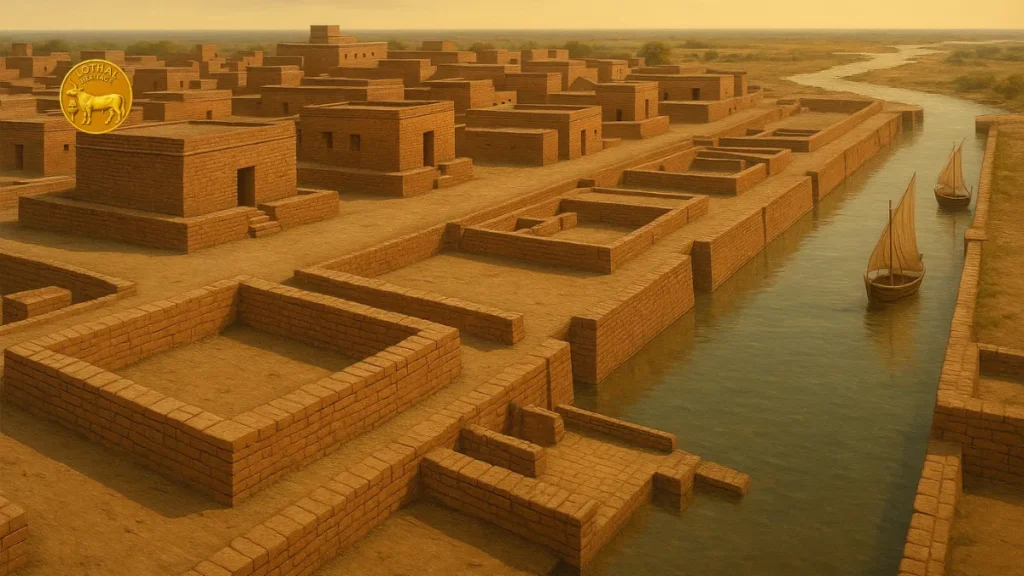
Lothal meaning carries far more depth than a simple place name; it reflects layers of language, geography, trade, and human ingenuity rooted in one of the world’s earliest urban civilizations. Located in present-day Gujarat, India, Lothal is one of the most significant sites of the Indus Valley Civilization, also known as the Harappan Civilization. The meaning of the name “Lothal” offers valuable insight into how ancient settlements interacted with their environment and how modern interpretations help us understand the past.
From its linguistic origins to its archaeological relevance, the name Lothal symbolizes a place shaped by water, commerce, and craftsmanship. This article explores the historical, cultural, and scholarly interpretations behind Lothal, connecting the meaning of the name to the lived reality of its ancient inhabitants. By examining evidence from archaeology, linguistics, and regional tradition, we gain a clearer understanding of why Lothal remains a cornerstone of South Asian history.

The Linguistic Roots Behind Lothal Meaning
The most widely accepted explanation of Lothal meaning comes from a combination of local Gujarati words. Scholars commonly agree that the name is derived from “Loth” or “Lotha,” meaning dead or desolate, and “Tal,” meaning pond or water body. When combined, Lothal can be interpreted as “the mound of the dead” or “a place of the dead pond.”
This interpretation aligns closely with the physical geography of the region. Lothal was once located near an ancient course of the Sabarmati River and was connected to the Arabian Sea through tidal channels. Over time, changes in river patterns and silting likely transformed the area into marshy or abandoned land, giving rise to the name used by later inhabitants.
However, it is important to note that the name “Lothal” was not necessarily the original name used by its Harappan residents. Like many archaeological sites, the modern name is often derived from local usage centuries or millennia after the site was abandoned. Still, the linguistic meaning provides clues about how the site was perceived in later historical periods.

Lothal as a Harappan Settlement
Understanding Lothal meaning requires placing it within the broader context of the Indus Valley Civilization. Flourishing between approximately 2600 BCE and 1900 BCE, this civilization was known for its advanced urban planning, standardized bricks, drainage systems, and extensive trade networks.
Lothal stands out among Harappan sites because of its strategic coastal location. Archaeological excavations suggest that Lothal functioned as a major port city, facilitating trade between the Indus Valley and regions such as Mesopotamia, Persia, and possibly East Africa. The discovery of a large dockyard-like structure has reinforced this interpretation, making Lothal unique among known Harappan settlements.
The meaning of Lothal, therefore, is not only linguistic but functional. It represents a place where water played a central role in daily life, commerce, and survival.

Archaeological Discoveries That Shape Lothal Meaning
The modern understanding of Lothal meaning has been significantly influenced by archaeological discoveries made during systematic excavations in the mid-20th century. Led by the Archaeological Survey of India, these excavations uncovered a wealth of material evidence that reshaped how historians viewed the site.
Key findings included:
- A large rectangular basin interpreted as a dockyard
- Warehouses with standardized platforms
- Bead-making workshops
- Weights and measures indicating standardized trade
- Seals with animal motifs and script symbols
These discoveries confirmed that Lothal was not a minor settlement but a carefully planned urban center. The dockyard, in particular, suggests advanced knowledge of tides, hydraulics, and maritime engineering. As a result, the meaning of Lothal expanded beyond a descriptive name to symbolize technological sophistication and economic vitality.
Geographic Context and Its Influence on Lothal Meaning
Geography plays a critical role in interpreting Lothal meaning. The settlement was located near the Gulf of Khambhat, an area known for strong tidal currents. This location would have allowed ships to travel inland during high tide and depart during low tide, making Lothal an ideal port for maritime trade.
Over centuries, environmental changes such as floods, earthquakes, and river course shifts altered the landscape. These natural processes likely contributed to the abandonment of the city and the later perception of the area as desolate or lifeless, reinforcing the linguistic interpretation of the name.
Thus, Lothal meaning is deeply connected to environmental history. It reflects both the prosperity of an ancient port and the eventual transformation of a thriving city into a silent archaeological mound.

Cultural Interpretations of Lothal Meaning
Beyond linguistics and archaeology, Lothal meaning has also been shaped by cultural memory. Local folklore and regional narratives often associate the site with ancient ruins, lost cities, and forgotten civilizations. Such associations influence how names are preserved and interpreted across generations.
In Indian cultural tradition, places associated with ruins or abandonment often acquire names reflecting decay or silence. This pattern can be seen across the subcontinent, where archaeological mounds are frequently referred to using terms that suggest desolation. Lothal fits within this broader cultural framework.
At the same time, modern cultural reinterpretations have transformed Lothal into a symbol of pride. It represents India’s ancient maritime heritage and its early contributions to global trade and urban planning.
Table: Key Aspects Related to Lothal Meaning
| Aspect | Description |
|---|---|
| Linguistic Origin | Derived from local Gujarati words meaning dead or desolate and pond |
| Geographic Setting | Located near ancient river channels and the Arabian Sea |
| Historical Period | Flourished during the Indus Valley Civilization |
| Primary Function | Major port and trade center |
| Cultural Significance | Symbol of early maritime and urban development |
Lothal Meaning in the Context of Indus Valley Civilization
To fully appreciate Lothal meaning, it is important to compare it with other Harappan sites such as Mohenjo-daro, Harappa, Dholavira, and Kalibangan. While all these cities demonstrate advanced planning, Lothal’s coastal orientation sets it apart.
Most Indus cities were inland, relying on river systems for agriculture and trade. Lothal, however, bridged the gap between inland production centers and overseas markets. This dual role enhances the symbolic meaning of Lothal as a gateway between civilizations.
The name Lothal, though applied much later, encapsulates this duality: a place shaped by water, yet ultimately reclaimed by nature.
The Role of Trade in Defining Lothal Meaning
Trade is central to understanding Lothal meaning. Archaeological evidence indicates that Lothal was involved in the export of beads, ornaments, and possibly textiles. Materials such as carnelian, shell, and copper were processed here and traded widely.
Seals found at the site resemble those discovered in Mesopotamian contexts, suggesting long-distance contact. This global outlook challenges the idea that ancient civilizations were isolated. Instead, Lothal emerges as an early example of international trade and cultural exchange.
In this sense, the meaning of Lothal extends beyond etymology. It represents connectivity, innovation, and economic foresight.
Scientific Perspectives on Lothal Meaning
Modern scientific studies, including geomorphology and climate research, have added new layers to Lothal meaning. Analysis of sediment deposits suggests that repeated flooding events may have contributed to the city’s decline. These findings align with theories that environmental stress played a role in the broader decline of the Indus Valley Civilization.
Understanding these factors helps explain why a once-thriving port became abandoned. The name Lothal, interpreted as a place of desolation, may reflect collective memory of these environmental changes rather than a single catastrophic event.
Lothal Meaning in Modern Education and Scholarship
Today, Lothal meaning is a standard topic in history textbooks, academic research, and museum exhibitions. It is often introduced as an example of how place names can preserve historical and environmental information.
Scholars continue to debate certain aspects, such as the exact function of the dockyard and the original name used by the Harappans. These debates keep the study of Lothal dynamic and relevant, ensuring that its meaning evolves with new discoveries.
Educational initiatives have also helped bring Lothal into public consciousness, transforming it from a remote archaeological site into a symbol of ancient innovation.
The Broader Symbolism of Lothal Meaning
Beyond its historical specifics, Lothal meaning holds broader symbolic value. It reminds us that civilizations rise and fall, shaped by their relationship with nature, technology, and trade. Lothal’s story illustrates how human ingenuity can flourish under favorable conditions and how environmental changes can alter the course of history.
The name Lothal, associated with abandonment, contrasts sharply with the evidence of advanced planning and prosperity uncovered by archaeologists. This contrast makes Lothal particularly compelling as a subject of study.
Lothal Meaning and Heritage Conservation
In recent years, efforts to preserve and promote Lothal as a heritage site have intensified. These initiatives emphasize the importance of understanding Lothal meaning not only as a historical concept but as a living narrative that connects the past with the present.
Museums, interpretation centers, and academic publications aim to present Lothal as an integral part of global heritage. By doing so, they ensure that the meaning of Lothal continues to inspire curiosity and respect for ancient civilizations.
Also read: What Is Lothal: Exploring One of the World’s Earliest Urban Civilisations
Conclusion: Why Lothal Meaning Still Matters
The exploration of Lothal meaning reveals a rich tapestry of language, history, environment, and culture. Far from being a simple translation, the name encapsulates the journey of an ancient city that once thrived as a maritime hub and later faded into silence.
Lothal stands as a testament to human adaptability and creativity. Its meaning reflects both the physical realities of its landscape and the interpretive lens of later generations. By studying Lothal, we gain insight not only into the Indus Valley Civilization but also into how societies remember and redefine their past.
In understanding Lothal meaning, we are reminded that names are powerful carriers of history. They preserve echoes of human experience, waiting to be rediscovered and understood by those willing to look beyond the surface.