
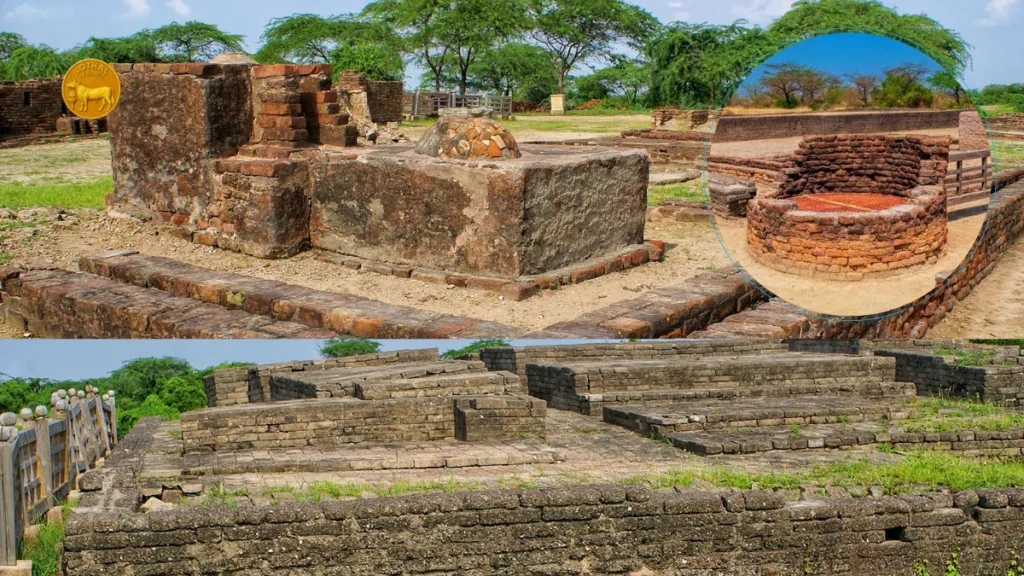
Lothal archaeological site history is one of the most fascinating chapters of ancient India, revealing the brilliance of the Indus Valley Civilization and its advanced urban planning, trade systems, and maritime knowledge.
Introduction to Lothal
Lothal is one of the most important archaeological sites of the Indus Valley Civilization, located in the modern state of Gujarat, India. The name “Lothal” is believed to mean “Mound of the Dead,” similar to other Harappan cities like Mohenjo-daro.
Discovered in 1954, Lothal quickly became a key site for understanding ancient Indian civilization. What makes it unique is its well-planned dockyard, which is considered one of the oldest known in the world. This shows that people living here were not only skilled in city planning but also experts in maritime trade.
The study of Lothal archaeological site history helps us understand how advanced and organized ancient societies were thousands of years ago.
Key Facts About Lothal
| Feature | Details |
|---|---|
| Location | Gujarat, India |
| Civilization | Indus Valley Civilization |
| Period | Around 2400 BCE – 1900 BCE |
| Discovered By | S.R. Rao |
| Year of Discovery | 1954 |
| Famous For | Dockyard, Bead Industry, Trade |
| Nearby River | Sabarmati River |
Discovery of Lothal
The discovery of Lothal was a major milestone in Indian archaeology. It was excavated by the Archaeological Survey of India between 1955 and 1960 under the leadership of S.R. Rao.
Before its discovery, historians mainly knew about the Indus Valley Civilization through sites like Harappa and Mohenjo-daro. However, Lothal provided new insights, especially about trade and sea routes.
Excavations revealed a well-planned city with streets, drainage systems, houses, warehouses, and a dockyard. These findings proved that Lothal was an important trading center during ancient times.
Location and Geography
Lothal is situated near the village of Saragwala in the Ahmedabad district of Gujarat. It lies close to the Sabarmati River and was once connected to the Arabian Sea through a network of waterways.
This strategic location made Lothal ideal for trade. Goods could easily be transported by river and sea, connecting the city to distant lands like Mesopotamia.
The geography of Lothal played a crucial role in its development as a major port city, making it a key highlight in Lothal archaeological site history.
Historical Timeline of Lothal
| Period | Event |
|---|---|
| Around 2400 BCE | Establishment of Lothal |
| 2300–2000 BCE | Peak development and trade growth |
| Around 2000 BCE | Signs of decline begin |
| Around 1900 BCE | Major decline and abandonment |

Historical Background
Lothal dates back to around 2400 BCE and was an important part of the Harappan Civilization. It flourished for several centuries before declining around 1900 BCE.
The people of Lothal were highly skilled in various fields, including engineering, craftsmanship, and trade. They built strong structures using baked bricks and followed a well-organized city layout.
The city shows clear evidence of planning, which suggests that there was some form of governance or administrative system in place.
Understanding Lothal archaeological site history gives us a glimpse into how people lived, worked, and interacted in ancient times.
Town Planning and Architecture
One of the most impressive aspects of Lothal is its town planning. The city was divided into two main parts: the upper town and the lower town.
Town Structure Overview
| Area | Description |
|---|---|
| Upper Town | Administrative and elite residential area |
| Lower Town | Common residential area with houses and markets |
| Streets | Grid pattern layout |
| Drainage | Covered and well-connected system |
Upper Town
The upper town was likely used by the ruling class and important officials. It was built on a raised platform to protect it from floods.
This area had larger buildings and possibly served administrative or ceremonial purposes.
Lower Town
The lower town was where most people lived. It had well-constructed houses, streets, and drainage systems.
The streets were laid out in a grid pattern, which shows a high level of planning. Houses were made of bricks and often had multiple rooms.
Drainage System
Lothal had an advanced drainage system, similar to other Harappan cities. Each house had a connection to a covered drainage channel, ensuring cleanliness and hygiene.
This level of infrastructure highlights the importance of sanitation in ancient urban life.
The Famous Dockyard
The dockyard is the most remarkable feature of Lothal. It is considered one of the earliest known dockyards in the world.
Dockyard Features
| Feature | Details |
|---|---|
| Structure | Rectangular basin |
| Purpose | Docking ships and trade |
| Water Control | Connected via channel to river |
| Importance | Maritime trade hub |
The structure was designed to allow ships to dock safely and load or unload goods. It was connected to the river through a channel, which helped maintain water levels.
The presence of a dockyard proves that Lothal was a major center for maritime trade. Traders from Lothal likely exchanged goods with regions like Mesopotamia, Oman, and Bahrain.
This makes the dockyard a central element in understanding Lothal archaeological site history.
Trade and Commerce
Trade played a vital role in the prosperity of Lothal. The city was known for its exports of beads, gemstones, ornaments, and pottery.
Major Trade Items
| Exported Goods | Imported Goods |
|---|---|
| Beads | Metals |
| Shell ornaments | Raw materials |
| Gemstones | Semi-precious stones |
| Pottery | Luxury goods |
Trade with Foreign Lands
Archaeological evidence suggests that Lothal had trade connections with Mesopotamia. Seals and artifacts found at the site indicate cultural and commercial exchanges.
This shows that ancient Indian traders were part of a global trade network.
Internal Trade
Lothal also had strong trade connections with other Harappan cities. Goods were transported using bullock carts and boats.
The city’s strategic location made it a hub for both local and international trade.
Craftsmanship and Industries
Lothal was famous for its skilled artisans and craftsmen. The city had specialized workshops for making beads, pottery, and jewelry.
Industrial Activities Overview
| Industry | Materials Used | Products |
|---|---|---|
| Bead Making | Carnelian, agate | Decorative beads |
| Metalwork | Copper, bronze | Tools, ornaments |
| Pottery | Clay | Painted vessels |
Bead Making
One of the most important industries in Lothal was bead making. Craftsmen used materials like carnelian, agate, and shell to create beautiful beads.
These beads were highly valued and traded across regions.
Metalwork
The people of Lothal were skilled in metalwork. They used copper and bronze to make tools, weapons, and ornaments.
Pottery
Pottery found at Lothal shows intricate designs and high-quality craftsmanship. Many pots were painted with geometric patterns and symbols.
These industries highlight the economic strength of the city and are a key part of Lothal archaeological site history.
Warehouse and Storage System
Another important feature of Lothal is its warehouse. This structure was used to store goods before they were transported.
Warehouse Features
| Feature | Description |
|---|---|
| Structure | Raised platform |
| Storage | Multiple rooms |
| Purpose | Protect goods from floods |
| Use | Trade and logistics |
The warehouse was built on a raised platform and had multiple rooms. This design helped protect goods from floods and moisture.
The presence of a warehouse indicates organized trade and storage systems, which were essential for a thriving commercial city.
Religious Beliefs and Culture
Although not much is known about the religious practices of Lothal, some clues have been found through artifacts.
Terracotta figurines, seals, and fire altars suggest that the people practiced rituals and worshipped certain deities.
The culture of Lothal reflects a blend of daily life, trade, and spiritual beliefs.
Script and Language
Like other Harappan sites, Lothal used the Indus script, which remains undeciphered to this day.
Script Features
| Feature | Details |
|---|---|
| Type | Pictographic |
| Medium | Seals, tablets |
| Use | Trade and administration |
| Status | Undeciphered |
Seals with inscriptions have been found, indicating that writing was used for trade and administration.
Understanding the script could provide deeper insights into Lothal archaeological site history, but it continues to be a mystery.
Causes of Decline
Lothal, like other Indus Valley cities, eventually declined. Several theories have been proposed to explain this.
Possible Reasons for Decline
| Cause | Explanation |
|---|---|
| Flooding | Repeated floods damaged the city |
| River Changes | Altered trade routes and water supply |
| Trade Decline | Reduced economic activity |
Flooding
One of the main reasons could be repeated flooding. The city was built near a river, and floods may have damaged its structures.
Changes in River Course
Changes in the course of the river may have affected trade routes and water supply.
Decline in Trade
As trade connections weakened, the economic strength of the city may have declined.
These factors likely contributed to the gradual abandonment of Lothal.
Importance of Lothal Archaeological Site History
Lothal archaeological site history is extremely important for understanding ancient India. It provides evidence of advanced engineering, trade systems, and urban planning.
Why Lothal is Important
| Aspect | Significance |
|---|---|
| Dockyard | Oldest known maritime structure |
| Trade | International trade connections |
| Planning | Advanced city design |
| Industry | Strong economic base |
The site shows that people living thousands of years ago had knowledge of maritime activities and global trade.
It also highlights the cultural and economic richness of the Indus Valley Civilization.
Lothal Museum
Today, Lothal has a museum that displays artifacts found during excavations. Visitors can see tools, pottery, beads, and other items that give a glimpse into ancient life.
Museum Highlights
| Exhibit | Description |
|---|---|
| Beads | Crafted ornaments |
| Tools | Copper and bronze items |
| Pottery | Painted vessels |
| Seals | Trade and script symbols |
The museum helps preserve and promote the heritage of Lothal.
Also Read: Major Sites of the Indus Valley Civilization: Key Locations and Archaeological Discoveries
Tourism and Preservation
Lothal is now a popular tourist destination. People from all over the world visit the site to learn about ancient history.
Efforts are being made to preserve the site and protect it from environmental damage.
The government and archaeological departments continue to study and maintain Lothal for future generations.
Also Read: Lothal Dockyard History: The World’s Oldest Known Maritime Port of the Indus Valley Civilization
Conclusion
Lothal archaeological site history is a remarkable story of human achievement, innovation, and resilience. From its well-planned streets to its advanced dockyard, Lothal stands as a symbol of the brilliance of the Indus Valley Civilization.
It teaches us how ancient societies managed trade, built cities, and developed industries with limited resources.
Even today, Lothal continues to inspire historians, archaeologists, and visitors, reminding us of India’s rich and glorious past.