Where is dholavira is a question that often arises among history enthusiasts, travelers, and students curious about India’s ancient past. The answer leads deep into the arid yet fascinating landscape of western India, where one of the most remarkable cities of the Indus Valley Civilization once thrived. Dholavira is not just a dot on the map; it is a powerful reminder of advanced urban planning, water management, and cultural richness that existed more than four thousand years ago.
Understanding where is dholavira helps place this archaeological site within a broader historical and geographical context. Its remote location, harsh environment, and strategic position make its survival and success even more impressive. Today, Dholavira stands as a UNESCO World Heritage Site, drawing global attention to India’s ancient heritage.
Where Is Dholavira Located in India
To answer where is dholavira in precise terms, Dholavira is located in the Kutch district of the Indian state of Gujarat. More specifically, it lies on Khadir Bet, an island-like landmass in the Great Rann of Kutch. This region is characterized by vast salt flats, extreme temperatures, and a unique ecosystem shaped by seasonal changes.
Khadir Bet is surrounded by salty marshland that becomes partially submerged during the monsoon season and dries into a white desert during summer. Dholavira’s position on this elevated island protected it from flooding while keeping it connected to important trade routes. This strategic placement explains why the city emerged as one of the most significant urban centers of the Indus Valley Civilization.
Geographical Setting of Dholavira
When exploring where is dholavira, geography plays a crucial role. The site lies between two seasonal streams, the Mansar in the north and the Manhar in the south. Although these rivers do not flow year-round today, they once played an essential role in collecting rainwater and sustaining the city.
The surrounding landscape may appear barren today, but in ancient times it supported human settlement through intelligent water conservation systems. Dholavira’s builders adapted their city to the challenging environment, proving that location alone does not limit human ingenuity.
Why Dholavira’s Location Was Important
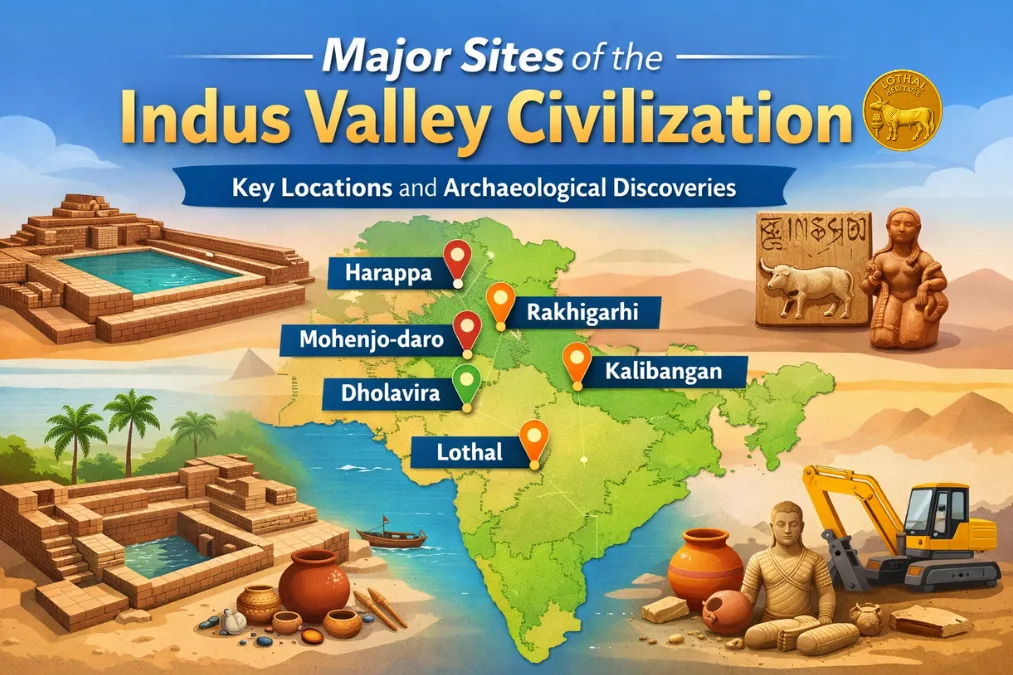
The question of where is dholavira is incomplete without understanding why this location mattered. Dholavira occupied a critical position between mainland Gujarat and the Sindh region (now in Pakistan). This made it an important link in trade networks connecting the Indus Valley cities such as Harappa, Mohenjo-daro, Lothal, and coastal ports along the Arabian Sea.
From this location, goods like semi-precious stones, metals, shells, and beads could move efficiently across regions. Dholavira’s proximity to raw material sources and trade routes contributed to its prosperity and long-term significance.
Archaeological Identification and Discovery
Although locals were aware of ancient ruins in the region, the wider world began asking where is dholavira only after systematic archaeological exploration. The site was officially discovered in 1967–68 by archaeologist J.P. Joshi of the Archaeological Survey of India.
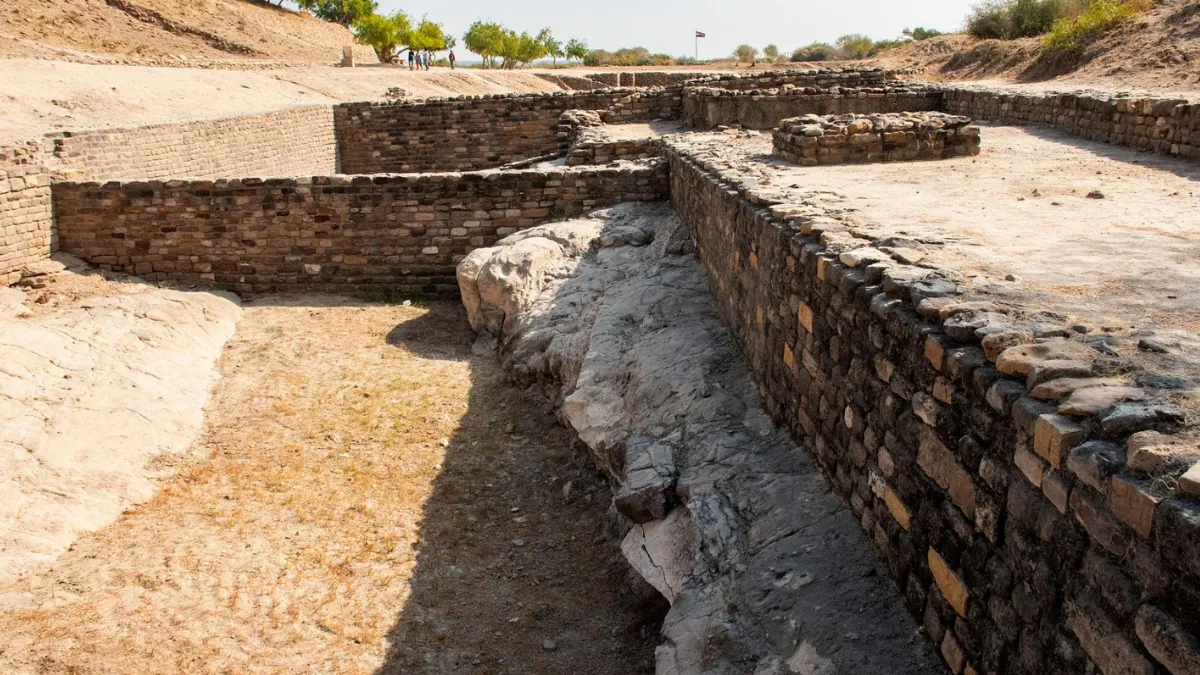
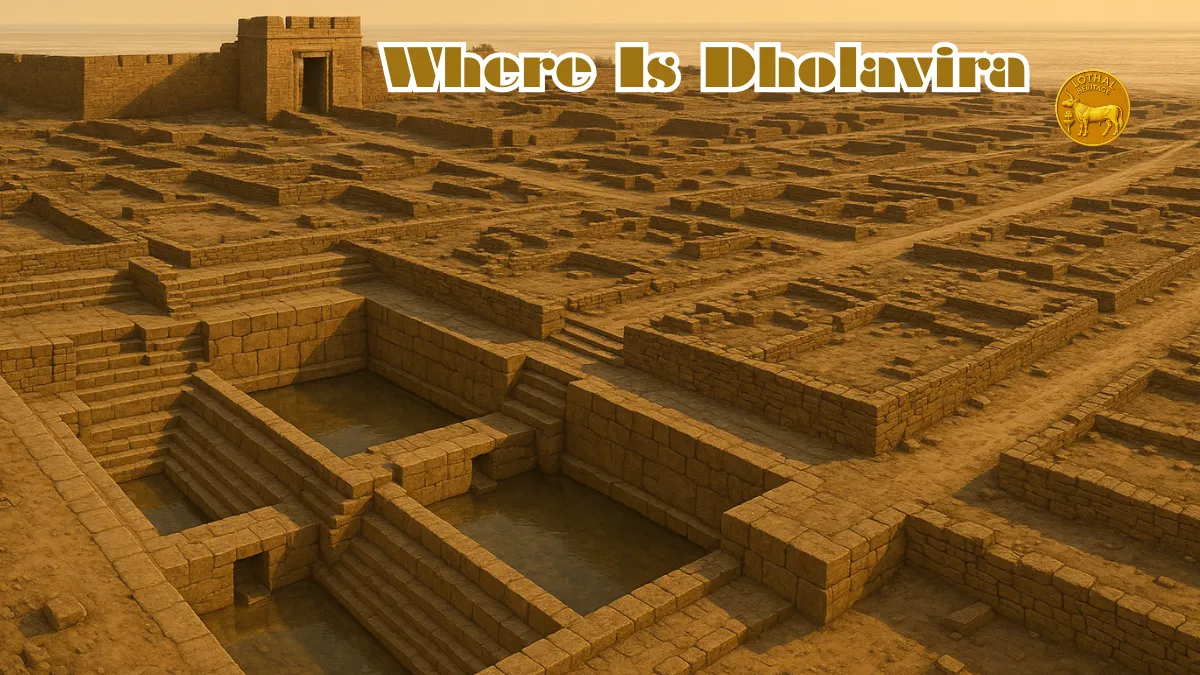
Excavations revealed a large, well-planned city divided into distinct zones, including a citadel, middle town, and lower town. Massive stone walls, reservoirs, gateways, and an advanced drainage system confirmed Dholavira’s importance among Indus Valley sites.
Where Is Dholavira in Relation to Modern Cities
For modern travelers, understanding where is dholavira involves knowing its distance from contemporary urban centers. Dholavira is remote and relatively isolated, which adds to its mystique but also requires careful travel planning.
The nearest town is Bhachau, while larger cities like Bhuj and Ahmedabad serve as major access points. Roads connect Dholavira to these cities, passing through desert landscapes and small villages that reflect the region’s cultural identity.
Key Location Details of Dholavira
| Aspect | Details |
|---|---|
| Country | India |
| State | Gujarat |
| District | Kutch |
| Specific Area | Khadir Bet (Great Rann of Kutch) |
| Nearest Major City | Bhuj |
| Civilization | Indus Valley Civilization |
| Environment | Semi-arid, salt desert region |
Climate and Environmental Conditions
Another layer to understanding where is dholavira lies in its climate. The region experiences extreme temperatures, with scorching summers, cold winters, and limited rainfall. Despite these conditions, Dholavira’s inhabitants developed one of the most sophisticated water management systems of the ancient world.
Large reservoirs carved out of stone collected rainwater and runoff, ensuring year-round water availability. The city’s location made rainwater harvesting not just beneficial, but essential for survival.
Cultural and Historical Significance of Its Location
Where is dholavira also matters culturally. Its location in Kutch places it within a region known for resilience, adaptation, and strong community traditions. The ancient city reflects these qualities through its architecture and urban planning.
Dholavira is also unique among Indus Valley sites for its large stone inscriptions, believed to be one of the earliest examples of written communication displayed publicly. The city’s location allowed it to develop a distinct identity while remaining connected to the wider Harappan world.
Also read: Dholavira Harappan Site: The Rise, Glory, and Legacy of One of the World’s Greatest Ancient Cities
UNESCO World Heritage Recognition
In 2021, the global importance of understanding where is dholavira was reinforced when UNESCO recognized it as a World Heritage Site. This status highlights not only its archaeological value but also the significance of its geographical placement in human history.
UNESCO described Dholavira as an outstanding example of a well-preserved Harappan city adapted to a challenging environment. Its location in the Great Rann of Kutch played a defining role in shaping its architecture, economy, and sustainability practices.
Visiting Dholavira Today
Today, travelers seeking to experience history firsthand often ask where is dholavira and how to reach it. The site is accessible by road and is best visited between October and March, when the climate is more comfortable.
Standing among the ruins, visitors can clearly see how the city’s location influenced its design. The surrounding emptiness of the salt desert amplifies the sense of awe, making Dholavira not just a historical destination but a deeply reflective experience.
Also read: Dholavira Hotels: Where Heritage, Comfort, and the Rann of Kutch Meet
Conclusion
So, where is dholavira? It is located in the Kutch district of Gujarat, on Khadir Bet in the Great Rann of Kutch-remote, rugged, and historically extraordinary. More than just a physical location, Dholavira represents the intelligence and adaptability of an ancient civilization that mastered its environment against all odds.
Understanding where is dholavira allows us to appreciate how geography, climate, trade, and innovation came together to create one of the most advanced urban centers of the ancient world. Even today, its location continues to shape how we interpret its legacy, reminding us that human creativity can flourish in the most challenging landscapes.