
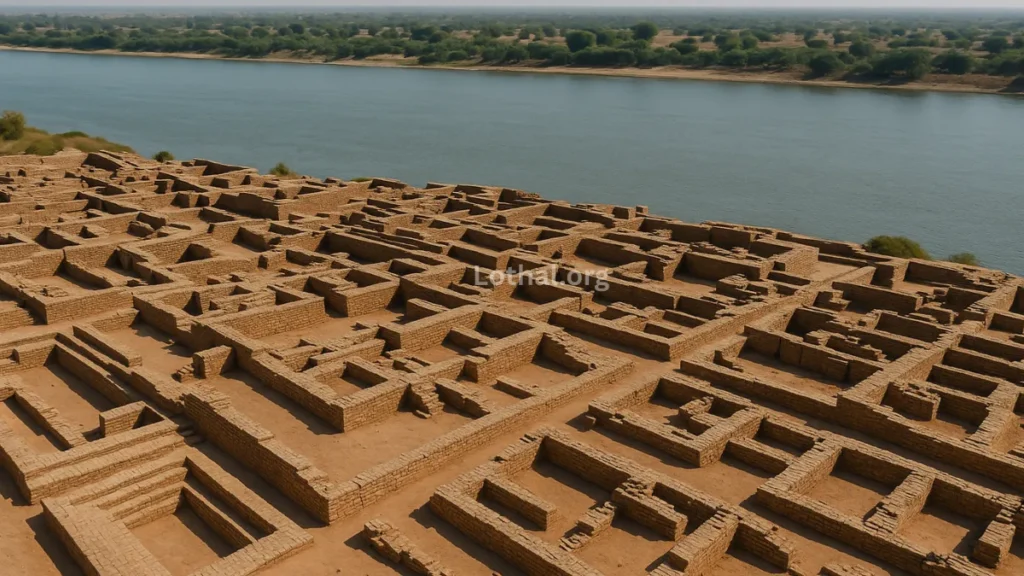
Lothal is situated on the banks of which river? This question not only points to a geographical detail but also opens the door to understanding one of the most remarkable archaeological sites of the Indus Valley Civilization. Located in the modern state of Gujarat, Lothal offers a window into the maritime, commercial and urban advancements of a civilization that flourished over 45,00 years ago. Its riverbank location played a vital role in shaping its identity as an influential port town, making the answer significant for historians, researchers and students exploring ancient urbanism.
In historical context, Lothal is situated on the banks of which river? The answer is the ancient course of the Sabarmati River and its tributary, the Bhogavo River. Over millennia, river paths have shifted, but archaeological evidence shows that these water bodies once flowed close to the site, supporting its dockyard, trade networks and agricultural practices. This riverine positioning helped Lothal evolve into a busy trade center connecting South Asia with regions as far as Mesopotamia.
The Importance of the River System Around Lothal
The question-Lothal is situated on the banks of which river?-leads us to understand why the Sabarmati–Bhogavo system mattered so much. Rivers were lifelines for settlements in the Indus Valley Civilization. They ensured water supply, irrigation, transportation and trade access. Lothal, unlike many other Harappan cities, developed as a port settlement. The river’s presence was central to building what is considered the world’s earliest known dockyard.
This unique dockyard, excavated alongside the remains of a bustling town, demonstrates advanced engineering skills. The water from the river allowed ships to berth and depart even during seasonal changes. The river system also created fertile surroundings that supported crop cultivation and animal rearing, enabling the town to sustain its growing population.
Subheading Featuring the Focus Keyword
Why the Question “Lothal is situated on the banks of which river?” Matters in Archaeological Studies
The significance of the riverbank location goes far beyond geography. For archaeologists, the river system explains how Lothal became a thriving commercial hub. The connectivity offered by the Sabarmati’s ancient route allowed Lothal’s merchants to trade beads, ornaments, terracotta objects, gemstones and metals. Artifacts discovered at excavation sites reveal links with West Asia, marking Lothal as a center of international trade.
Understanding Lothal’s relationship with the river also helps scholars reconstruct climate patterns, trade routes and settlement planning of the Harappan period. When someone asks, “Lothal is situated on the banks of which river?”, it reflects interest in the interdependence between natural landscapes and ancient human innovation.
Lothal’s Urban Planning and Water Management
Lothal stands out for its meticulously designed layout. The town was divided into a citadel and a lower town, connected by an organized grid pattern of streets. Houses were built using standardized bricks, and wells and drainage systems demonstrated remarkable engineering precision. Water management was central to this planning, reinforcing once again why the question-Lothal is situated on the banks of which river?-is essential to understanding its history.
The proximity to the Sabarmati’s ancient course allowed the residents to channel water efficiently. The dockyard, built with baked bricks, was connected to the river through an inlet channel. This ensured that ships could be raised to the dock for loading, unloading or repair. Such infrastructure suggests a deep understanding of tidal flows, water pressure and seasonal variations.
Table: Key Facts About Lothal and Its River Connection
| Feature | Details |
|---|---|
| Location | Saragwala village, Dholka Taluka, Gujarat, India |
| Civilization | Indus Valley / Harappan Civilization |
| River Associated | Ancient course of the Sabarmati River and Bhogavo River |
| Major Discovery | World’s earliest known dockyard |
| Notable Artifacts | Beads, seals, pottery, tools, gemstones |
| Purpose of Settlement | Maritime trade, bead-making, craftsmanship |
| Period of Occupation | Approximately 2400 BCE – 1600 BCE |
The Dockyard: A Testament to Engineering Brilliance
One of the strongest points supporting the importance of the rivers is the presence of Lothal’s dockyard. It is among the most significant archaeological discoveries in India. Measuring roughly 218 meters long and 37 meters wide, the dockyard was lined with burnt bricks to prevent erosion. It was designed to regulate water levels, a remarkable achievement considering its age.
Research suggests that ships from Lothal sailed to the Persian Gulf and beyond. For such maritime activities, stable river access was crucial. This once again highlights the relevance of asking, “Lothal is situated on the banks of which river?” because the river enabled Lothal’s role as a port city and shaped its economic identity.
Also read: What Is Lothal: Exploring One of the World’s Earliest Urban Civilisations
Agricultural Prosperity Through the River System
The river system also supported agriculture. Excavation findings point to the cultivation of rice, peas, sesame, sorghum and barley. The alluvial soil deposited by the river made farming productive, and irrigation channels directed water to farmlands. Such agricultural security helped the town prosper alongside its trade-based economy.
Cultural and Craft Heritage
Beyond commerce and engineering, Lothal also flourished as a center of art and craftsmanship. Bead-making, shell-working, pottery and metallurgy were key industries. The river facilitated trade by transporting crafted goods to other settlements. The question “Lothal is situated on the banks of which river?” therefore also ties into the artistic legacy of the region.
Also read: Harappan Port City Lothal: Unearthing the Legacy of the World’s Earliest Known Tidal Dockyard
Decline and Shifting River Patterns
Over time, changes in river flow contributed to Lothal’s decline. The shifting course of the Sabarmati and the silting of river channels reduced maritime activity. As water access diminished, the port lost its strategic importance. This demonstrates how dependent ancient settlements were on water systems and why understanding river history is essential.
Modern Relevance of the Question
In today’s academic and historical context, the question—Lothal is situated on the banks of which river?—helps students appreciate the role geography plays in shaping civilizations. It is also essential for tourism, heritage preservation and archaeological research. Lothal continues to attract scholars and travelers who wish to explore its dockyard, acropolis, bead workshop and museum.
Also read: Where Is Lothal? Inside India’s 4,500-Year-Old Port City That Rewrote Maritime History
Conclusion
Lothal is situated on the banks of which river? The ancient course of the Sabarmati and the Bhogavo rivers nurtured one of the most innovative port towns of the Indus Valley Civilization. These rivers shaped Lothal’s maritime prominence, agricultural success, urban planning and cultural evolution. Today, the site stands as a testament to human ingenuity and the profound influence of natural landscapes on early civilizations. Understanding this river connection not only answers a geographical question but also deepens our insight into how ancient societies flourished through harmony with their environment.