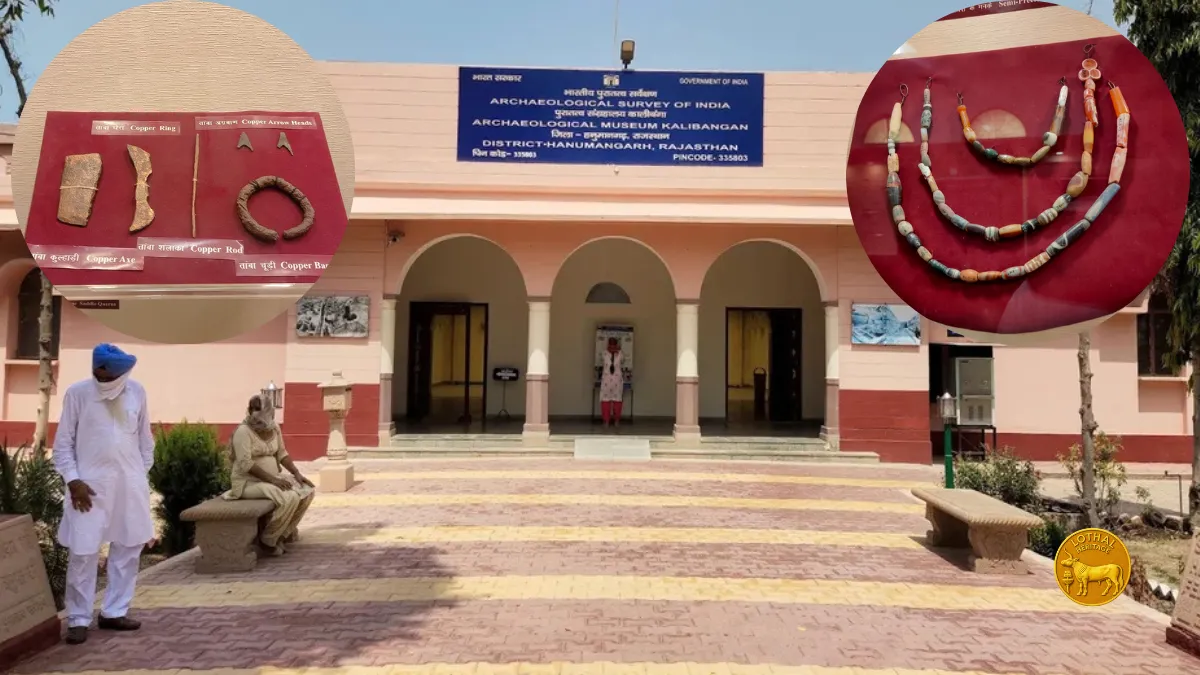
The Archaeological Museum Kalibangan stands as one of India’s most important cultural institutions, preserving rare and invaluable evidence of the Indus Valley Civilization. Located in the Hanumangarh district of Rajasthan, this museum offers a detailed window into human life more than 4,500 years ago. From early farming practices to urban planning, burial rituals, art, and craftsmanship, the museum documents a civilization that laid the foundations of South Asian history.
Reopened in 2017 after extensive upgradation and reorganization, the Archaeological Museum Kalibangan today serves not only as a repository of ancient objects but also as an educational centre for students, researchers, historians, and global visitors interested in one of the world’s earliest urban cultures.
Location and Background of Archaeological Museum Kalibangan
The Archaeological Museum Kalibangan is located approximately 8 kilometres south of Pilibangan, the tehsil headquarters, in Hanumangarh district, Rajasthan. The museum is situated close to the original excavation site of Kalibangan, one of the most significant settlements of the Indus Valley Civilization in India.
Originally established in 1985, the museum was created to display the antiquities recovered during large-scale excavations carried out at Kalibangan between 1961 and 1969. After decades of serving scholars and visitors, the museum underwent major renovation and modernization and was reopened on 18 May 2017, coinciding with World Museum Day.
The reopening marked a new chapter, transforming the museum into a well-organized, visitor-friendly space while maintaining strict archaeological authenticity.
Purpose and Vision of the Museum
The core objective of the Archaeological Museum Kalibangan is to preserve, display, and interpret artifacts recovered from one of the earliest urban settlements in the Indian subcontinent. The museum presents material evidence from both the Early Harappan and Mature Harappan phases, helping visitors understand the evolution of civilization at Kalibangan.
The museum plays a vital role in:
- Educating the public about Indus Valley history
- Preserving fragile archaeological remains
- Supporting academic research
- Promoting cultural heritage tourism in Rajasthan
Excavations at Kalibangan: A Landmark Discovery
Kalibangan gained global attention after its discovery in 1952 by archaeologist Amlanand Ghosh. At the time, most known Harappan sites were located in present-day Pakistan following the Partition of India in 1947. This discovery confirmed that major centres of the Indus Valley Civilization also existed within Indian territory.
Between 1961 and 1969, nine excavation seasons were conducted under the leadership of:
- Professor B. B. Lal
- Shri B. K. Thapar
- Shri J. P. Joshi
All three later served as Director Generals of the Archaeological Survey of India (ASI). Their work at Kalibangan revealed a continuous cultural sequence and provided unprecedented insights into Harappan life.
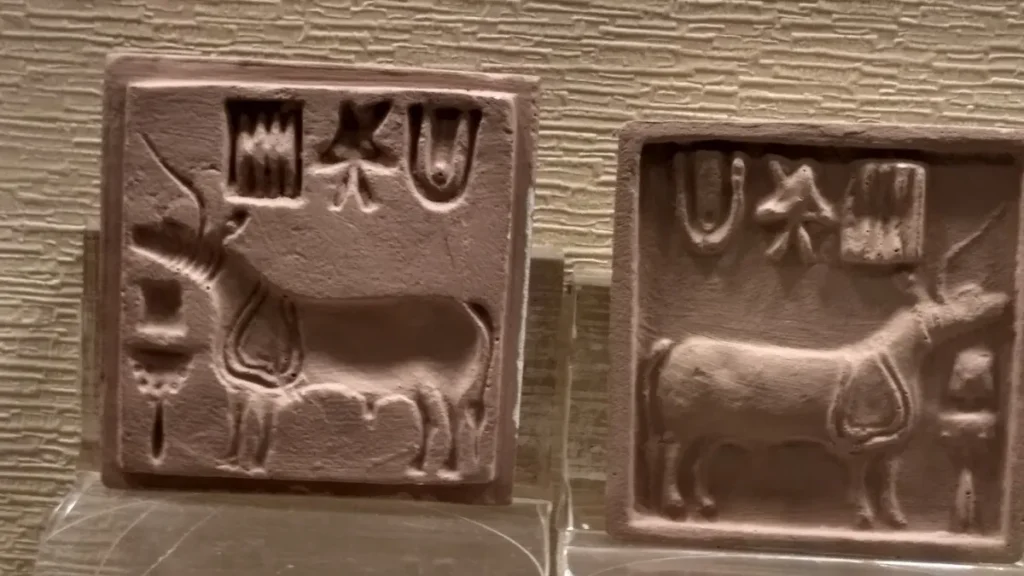
Historical Importance of Kalibangan in the Indus Valley Civilization
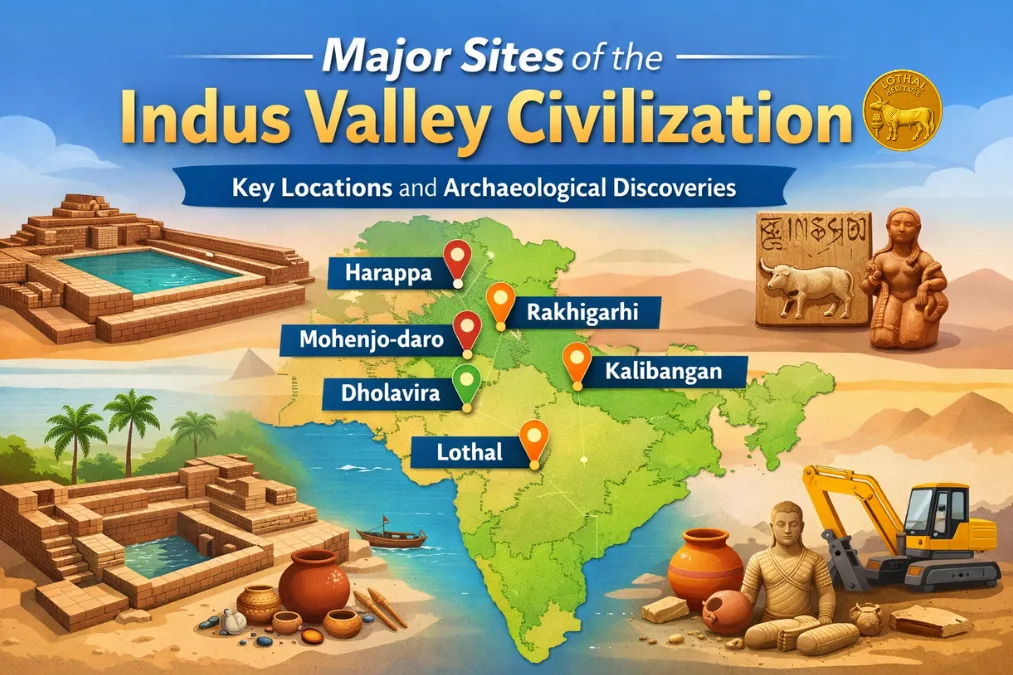
The Indus Valley Civilization, first identified in 1921–22 through excavations at Harappa and Mohenjo-daro, is one of the world’s earliest urban civilizations. It flourished across a vast region stretching:
- From Manda (Jammu & Kashmir) to Daimabad (Maharashtra)
- From Alamgirpur (Uttar Pradesh) in the east to Sutkagendor (Baluchistan) in the west
Kalibangan, located on the left bank of the now-dry Ghaggar River (often associated with the ancient Saraswati), occupies a central place in this cultural landscape.
Museum Layout and Galleries
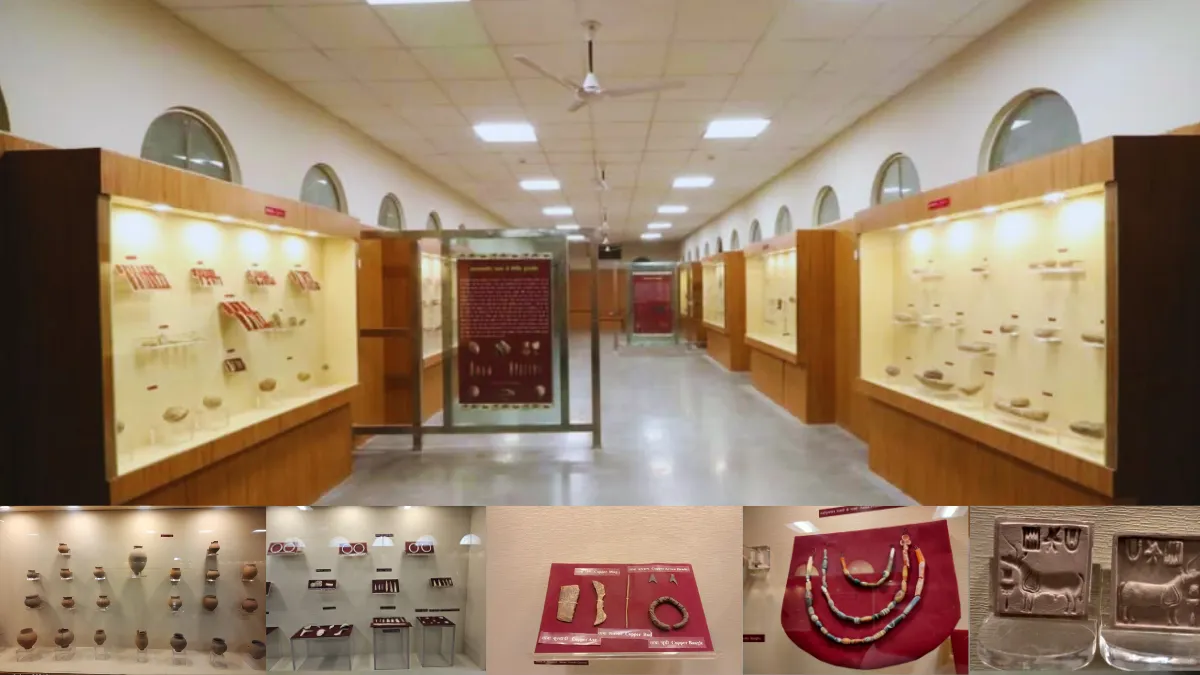
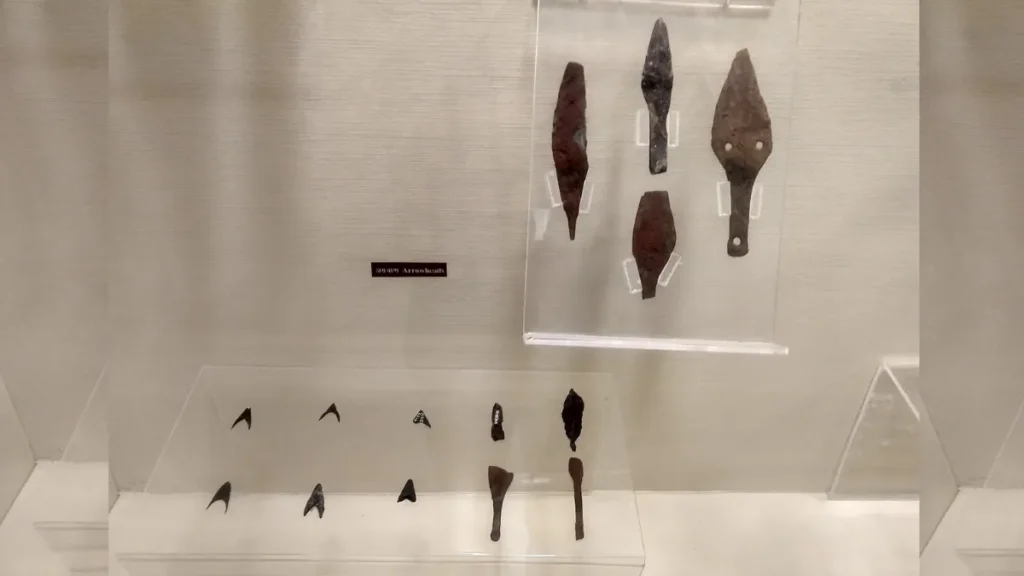
The Archaeological Museum Kalibangan houses its collections across three carefully curated galleries, each highlighting different aspects of Harappan culture.
Cultural Phases Represented
The exhibits are divided into:
- Early Harappan Culture (circa 3000–2700 BCE)
- Mature Harappan Culture (circa 2600–1900 BCE)
Artifacts displayed include:
- Pottery
- Terracotta figurines
- Stone tools
- Metal objects
- Ornaments
- Bricks
- Weights and measures
- Burial remains and replicas
Early Harappan Gallery: Life at the Dawn of Urbanism
The Early Harappan gallery introduces visitors to a society transitioning from rural settlements to organized urban life.
Pottery Classification
Early Harappan pottery at Kalibangan is scientifically classified into six fabric groups (A to F) based on texture, colour, firing technique, and decoration.
- Fabric A: Thin, red to pink vessels painted in black and white
- Fabric B: Red-slipped pottery with rusticated surfaces and animal motifs
- Fabric C: Deluxe ware with fine texture and geometric designs
- Fabric D: Thick basins with internal decorations and cord impressions
- Fabric E: Buff-slipped jars decorated in black and white pigment
- Fabric F: Grey pottery painted in white, including dishes on stands
These pottery styles reflect advanced craftsmanship and aesthetic sensibility.
Terracotta Art and Daily Life Objects
The Archaeological Museum Kalibangan displays an extensive collection of terracotta objects that illustrate everyday life and religious practices.
Notable items include:
- Feeding cups
- Bangles and beads
- Toy carts and wheels
- Whistles and rattles
- Game pieces and hopscotch markers
- Miniature cots and plough models
Animal figurines representing bulls, dogs, cats, camels, and birds such as ducks, sparrows, parrots, pigeons, and eagles offer insight into domestication and symbolic beliefs.
Early Harappan Tools and Materials
Stone and metal artifacts provide evidence of technological skill:
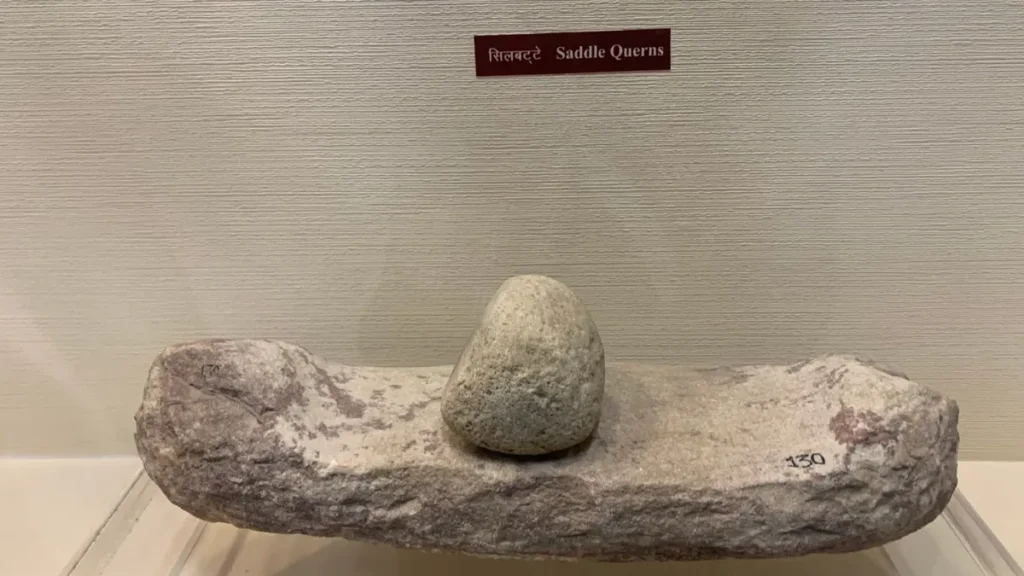
- Saddle querns for grinding grain
- Chert blades
- Beads made from carnelian and steatite
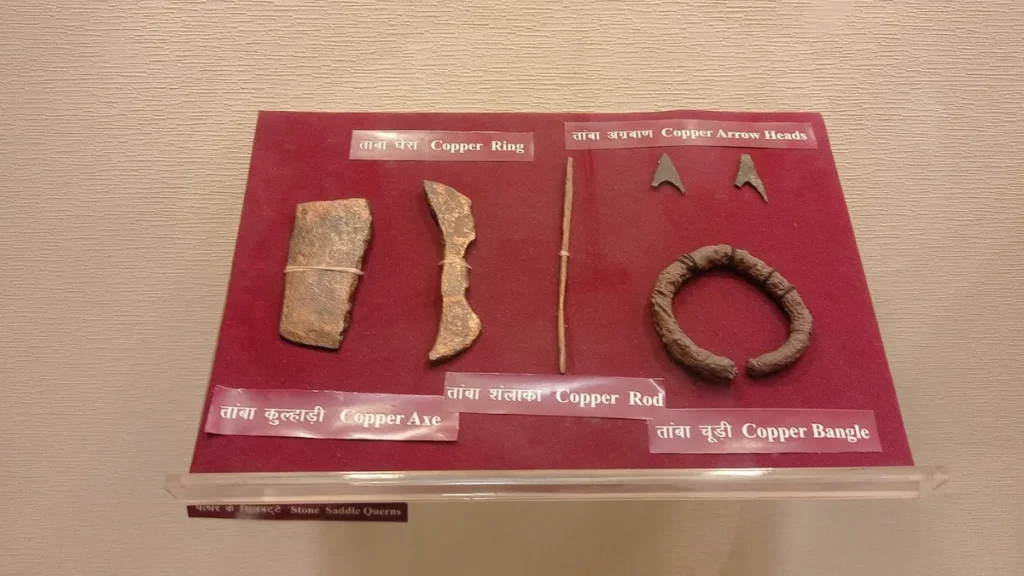
- Copper objects such as rings, arrowheads, and beads
These finds suggest trade networks, specialized labor, and advanced material knowledge.
The World’s Earliest Ploughed Field
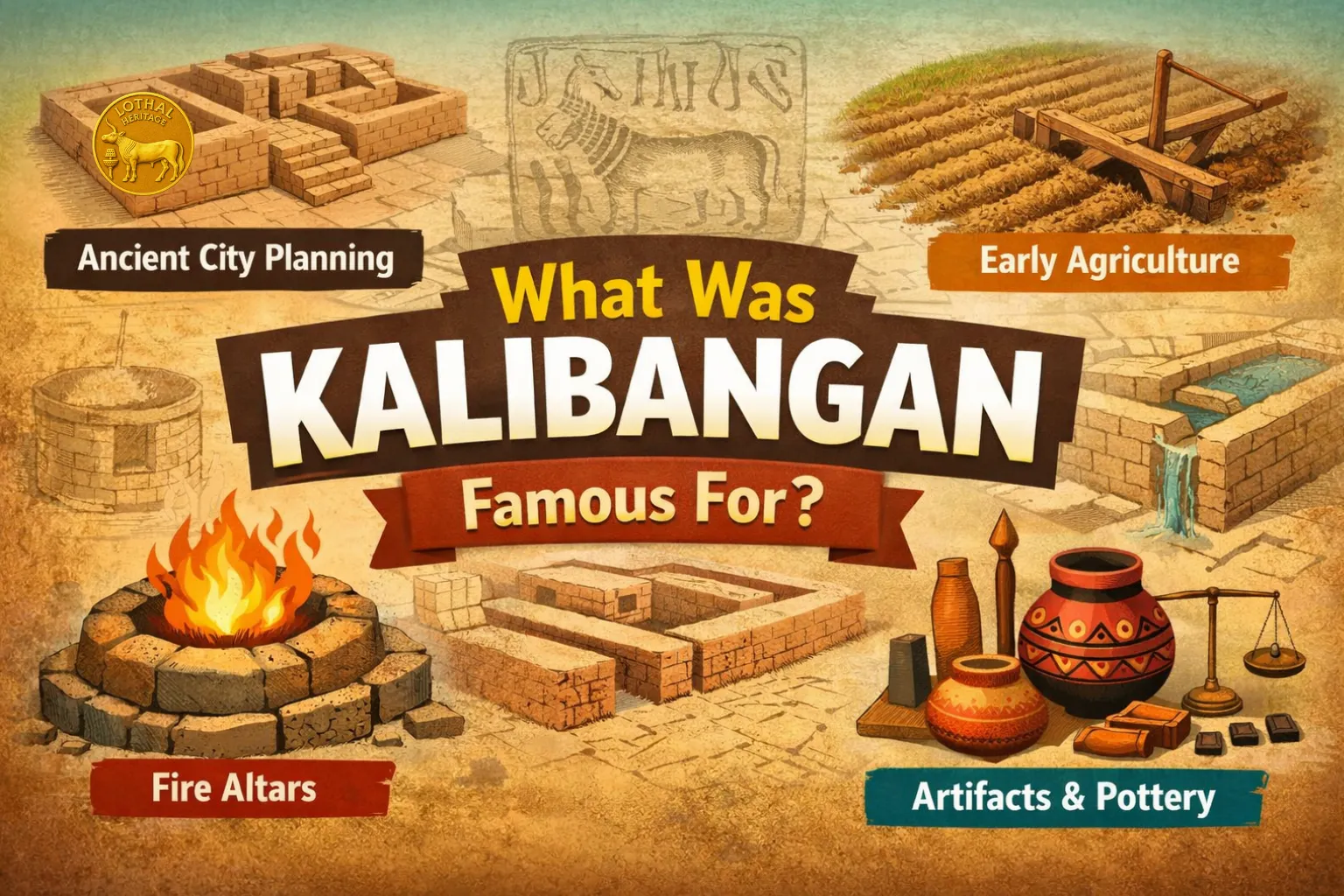
One of Kalibangan’s most extraordinary discoveries was a ploughed agricultural field with criss-cross furrows, dating to the Early Harappan period. This is considered the earliest excavated evidence of plough-based agriculture in the world.
The field pattern indicates:
- Double cropping in a single season
- Knowledge of soil management
- Organized agricultural planning
Terracotta plough models further confirm farming practices.
Agriculture and Economy
Evidence shows cultivation of:
- Wheat
- Barley
- Rice
- Peas
- Horse gram
The presence of gypsum suggests soil treatment to reduce salinity. Fishing and hunting were also practiced, supported by the discovery of fish hooks.
Mature Harappan Gallery: A Planned Urban Society
After an apparent earthquake around 2700 BCE, the site was abandoned briefly and later reoccupied by Mature Harappan settlers. This phase represents Kalibangan at its urban peak.
City Planning
The settlement was divided into:
- A Citadel on the western side
- A Lower Town on the eastern side
Both areas were fortified and followed a grid-based street layout, showcasing advanced urban planning.
Ritual Platforms and Fire Altars
Within the citadel, archaeologists discovered:
- Massive brick platforms
- A series of seven fire altars
- A bathing pavement
- A well
These structures suggest organized ritual or ceremonial activities, possibly linked to early religious practices.
Mature Harappan Pottery Collection
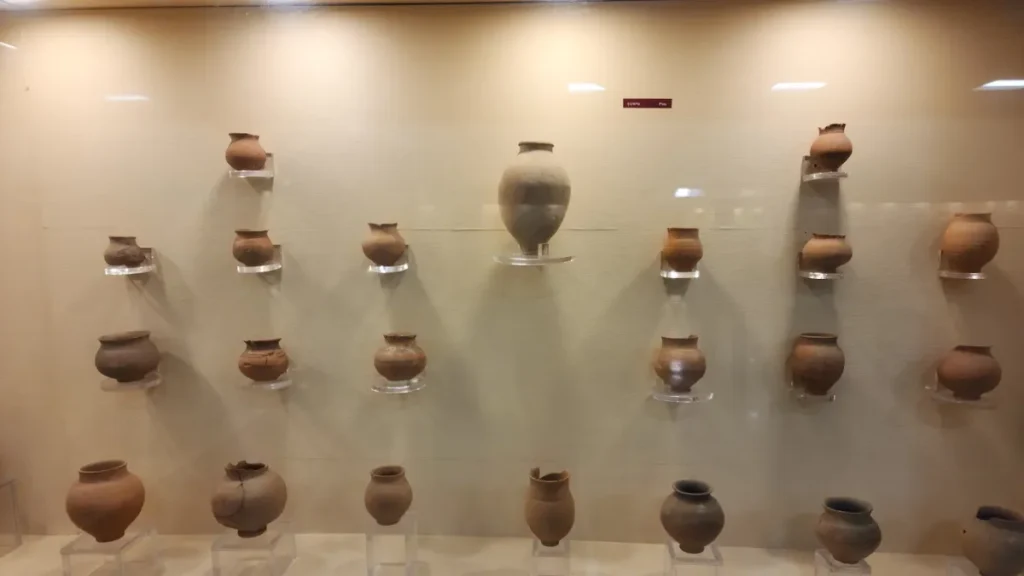
The Archaeological Museum Kalibangan houses a remarkable range of Mature Harappan pottery, fired at extremely high temperatures.
Common forms include:
- Dish-on-stand
- Storage jars
- Bowls with out-turned rims
- Beakers and goblets
- Perforated vessels
Decorations feature geometric patterns, floral designs, animals, and graffiti marks believed to be related to Harappan script.
Ornaments, Tools, and Luxury Items
The museum displays exquisite artifacts such as:
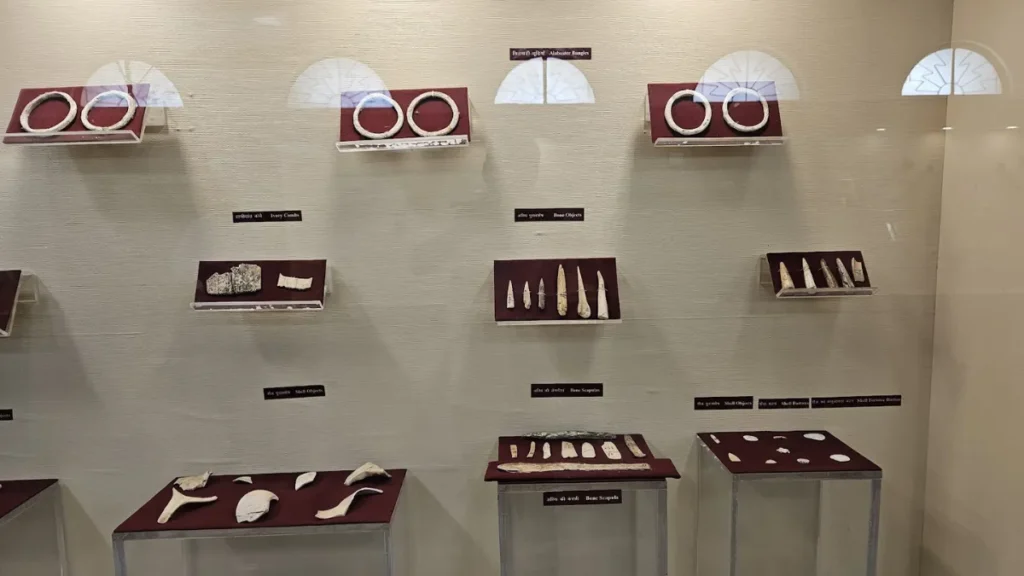
- Copper axes, knives, and spearheads
- Mirrors and needles
- Bangles and rings
- Antimony rods used as cosmetic tools
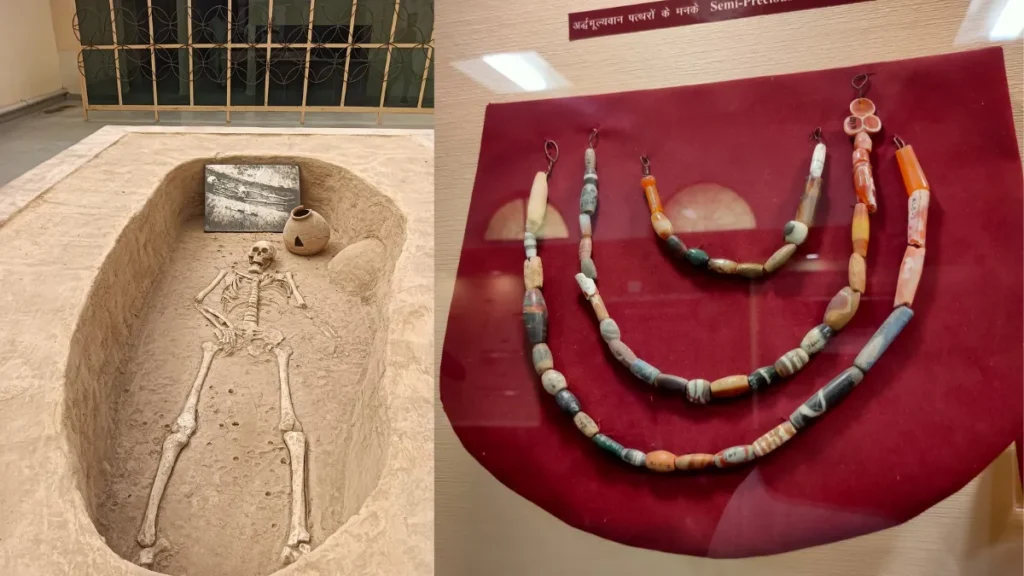
- Beads made from agate, jasper, faience, lapis lazuli, and steatite
Ivory and bone objects reflect advanced craftsmanship and aesthetic culture.
Burial Practices at Kalibangan
The burial ground, located about 300 metres southwest of the settlement, offers crucial insight into Harappan beliefs about death and the afterlife.
Types of Burials Found
- Extended burials with skeletal remains
- Pot burials without skeletons
- Symbolic burials containing only pottery and grave goods
A replica of a skeletal burial from KLB-8 is displayed in the museum courtyard, allowing visitors to observe ancient funerary customs.
Importance of Archaeological Museum Kalibangan Today
The Archaeological Museum Kalibangan is not just a collection of artifacts—it is a living archive of humanity’s early achievements. It helps historians trace the evolution of urban planning, agriculture, trade, religion, and social organization in South Asia.
For students, scholars, and tourists from the UK, US, and around the world, the museum offers an authentic and deeply informative experience rooted in scientific excavation and careful preservation.
Read also: Kalibangan: The Ancient Indus Valley City That Redefined Early Urban Life and Agriculture
Visitor Information
Opening Hours:
10:00 AM – 5:00 PM
Entry Fee:
₹5
Address:
Archaeological Museum, Kalibangan – 335803
District Hanumangarh, Rajasthan, India
Contact:
circlejai.asi@gmail.com
Read also: Inside India’s Ancient Harbor: Lothal Museum Ticket Price, Timings, and Visitor Insights
Conclusion
The Archaeological Museum Kalibangan stands as a powerful reminder of India’s ancient past and humanity’s shared heritage. Through its carefully curated galleries, rare artifacts, and educational displays, the museum tells the story of one of the world’s earliest civilizations with clarity and depth.
For anyone interested in archaeology, history, or the origins of urban life, the Archaeological Museum Kalibangan is not just a destination—it is an essential journey into the roots of civilization.
Disclaimer:
The information provided in this article is intended for general informational purposes only. Ticket prices, online booking availability, visiting hours, and entry rules for Kalibangan may change from time to time based on decisions taken by the Archaeological Survey of India or other relevant authorities. While every effort has been made to ensure accuracy, the article does not guarantee the completeness or current validity of the details mentioned. Readers are advised to verify the latest updates through official government or authorized tourism sources before planning their visit. The publisher is not responsible for any loss, inconvenience, or changes arising from reliance on the information presented here.