Gujarat, India:
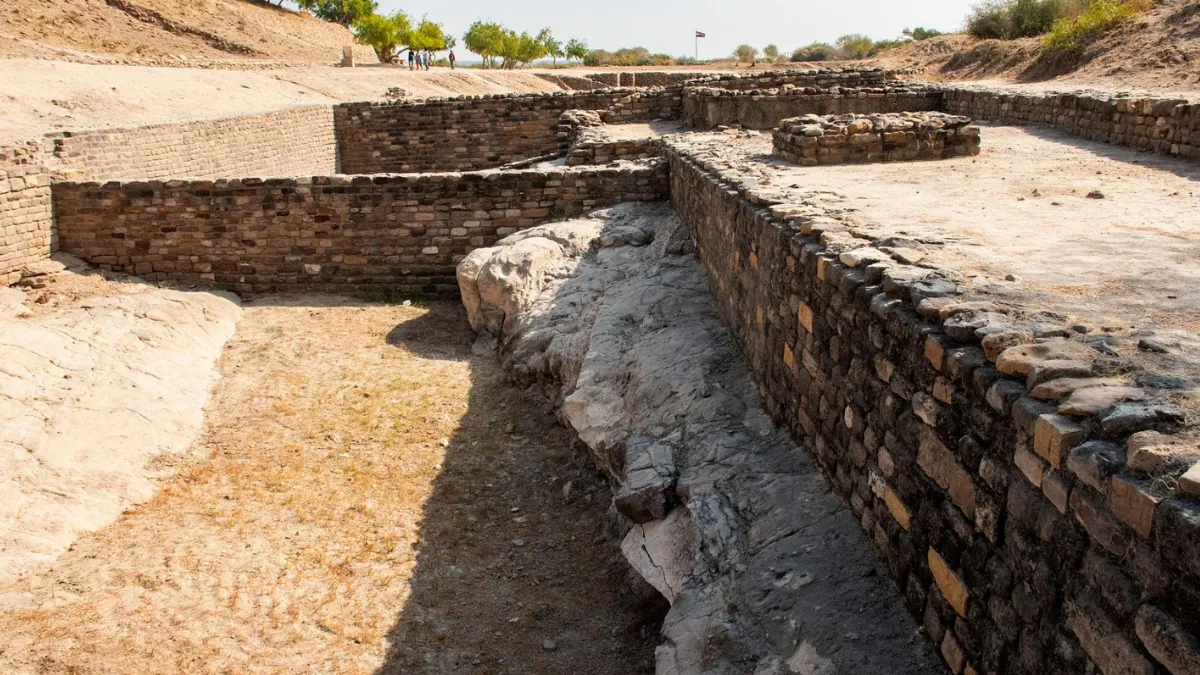
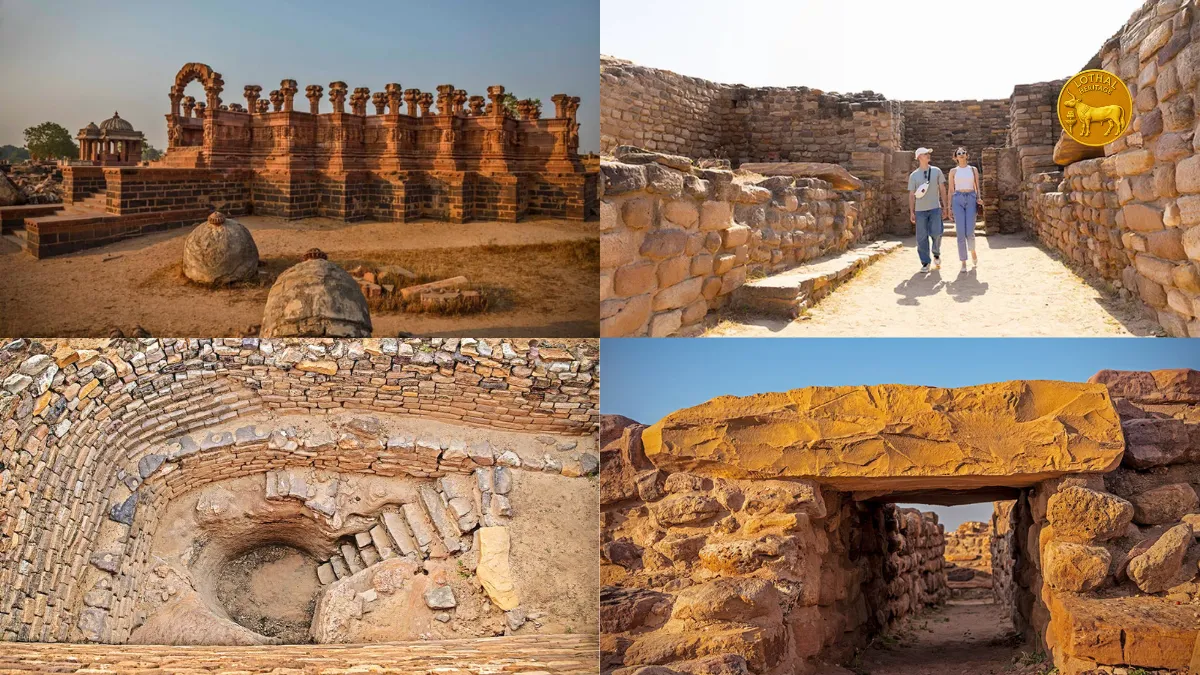
Dholavira Harappan Site: Hidden amid the stark, salt-laden landscapes of western India lies one of the most extraordinary archaeological discoveries of the ancient world-the Dholavira Harappan site. Located on the arid Khadir Bet island in Gujarat’s Kachchh district, Dholavira stands today as a powerful reminder of human ingenuity, urban planning, and resilience dating back more than 4,500 years.
Recognised as one of the largest and most impressive urban centres of the Indus Valley Civilisation, the Dholavira Harappan site continues to captivate archaeologists, historians, and travellers from across the globe. Its advanced city planning, sophisticated water management systems, and monumental architecture challenge modern assumptions about early human societies and firmly establish Dholavira as one of the grandest ancient cities ever built.
Where Is the Dholavira Harappan Site Located?
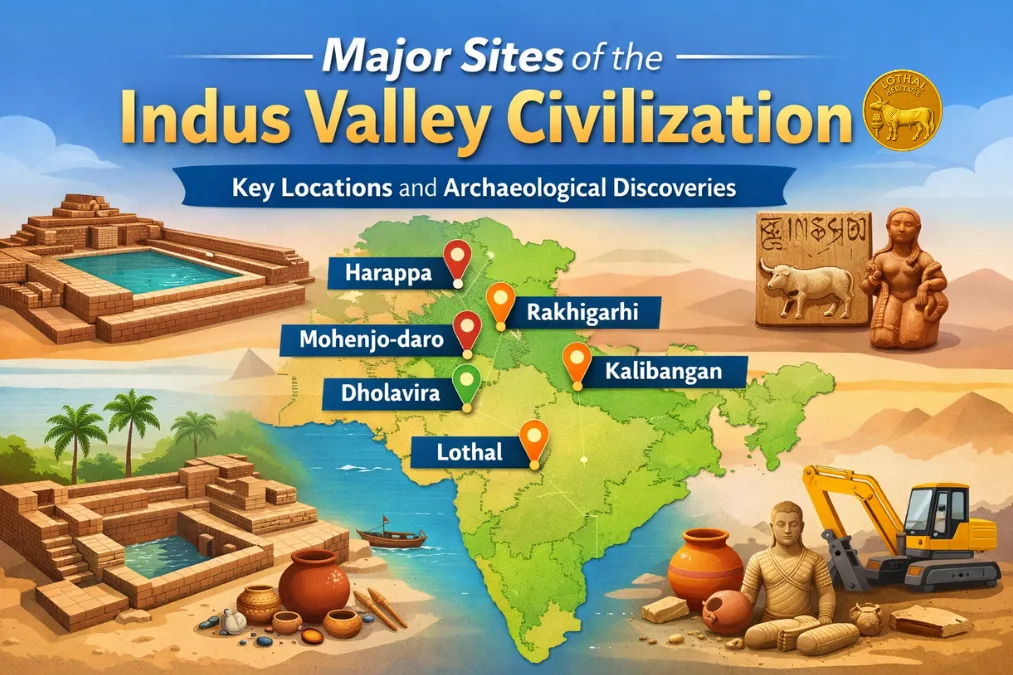
The Dholavira Harappan site is situated at Khadirbet village in Bhachau Taluka of Kachchh district, Gujarat, western India. The ruins lie approximately 1 kilometre north of the modern village of Dholavira, from which the ancient city derives its name. The nearest major town is Radhanpur, located around 165 kilometres away.
Geographically, Dholavira occupies a striking position on the Tropic of Cancer, placing it among the very few ancient urban settlements in the world aligned with this important latitude. The city rests within the Kachchh Desert Wildlife Sanctuary, deep inside the Great Rann of Kachchh, a vast salt desert known for its extreme climate and harsh terrain.
Despite the region’s aridity today, the location once supported a thriving civilisation due to its proximity to seasonal freshwater streams and its strategic placement along ancient trade routes.
One of the Largest Cities of the Indus Valley Civilisation
Among the hundreds of Harappan settlements discovered across the Indian subcontinent, the Dholavira Harappan site holds a special place. Archaeologists classify it as one of the five largest Harappan cities, alongside Mohenjo-daro, Harappa, Rakhigarhi, and Ganeriwala.
Covering an area of nearly 47 hectares (120 acres), the city was laid out in a precise quadrangular design, reflecting remarkable planning skills. The settlement was strategically positioned between two seasonal streams-Mansar to the north and Manhar to the south-which played a vital role in supplying water to the city during monsoon seasons.
What sets Dholavira apart is not just its size, but the sophistication of its design, indicating a high degree of political organisation and engineering expertise.
Timeline: From Prosperity to Decline
Archaeological evidence suggests that the Dholavira Harappan site was first occupied around 2650 BCE, during the mature phase of the Indus Valley Civilisation. The city flourished for several centuries, emerging as a major political, economic, and cultural hub.
By around 2100 BCE, Dholavira began to experience a gradual decline. Environmental changes, shifting river patterns, and reduced rainfall are believed to have contributed to the city’s slow deterioration. The site was briefly abandoned before being reoccupied again, with signs of habitation continuing until approximately 1450 BCE.
This long occupational history makes Dholavira one of the few Harappan sites that witnessed multiple phases of rise, decline, and re-settlement.
A City Divided Into Three Distinct Sections
One of the most striking features of the Dholavira Harappan site is its three-tiered urban layout, which reflects a clearly defined social and administrative hierarchy.
1. The Citadel or Royal Complex (Raj Mahal)
At the highest elevation stood the Raj Mahal, believed to be the residence of the ruler or governing elite. This fortified citadel was surrounded by massive stone walls and protected by four imposing gateways, indicating both authority and security.
The elevated position of the citadel symbolised power, allowing rulers to oversee the entire city while remaining physically and socially separated from the rest of the population.
2. The Middle Town: Officials and Administrators
Below the citadel lay the habitat of senior officers and administrators. This area also featured protective walls, though less imposing than those of the royal complex. Excavations reveal buildings with two to five rooms, likely serving as official residences and administrative centres.
This middle tier suggests an organised bureaucratic structure, with officials responsible for governance, trade, and city management.
3. The Lower Town: Common Citizens
The largest section of the Dholavira Harappan site was reserved for common town dwellers. Houses here were constructed using baked bricks and stone, arranged in well-planned streets.
Despite being the residential area for ordinary citizens, the lower town was far from primitive. The presence of organised housing, drainage, and workshops highlights a high standard of living for its time.
Industrial Excellence: Pearls and Copper
Excavations at the Dholavira Harappan site have revealed evidence of significant industrial activity. Among the most remarkable discoveries is a large pearl-manufacturing factory, indicating that Dholavira was a major centre for luxury goods production.
Additionally, copper distillation units have been identified through fossil evidence, pointing to advanced metallurgical knowledge. These findings suggest that the city played a vital role in regional and long-distance trade networks, exchanging goods with other Harappan cities and possibly distant regions beyond the subcontinent.
Why the Dholavira Harappan Site Matters Today
The importance of Dholavira extends far beyond India’s borders. Its advanced urban planning, water conservation systems, and social organisation offer valuable insights into how ancient societies adapted to harsh environments.
Unlike many ancient cities built near large rivers, Dholavira thrived in a semi-arid zone, relying on innovative water storage and management techniques. This makes the site especially relevant today, as modern cities face increasing challenges related to climate change and water scarcity.
The Dholavira Harappan site stands as a testament to human resilience and creativity, proving that sustainable living is not a modern concept but an ancient one.
Read also: Harappan Civilization: Tracing the Legacy of an Ancient Urban World
How to Reach the Dholavira Harappan Site
Despite its remote location, the Dholavira Harappan site is accessible through multiple modes of transport.
By Air
The nearest airport is Bhuj Airport, which is well-connected to major Indian cities. From Bhuj, travellers can continue by road.
By Train
The closest railway station is Bhachau, located on the main rail network of Gujarat. Regular trains connect Bhachau with cities like Ahmedabad and Rajkot.
By Road
Bhachau is the nearest major town, and well-maintained roads lead from Bhachau to Dholavira. The drive offers stunning views of the Rann of Kachchh, especially during the dry season.
A Living Legacy of the Indus Valley Civilisation
Today, the Dholavira Harappan site stands as one of the most important archaeological landmarks in the world. Its ruins tell the story of a civilisation that mastered architecture, governance, industry, and environmental adaptation long before modern technology existed.
As research continues and new discoveries emerge, Dholavira’s global significance only grows stronger. For historians, it is a key to understanding early urban life. For travellers, it is a journey into humanity’s distant past. And for the world, it is a reminder that some of the greatest lessons in sustainability and urban planning come from ancient civilisations that once thrived against all odds.
The Dholavira Harappan site is not just an archaeological wonder-it is a legacy carved in stone, waiting to inspire future generations.