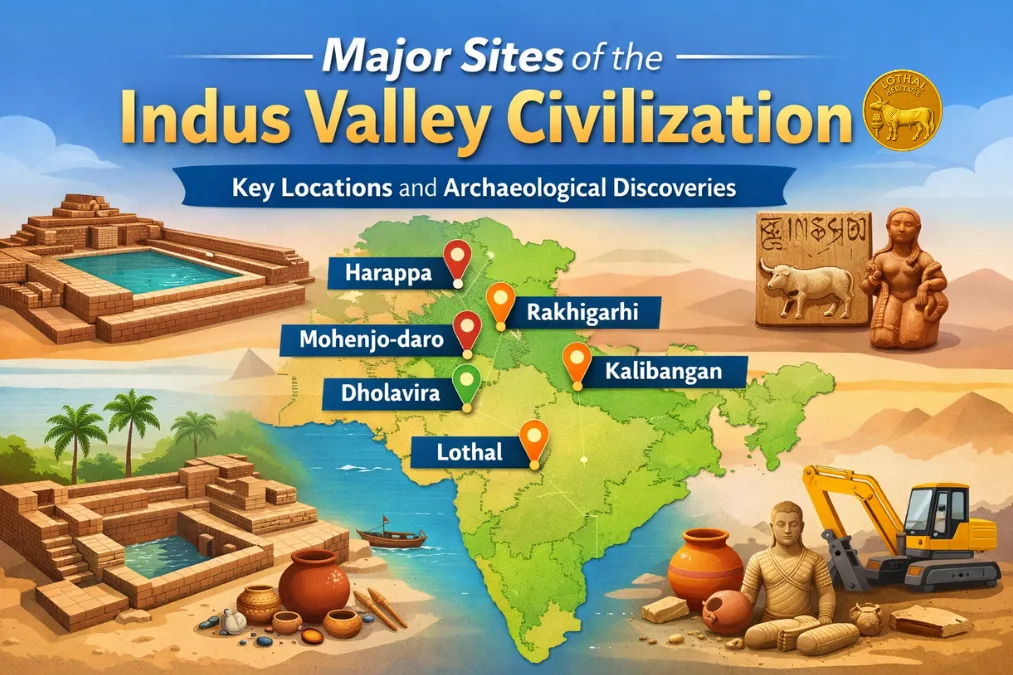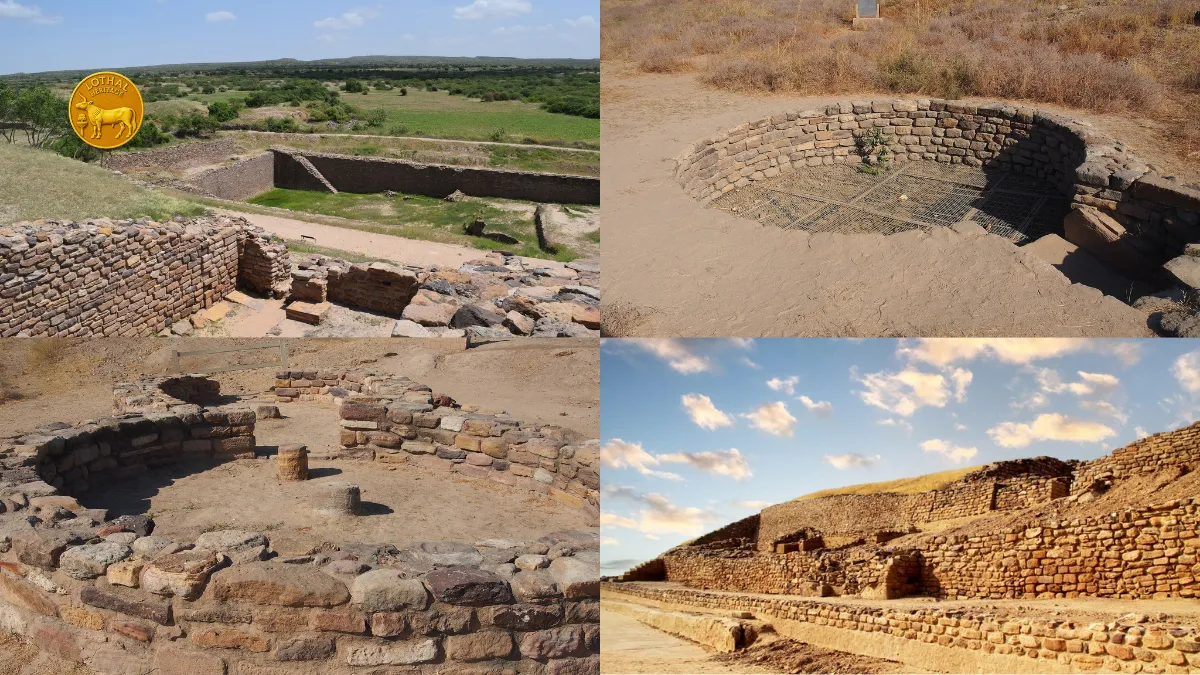
Hidden deep within the stark, windswept landscapes of western India lies a city that time chose not to erase. Long abandoned yet remarkably intact, Dholavira stands as one of the most extraordinary archaeological discoveries of the modern era. Situated on Khadir Island in the Great Rann of Kutch, this ancient urban settlement offers rare insight into the brilliance, discipline, and adaptability of the Harappan-or Indus Valley-Civilisation
Often described as a city frozen in time, Dholavira Kutch is not merely a ruin. It is a carefully planned metropolis that once thrived in one of the harshest environments on Earth. From advanced water conservation systems to large public spaces, fortified walls, and evidence of organised social structure, Dholavira challenges modern assumptions about the technological limits of ancient societies.
As global interest grows in sustainable urban planning and climate resilience, Dholavira’s story feels more relevant than ever.
A City That Emerged Against All Odds
Dholavira was occupied between approximately 3000 BCE and 1500 BCE, placing it firmly within the mature and late phases of the Harappan Civilisation. Unlike many ancient cities built near fertile riverbanks, Dholavira developed in an arid region where water scarcity was a constant threat.
Located on Khadir Island-an elevated stretch of land surrounded seasonally by water from the Rann—Dholavira Kutch occupied a strategic position that enabled both defence and trade. Archaeologists estimate that the settlement covered over 100 hectares, making it one of the largest and most sophisticated urban centres of its time in South Asia.
Despite its remote location, Dholavira flourished for centuries, suggesting a society with advanced planning skills, strong governance, and deep environmental understanding.
Urban Planning Far Ahead of Its Time
What immediately sets Dholavira apart from many other ancient sites is its exceptional urban design. The city was carefully divided into distinct zones, each serving a specific purpose. These included:
- A fortified citadel or castle, likely reserved for administrative or elite functions
- A ceremonial ground for public gatherings or rituals
- Residential areas with varying sizes and construction quality, reflecting social hierarchy
- Well-laid streets aligned with cardinal directions
This level of structured planning reveals that Dholavira was not a spontaneous settlement but a deliberately designed city governed by strict civic principles.
Massive stone walls enclosed key areas, indicating both defensive needs and administrative control. Even today, standing atop the ruins offers a powerful sense of how organised and monumental this ancient city once was.
The World’s Earliest Water Management Genius
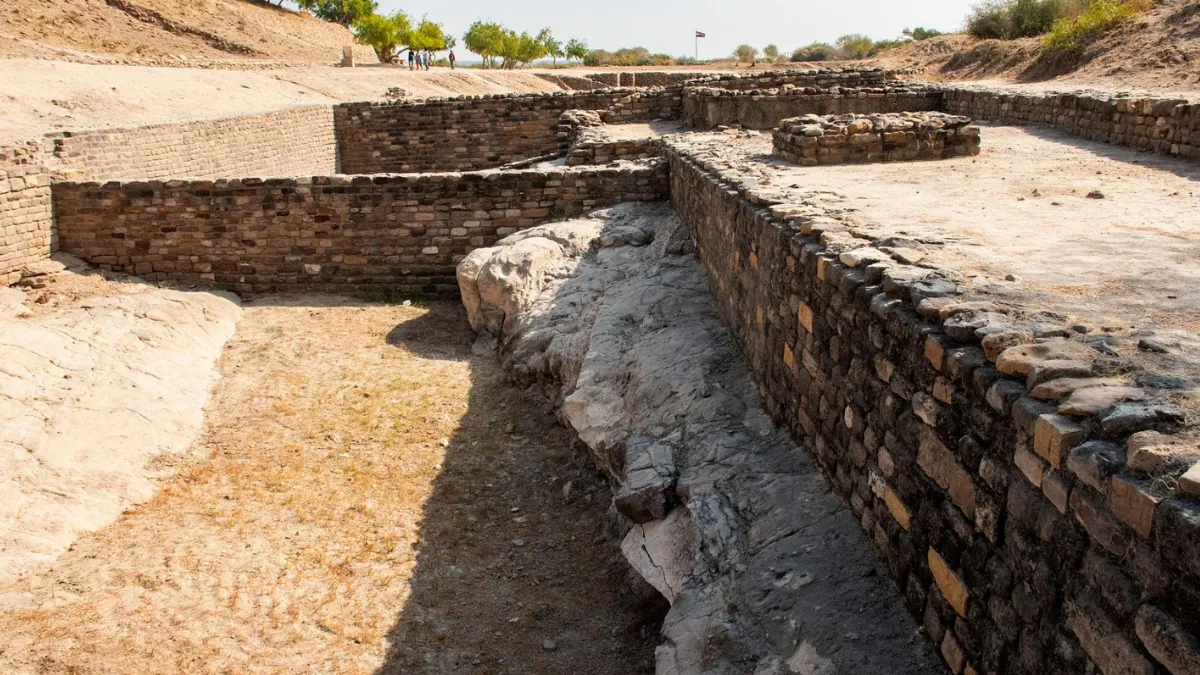
Perhaps the most astonishing feature of Dholavira Kutch is its water conservation system, widely regarded as one of the earliest and most advanced in the ancient world.
Surrounded by desert and dependent on unpredictable monsoon rains, the residents of Dholavira engineered an intricate network of reservoirs, channels, and dams to harvest and store rainwater efficiently. These systems captured runoff from surrounding hills and directed it into massive stone-lined tanks within the city.
Unlike many ancient settlements where water systems were secondary additions, water management was central to Dholavira’s design from the very beginning.
Experts believe this sophisticated infrastructure allowed the city to survive prolonged droughts and environmental fluctuations, a lesson modern urban planners continue to study with admiration.
The Mystery of the Indus Script Signboard
Among Dholavira’s most intriguing discoveries is a large stone signboard bearing symbols of the Indus script. Made from white gypsum inlay set against a wooden or stone base, this artefact is believed by some scholars to represent one of the world’s earliest public signboards.
Though the Indus script remains undeciphered, the placement and scale of this inscription suggest it may have displayed the city’s name or conveyed an important civic message.
This discovery reinforces the idea that literacy-or at least symbolic communication-played a significant role in Harappan society.
Evidence of Craftsmanship and Global Trade
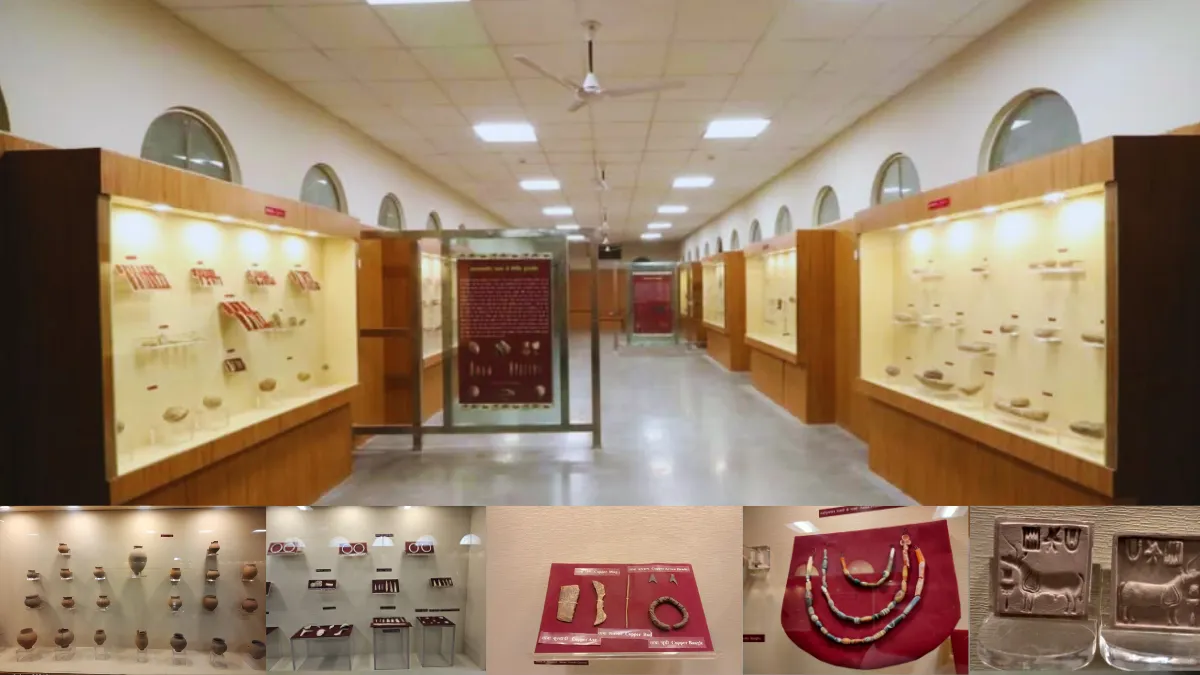
Excavations at Dholavira have revealed extensive evidence of industrial and artistic activity. Archaeologists uncovered workshops dedicated to bead-making, metallurgy, and shell craftsmanship, along with finished goods that reflect exceptional skill.
Artefacts found at the site include items made from:
- Copper and bronze
- Semi-precious stones such as carnelian and agate
- Shell and ivory
- Terracotta and gold
These materials were not locally available, indicating long-distance trade networks linking Dholavira to regions across present-day India, Pakistan, and possibly the Middle East.
The city’s strategic location likely made it a vital commercial hub connecting inland routes with coastal trade paths.
A Unique Perspective on Life and Death
One of the lesser-known but fascinating aspects of Dholavira Kutch is its cemetery. Archaeologists identified a large burial ground containing six distinct types of cenotaphs, or symbolic tombs.
Unlike many ancient burial sites, these cenotaphs often lacked human remains, suggesting a complex belief system regarding death and remembrance. This practice sets Dholavira apart from other Harappan sites and hints at philosophical or ritual traditions still not fully understood.
Decline, Desertion, and Cultural Transformation
Archaeological evidence indicates that Dholavira experienced multiple phases of occupation and decline. During the fifth or seventh stage of settlement, the city was gradually abandoned, likely due to environmental stress, declining trade, or shifting monsoon patterns.
Later, people returned during the late Harappan period, but the original urban culture was never restored. Instead of rectangular stone houses, settlers constructed circular huts known as bhungas, a design still common in Kutch today.
Pottery styles and tools from this period show influences from Sindh, southern Rajasthan, and other parts of Gujarat. These changes point to a society adapting to new realities, simplifying its lifestyle, and slowly transitioning away from large-scale urbanism.
Rather than collapsing suddenly, Dholavira’s civilisation appears to have faded gradually, displaying resilience even in decline.
Dholavira Kutch and Its Global Significance
Today, Dholavira is recognised as one of the most important archaeological sites in the world. It provides rare insights into:
- Early urban governance
- Sustainable architecture
- Climate adaptation strategies
- Social organisation in prehistoric societies
Its preservation allows historians and visitors alike to walk through streets laid out more than 4,000 years ago, experiencing a direct connection with humanity’s distant past.
For scholars in the UK, US, and beyond, Dholavira challenges Eurocentric narratives of ancient innovation and highlights South Asia’s critical role in early global civilisation.
Exploring Beyond the Ruins: What Else to See in Kutch
A visit to Dholavira is often part of a broader journey through the culturally rich Kutch region.
Vijay Vilas Palace, Mandvi
This grand palace, set against the Arabian Sea, reflects the royal heritage of Kutch. Its architecture blends Rajput, Mughal, and European styles, making it a visual masterpiece.
Read also: Seals of Harappan Civilization: Exploring the Legacy of an Ancient Script and Symbolic World
Bhujodi Village
Known for its handwoven textiles and traditional huts, Bhujodi offers visitors a living example of Kutch’s artisanal legacy.
Kutch Desert Wildlife Sanctuary
Home to the endangered Indian Wild Ass and numerous migratory birds, this sanctuary showcases the region’s surprising biodiversity.
Rann Utsav
Held between November and February, this cultural festival celebrates Kutch’s music, crafts, dance, and cuisine against the surreal backdrop of the white salt desert.
Read also: Urban Planning of Harappan Civilization: A Detailed Exploration of an Ancient Urban Marvel
A Timeless Invitation
Under the vast Gujarat sky, amid salt flats and silence, Dholavira Kutch continues to whisper stories of ambition, innovation, and endurance. Its deserted streets and towering walls remind visitors that great civilisations do not vanish without leaving lessons behind.
In an era searching for sustainable futures, Dholavira stands as proof that ancient wisdom still has much to teach the modern world.
As the sun sets over the ruins, casting golden light across stone reservoirs and forgotten pathways, one truth becomes clear: Dholavira is not just a relic of history-it is a message from the past, waiting patiently to be heard.