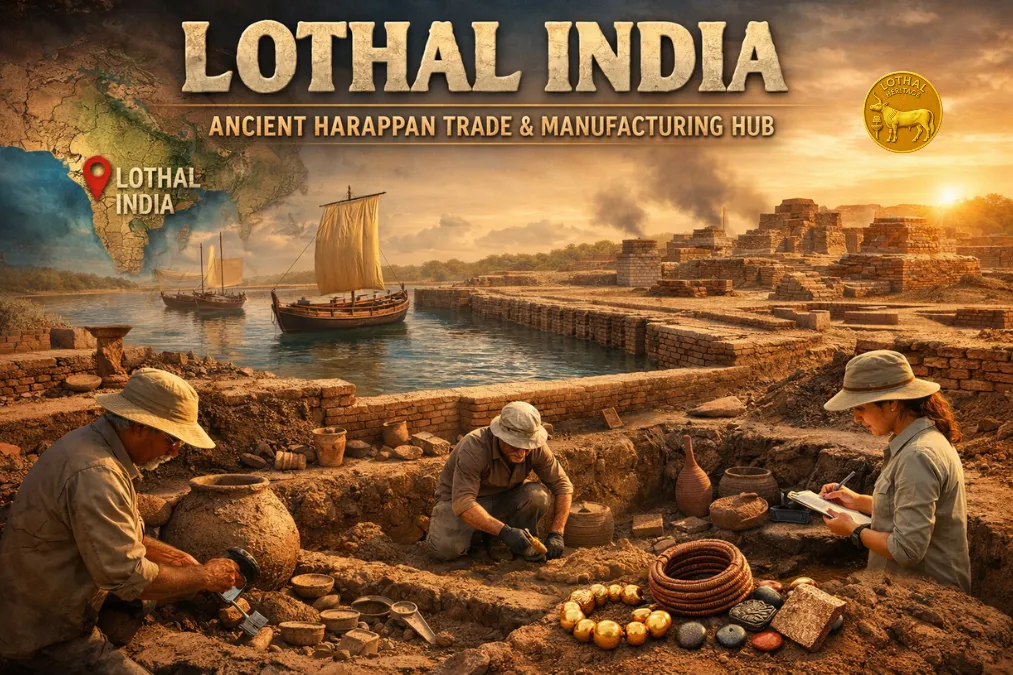
Town Lothal stands as one of the most revealing archaeological windows into the urban, economic, and maritime life of the Indus Valley Civilization, offering rare insight into how one ancient settlement connected inland societies with the wider world.
Why Lothal Still Matters
When historians speak about the Indus Valley Civilization, names like Harappa and Mohenjo-daro often dominate the discussion. Yet, quietly situated in present-day Gujarat, town Lothal tells a story that is equally significant and, in many ways, distinct. Unlike the large inland cities of the Indus region, Lothal functioned as a coastal settlement with a unique emphasis on trade, navigation, and maritime engineering.
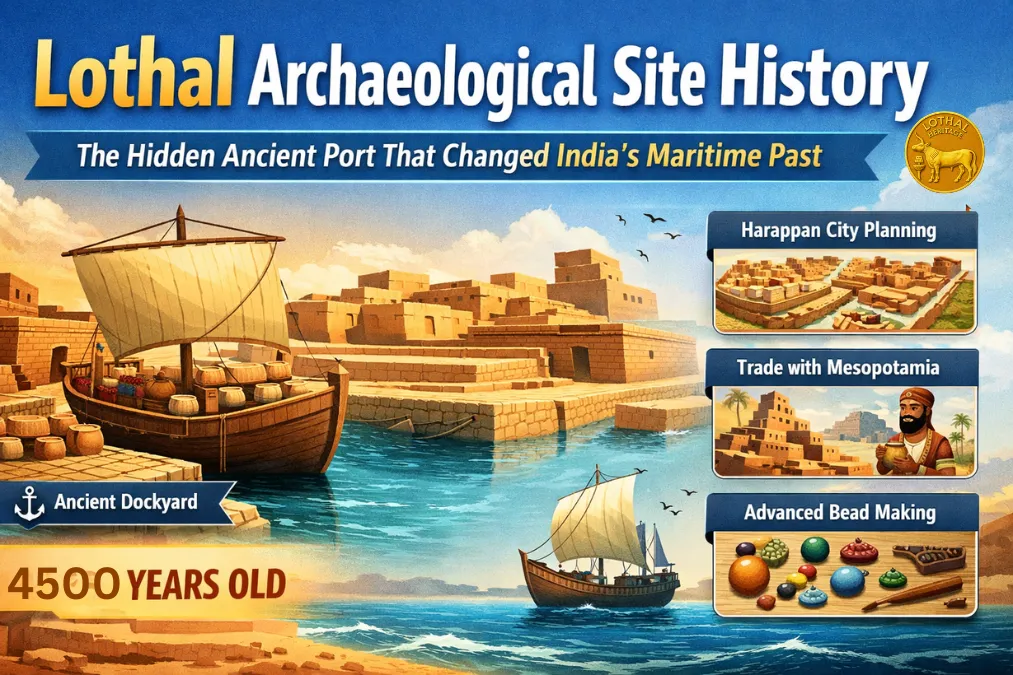
Discovered in the mid-20th century, the site reshaped scholarly understanding of Harappan commerce and technological sophistication. Its dockyard, town planning, drainage systems, and standardized weights demonstrate not just urban organization but also an advanced grasp of logistics and international exchange. More than a collection of ruins, Lothal represents a living narrative of how ancient societies adapted to geography, environment, and economic opportunity.
This article explores the origins, structure, economy, culture, decline, and continuing relevance of Lothal, presenting a comprehensive portrait of one of South Asia’s most remarkable ancient towns.
Geographic Setting and Environmental Context
Lothal is located in the Bhal region of Gujarat, near the Gulf of Khambhat. During the height of the Indus Valley Civilization, this region had a very different environmental profile than it does today. Rivers such as the Sabarmati and Bhogavo flowed closer to the settlement, creating a network of waterways that linked inland production centers with coastal trade routes.
The town was strategically positioned on a tidal inlet, allowing ships to enter and exit with relative ease. This location was not accidental. Harappan planners clearly understood tidal patterns, sediment movement, and seasonal changes. Such environmental awareness enabled Lothal to function as a trading hub without being directly exposed to the open sea, reducing the risks posed by storms and strong currents.
Over centuries, shifts in river courses and silting gradually altered this landscape, contributing to the town’s eventual decline. However, during its peak, the surrounding environment supported agriculture, craft production, and maritime trade in equal measure.
Discovery and Archaeological Exploration
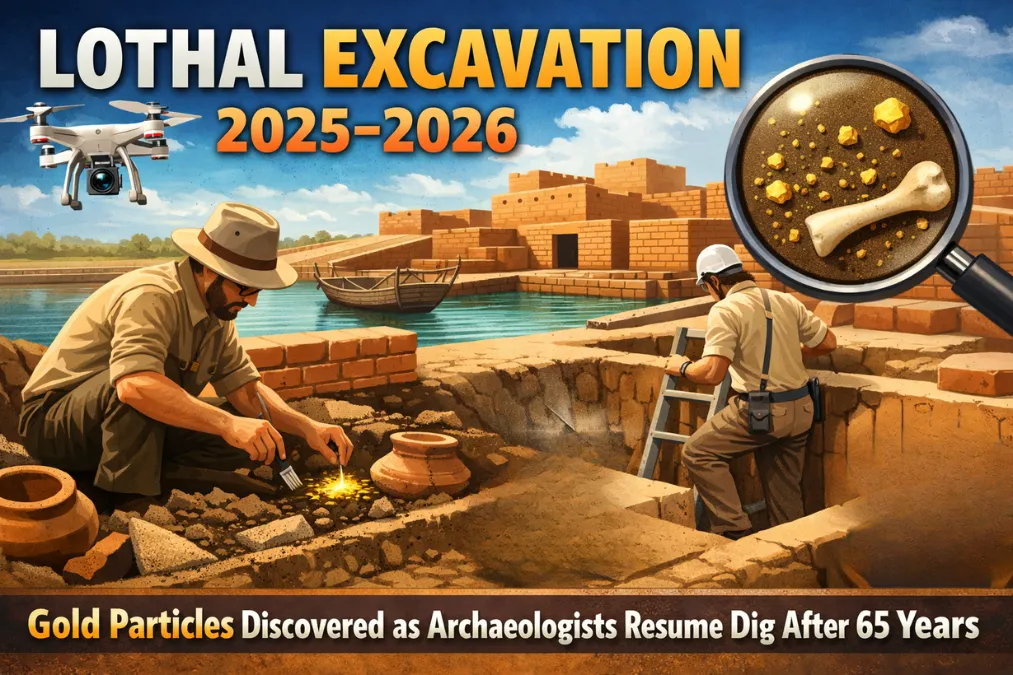
The modern rediscovery of Lothal occurred in 1954, when archaeologist S. R. Rao led excavations under the Archaeological Survey of India. What initially appeared to be a modest mound soon revealed layers of complex urban planning and industrial activity.
Excavations uncovered streets laid out in a grid pattern, brick-built structures, workshops, warehouses, and the now-famous dockyard. Carbon dating and material analysis placed the town firmly within the Mature Harappan phase, roughly between 2400 and 1900 BCE.
What distinguished Lothal from other Indus sites was not merely its architecture but the functional clarity of its design. Every structure appeared purpose-built, reflecting a society that valued efficiency, order, and standardization. These findings challenged earlier assumptions that Harappan maritime trade was limited or secondary, positioning Lothal as central to long-distance exchange.
Urban Planning and Architectural Design
The layout of Lothal reflects a deliberate and carefully executed plan. The town was divided into distinct zones, each serving a specific function. Residential areas were separated from industrial and administrative spaces, reducing congestion and contamination.
Streets were laid out at right angles, forming a grid that facilitated movement and drainage. Houses varied in size, suggesting differences in social status, yet even modest dwellings adhered to standardized construction techniques. Baked bricks of uniform proportions were used throughout, a hallmark of Harappan engineering.
Public infrastructure received equal attention. Covered drains ran along streets, connected to soak pits that prevented waterlogging. Wells provided access to fresh water, and elevated platforms protected key buildings from flooding. This level of planning indicates not only technical expertise but also civic governance capable of organizing labor and resources on a large scale.
The Dockyard: Engineering and Purpose
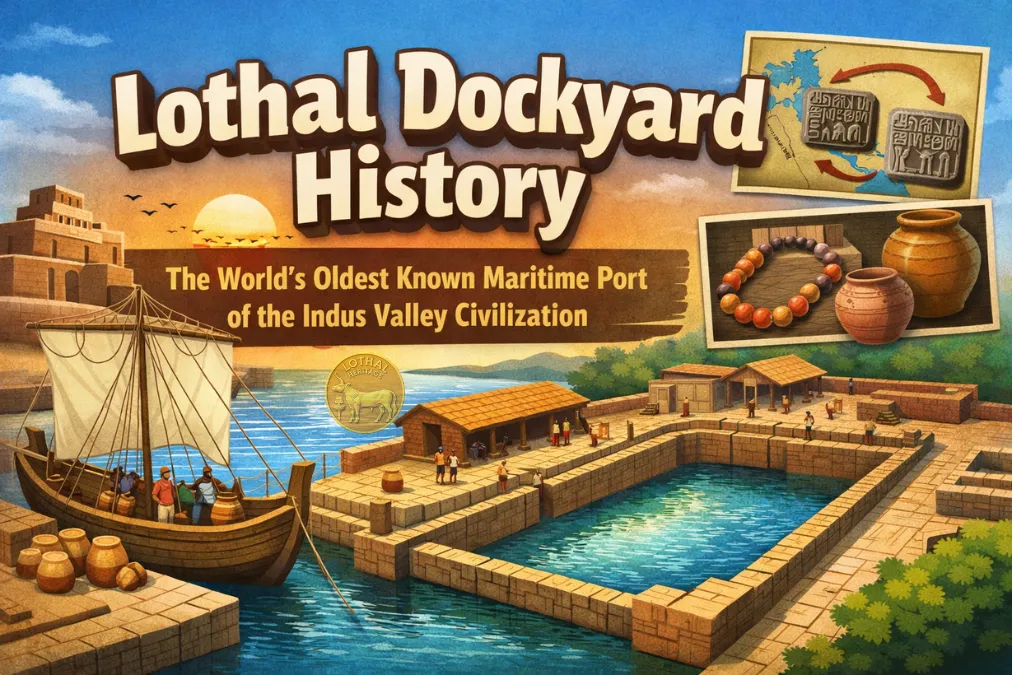
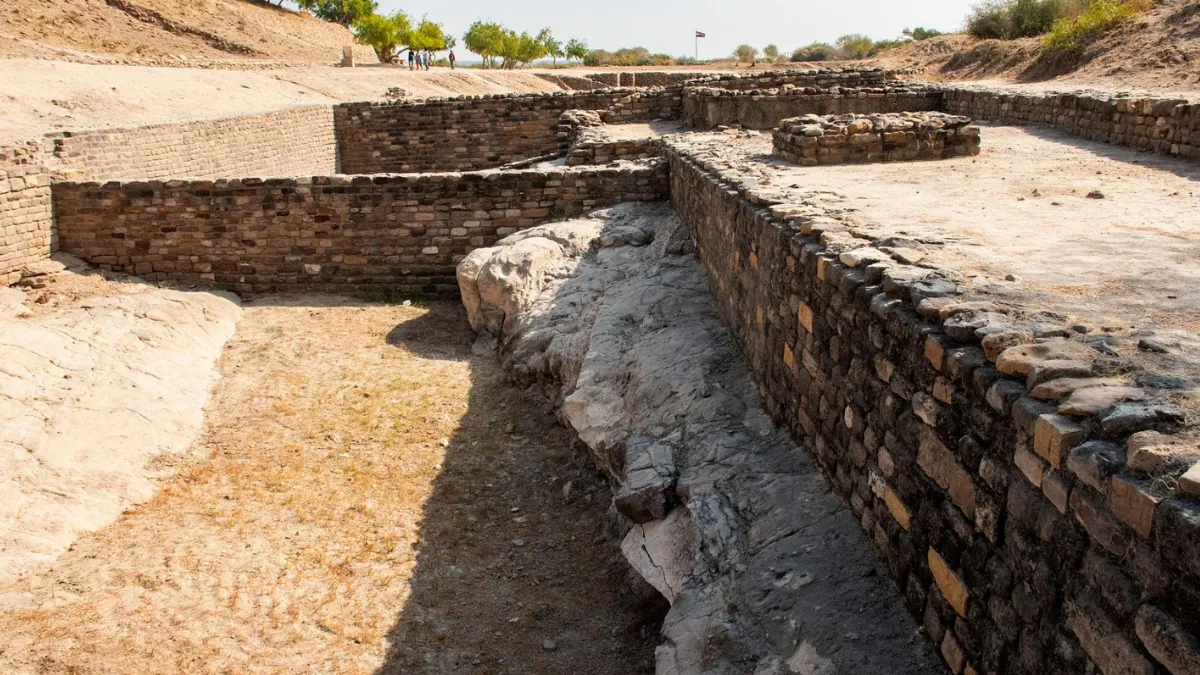
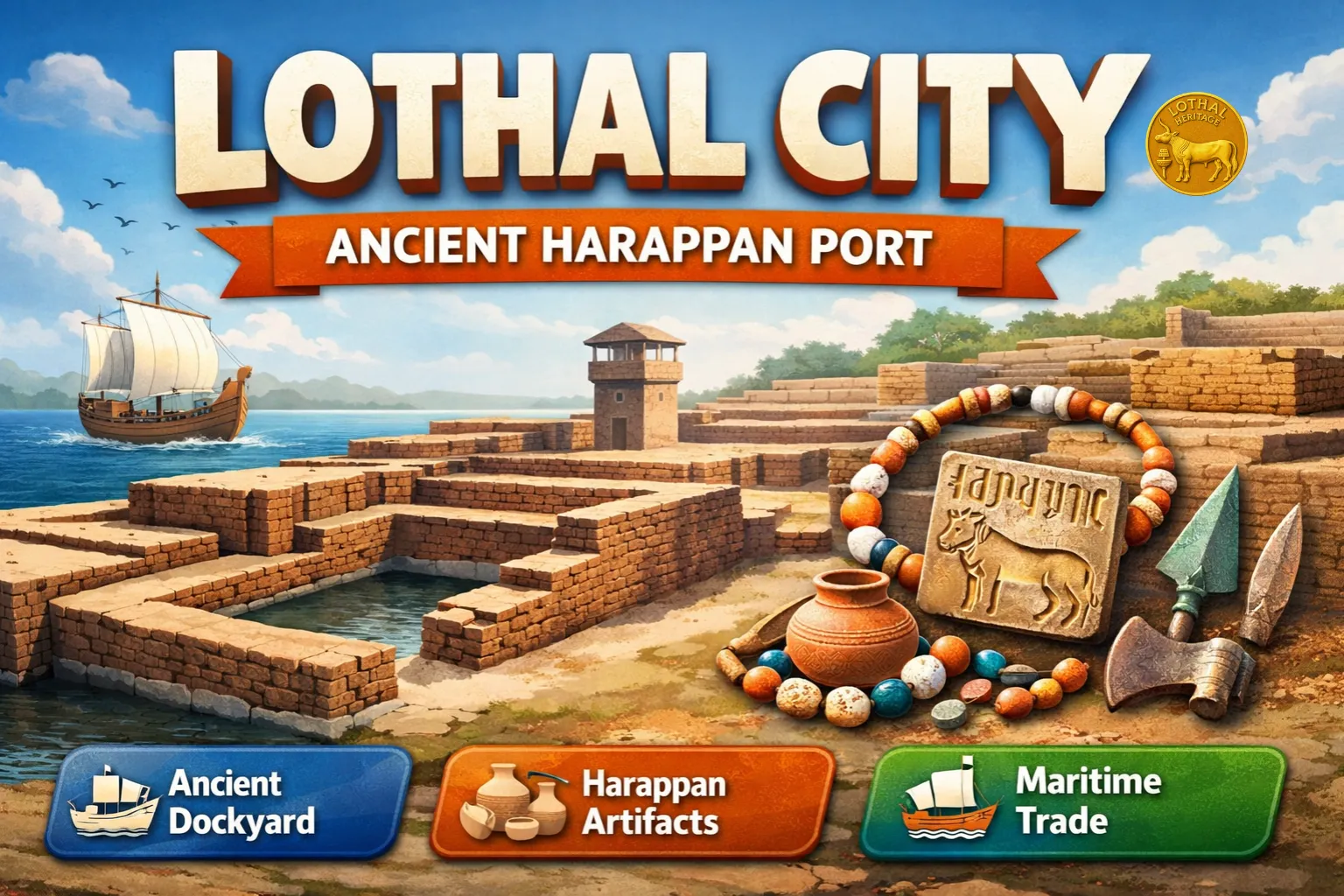
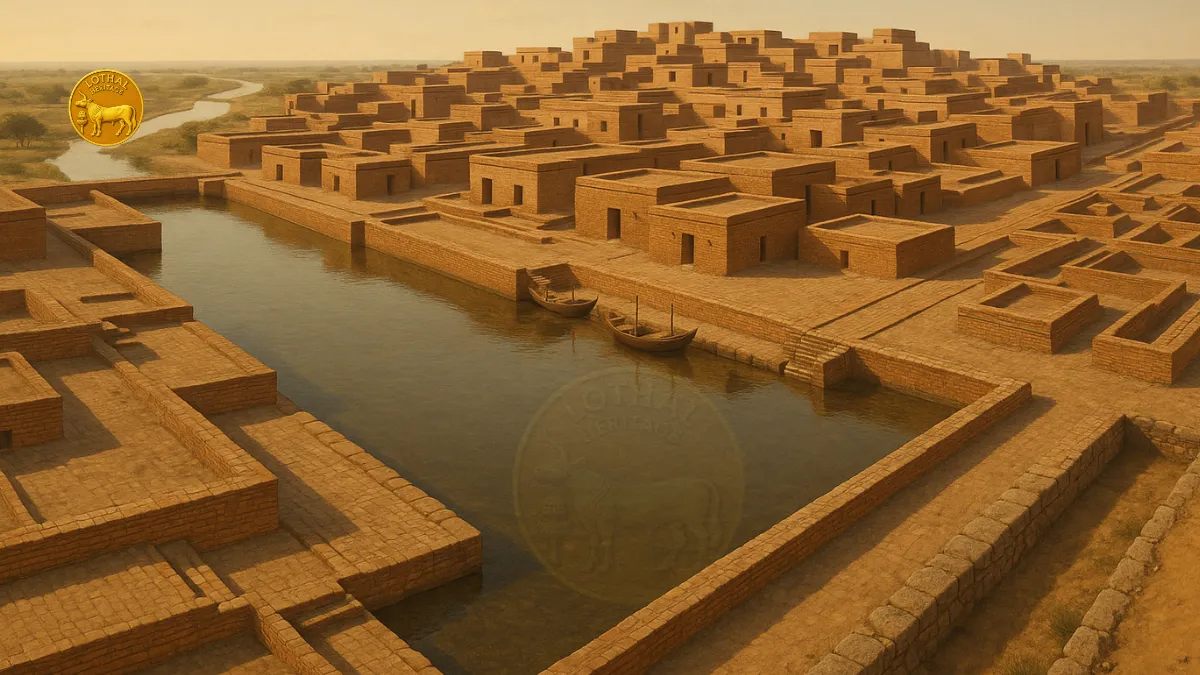
Perhaps the most discussed feature of town Lothal is its dockyard, often described as one of the earliest known examples of maritime infrastructure in the ancient world. Measuring approximately 220 meters in length and 37 meters in width, the dockyard was constructed with kiln-fired bricks and featured a sophisticated system for regulating water levels.
Scholars believe the dockyard was connected to a river channel that linked it to the sea. A spillway allowed excess water to drain, preventing damage to docked vessels. Such features demonstrate a clear understanding of hydraulic engineering and tidal mechanics.
The dockyard was likely used for berthing ships, loading and unloading cargo, and perhaps even minor repairs. Its presence confirms that Lothal was not a peripheral settlement but an active participant in regional and international trade networks.
Trade Networks and Economic Life
The economy of Lothal was deeply intertwined with trade. Archaeological evidence points to the export of beads, shell ornaments, pottery, and possibly textiles. Raw materials such as semi-precious stones were imported from distant regions, including present-day Rajasthan and possibly Afghanistan.
Seals found at the site bear symbols consistent with those discovered across the Indus Valley, suggesting a shared system of identification and regulation. Standardized weights made of stone further support the existence of controlled commercial transactions.
Trade routes likely extended across the Arabian Sea to Mesopotamia, where references to a land called “Meluhha” appear in ancient texts. While direct identification remains debated, material similarities lend credibility to the idea that Lothal played a role in this interregional exchange.
Craft Production and Industrial Activity
Beyond trade, Lothal was a center of craft production. Bead-making workshops have been extensively documented, revealing techniques that required precision and skill. Artisans drilled tiny holes into hard stones like carnelian, producing ornaments that were both decorative and symbolic.
Shell working was another prominent industry. The town’s proximity to the coast made shells readily available, and finished products were likely traded inland. Copper tools, pottery kilns, and evidence of metallurgy point to a diversified industrial base.
These activities were not randomly distributed. Workshops were concentrated in designated areas, reflecting urban zoning and a desire to manage noise, waste, and labor effectively.
Social Structure and Daily Life
Understanding daily life in Lothal requires piecing together clues from architecture, artifacts, and burial practices. The variation in house sizes suggests social differentiation, though the absence of palatial structures points to a relatively egalitarian society compared to later civilizations.
Household items such as pottery, tools, and ornaments indicate a life that balanced work with domestic comfort. Children likely played in courtyards, while adults engaged in craft production, trade preparation, or agricultural tasks.
Public spaces and standardized infrastructure imply collective responsibility and shared norms. Rather than emphasizing monumental architecture, the society of Lothal appears to have prioritized functionality and communal well-being.
Religion, Beliefs, and Symbolism
Direct evidence of religious practices in Lothal is limited, as no large temples or obvious cult structures have been identified. However, seals, figurines, and symbolic motifs provide indirect insights.
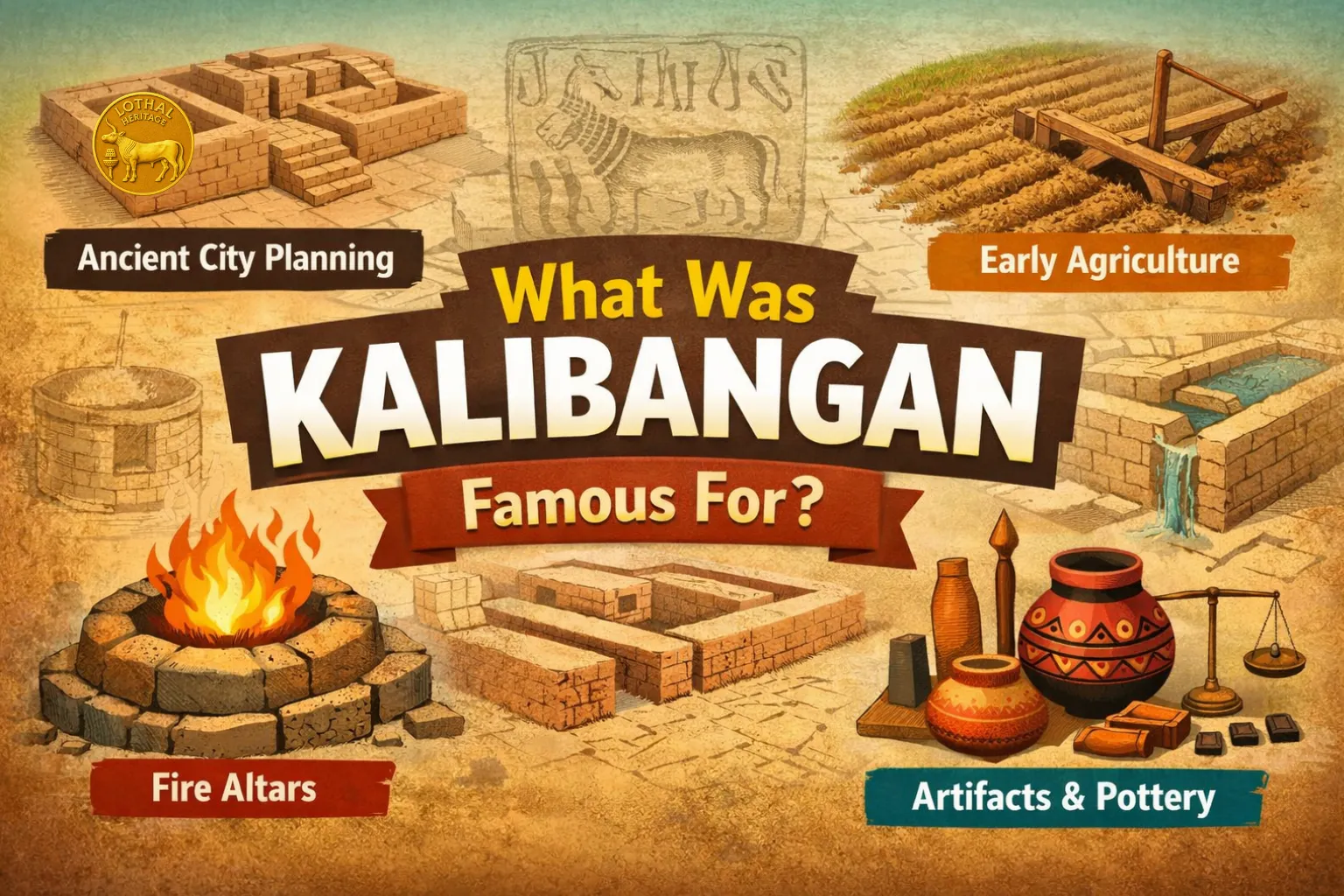
Some seals depict animals and abstract symbols that may have held ritual significance. Fire altars discovered at the site suggest ceremonial practices possibly linked to domestic or communal rituals.
The absence of grand religious monuments may indicate a belief system integrated into daily life rather than centralized worship. This subtlety aligns with broader patterns observed across the Indus Valley Civilization.
Administration and Governance
The organization evident in Lothal’s planning implies an administrative system capable of enforcing standards and coordinating activities. Uniform brick sizes, consistent street layouts, and regulated weights point to centralized oversight.
Seals may have functioned as markers of authority or ownership, while warehouses suggest controlled storage and distribution of goods. Governance in Lothal likely involved councils or officials rather than a single ruler, though definitive conclusions remain elusive.
What is clear is that the town operated under a shared framework of rules and expectations, enabling complex economic and social interactions.
Decline and Abandonment
Like many Indus Valley sites, Lothal experienced gradual decline rather than sudden collapse. Environmental changes, including shifting river courses and increased flooding, disrupted trade routes and agricultural productivity.
Archaeological layers show signs of rebuilding after floods, followed by periods of reduced activity. Eventually, the settlement was abandoned, its inhabitants moving to more stable locations.
The decline of Lothal reflects broader regional transformations rather than isolated failure, highlighting the vulnerability of even advanced societies to environmental change.
Table: Key Features of Lothal at a Glance
| Aspect | Description |
|---|---|
| Civilization | Indus Valley Civilization |
| Approximate Period | 2400–1900 BCE |
| Location | Bhal region, Gujarat, India |
| Primary Function | Port town and trade center |
| Notable Structure | Brick-built dockyard |
| Economic Activities | Trade, bead-making, shell work |
| Urban Planning | Grid layout, drainage systems |
| Key Discovery | Evidence of maritime engineering |
Lothal in Modern Scholarship
Modern archaeological research continues to refine understanding of Lothal. Advances in sediment analysis, remote sensing, and comparative studies have strengthened interpretations of its dockyard and trade networks.
Debates persist regarding the exact nature of its maritime connections, yet consensus acknowledges its importance within the Indus world. Lothal is now studied not just as a site but as a case study in early urban adaptation to coastal environments.
Its inclusion in educational curricula and museum exhibits has further cemented its place in public history.
Read also: Lothal: The Ancient Port City That Redefined Early Maritime Trade
Preservation and Public Engagement
The site of Lothal is protected by the Archaeological Survey of India and has been developed as a heritage destination. A museum near the ruins displays artifacts, models, and explanatory panels that help visitors visualize the ancient town.
Efforts are ongoing to balance preservation with accessibility. Environmental factors, including erosion and groundwater changes, pose challenges, making conservation a continuous process rather than a one-time effort.
Public engagement plays a crucial role in sustaining interest and support for such sites, ensuring that Lothal remains part of the cultural conversation.
Read also: Lothal: Home to the World’s Earliest Known Dock and a Living Testament to India’s Maritime Legacy
Comparative Perspective: Lothal and Other Harappan Cities
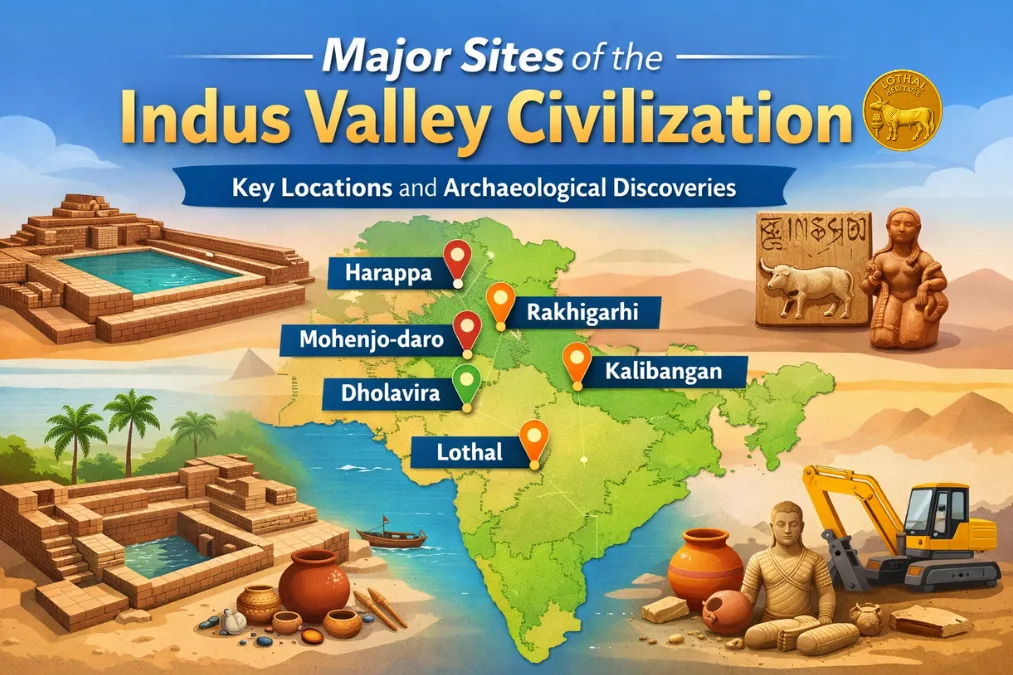
Compared to inland cities like Mohenjo-daro, town Lothal exhibits a stronger emphasis on trade infrastructure rather than monumental architecture. While drainage and urban planning principles are shared, the dockyard sets Lothal apart.
This diversity within the Indus Valley Civilization underscores its adaptability. Rather than a monolithic culture, it comprised interconnected towns, each specializing according to geographic and economic context.
Such comparisons enrich understanding of how ancient civilizations balanced unity with regional variation.
Read also: Lothal Meaning: Understanding the Name, History, and Cultural Legacy of an Ancient Harappan Port
Lessons from Lothal for the Present
Lothal offers lessons that extend beyond archaeology. Its planners recognized the importance of environmental integration, infrastructure resilience, and economic diversification. These principles remain relevant in modern urban planning, especially in coastal regions facing climate challenges.
The town’s rise and decline remind us that sustainability depends on adaptability. Even the most sophisticated systems must evolve in response to changing conditions.
By studying Lothal, modern societies gain perspective on long-term human interaction with environment, technology, and trade.
Cultural Memory and Identity
In contemporary India, Lothal occupies a unique place in cultural memory. It represents an indigenous tradition of urbanism and maritime activity that predates many classical civilizations.
This recognition contributes to a broader appreciation of South Asia’s ancient heritage, challenging outdated narratives that underestimated the region’s historical complexity.
As research continues, Lothal’s story grows richer, connecting past achievements with present identity.
Conclusion: The Enduring Significance of Town Lothal
Town Lothal is more than an archaeological site; it is a testament to human ingenuity, organization, and ambition in the ancient world. From its carefully planned streets to its pioneering dockyard, the town reflects a society that understood both land and sea.
Though abandoned thousands of years ago, its legacy endures through ongoing research, preservation, and public interest. By examining Lothal in detail, we gain not only knowledge of the past but also insight into enduring patterns of human civilization.
In tracing the life, landscape, and legacy of Lothal, we uncover a chapter of history that continues to inform and inspire, reminding us that the foundations of global connectivity were laid long before the modern age.