harappan script: A groundbreaking study by the Indian Institute of Technology–Gandhinagar (IITGn) has revived global interest in Lothal-one of the most important archaeological sites of the Harappan Civilization. Using cutting-edge geospatial technologies, researchers have uncovered strong evidence indicating that Lothal’s massive trapezoidal basin was indeed a functional dockyard. This finding not only reinforces the maritime capabilities of the Harappans but also provides fresh context for administrative practices that may relate to the mysterious harappan script, which remains undeciphered even today.
Lothal: A Southern Harappan Trade Powerhouse
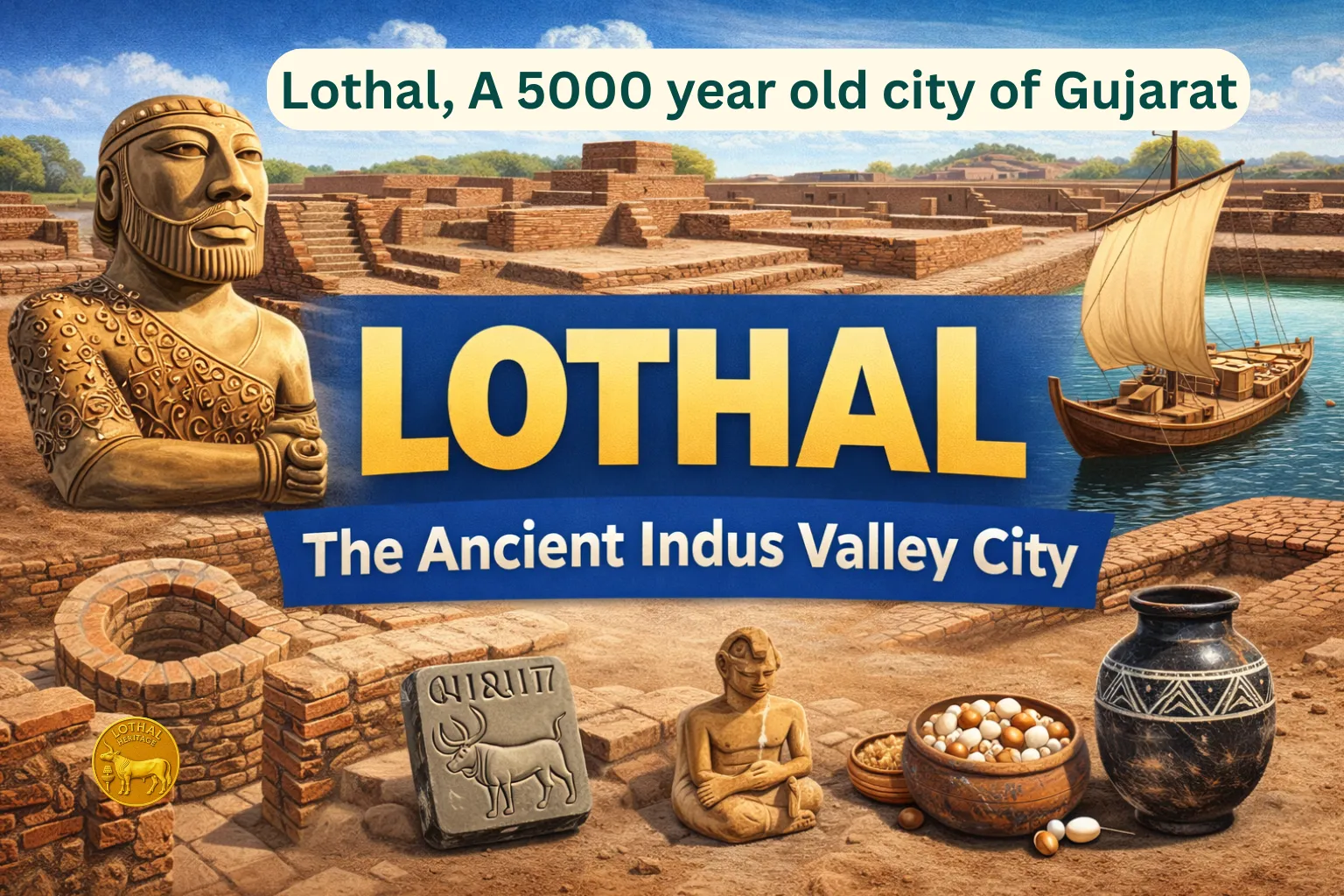
Located approximately 30 km inland from the Gulf of Khambhat in Gujarat, Lothal has long been celebrated for its sophisticated urban design, brick architecture, bead-making industry, and vast commercial networks. As one of the southernmost settlements of the Indus Valley Civilization, Lothal was uniquely positioned to link inland resource hubs with coastal trading ports.
Why Lothal Was a Strategic Harappan Centre
- Abundance of natural resources like carnelian, shells, copper, and steatite
- Direct access to inland trade routes
- Proximity to coastal waters enabling maritime commerce
- Presence of industrial workshops producing beads, seals, and ornaments
These industries required meticulous administrative systems, potentially contributing to the evolution and use of the harappan script across seals and trade tokens.
The Long Debate: Dockyard or Reservoir?
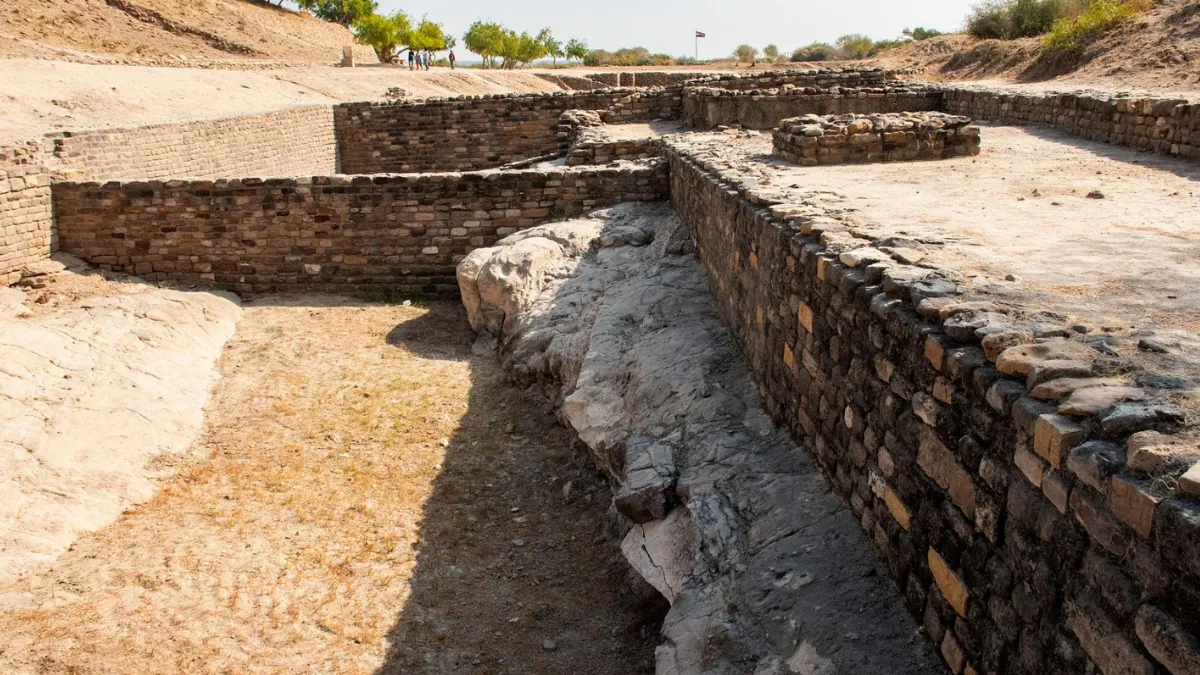
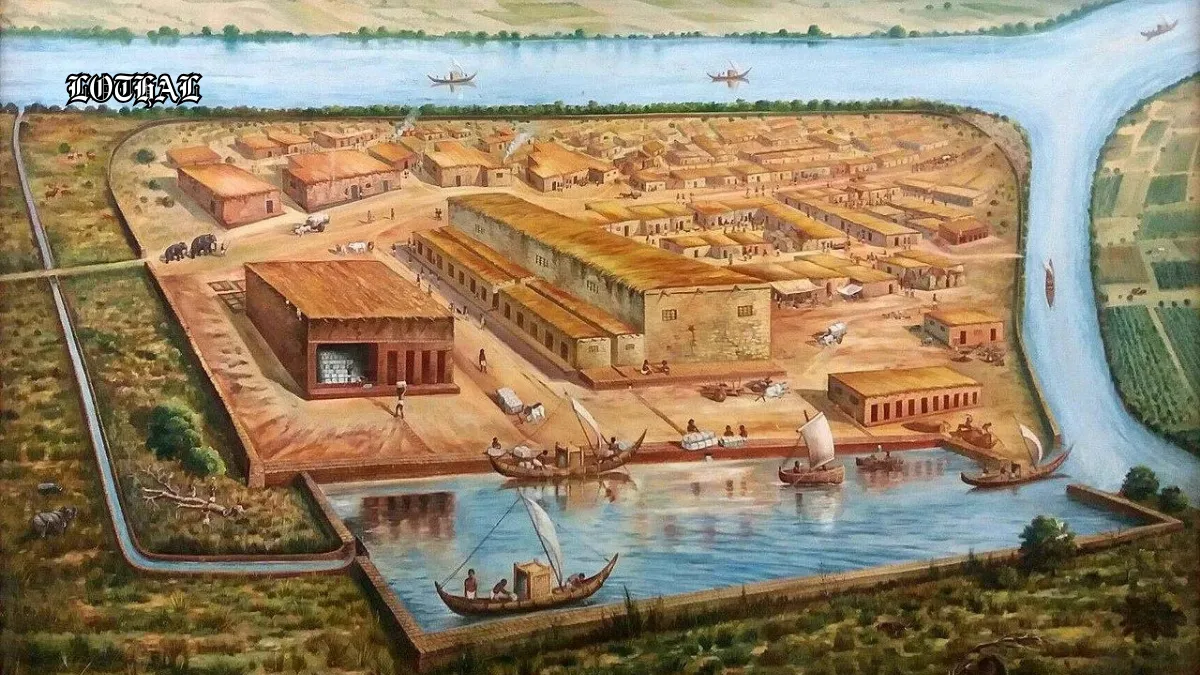
The heart of the debate lies in the huge brick-lined basin at Lothal measuring around:
- 222 metres long
- 37 metres wide
- 4 metres deep
Supporters of the Dockyard Theory (like S.R. Rao) cite:
- Inlet and outlet channels
- A warehouse adjoining the basin
- Maritime trade evidence from Mesopotamia and the Persian Gulf
Critics, however, argue:
- Basin could have been a reservoir
- Saurashtra coastline navigation might have been difficult
- No clear hinterland was identified previously
This controversy has persisted for decades-until the latest IITGn research offered data-driven clarity.
New IITGn Research Offers Breakthrough Evidence
Advanced Technologies Used in the Study
Researchers employed:
- Multi-sensor satellite data
- High-resolution Digital Elevation Models
- Cloud computing analytics
- Palaeochannel mapping
- Geomorphological reconstruction
This multidisciplinary approach enabled scientists to re-imagine the ancient landscape with remarkable accuracy.
Key Finding: Ancient Sabarmati River Flowed Next to Lothal
One of the most significant discoveries is that the ancient Sabarmati River, which today is situated 20 km east of Lothal, once flowed directly beside the settlement.
Prof. V. N. Prabhakar explains:
“Satellite images have unveiled old channels of the River Sabarmati, suggesting Lothal’s strategic positioning on a major river route connecting Ahmedabad’s resource-rich areas with the Little Rann of Kachchh.”
This river connection strengthens the argument that the basin functioned as a dockyard, enabling both riverine and maritime movement of goods.
Implications for Harappan Trade and Administration
Why the Dockyard Matters
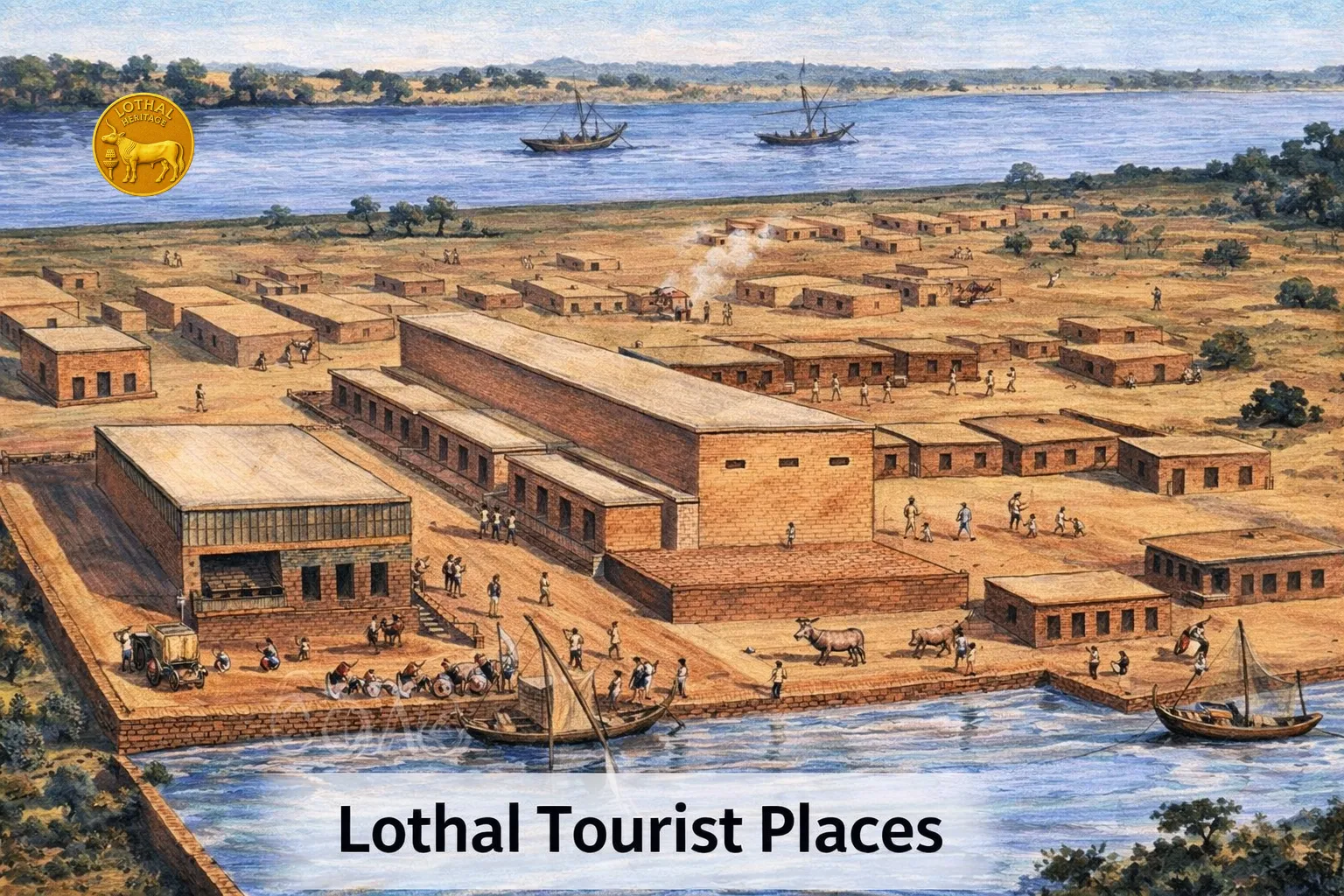
If the basin was a dockyard, then Lothal becomes one of the world’s earliest known port cities, predating many ancient maritime structures globally.
This would imply:
- Large-scale trade with Mesopotamia, Elam, and the Gulf region
- Sophisticated water management engineering
- Organized shipment storage and cargo handling
- Administrative record-keeping, possibly involving the harappan script
Harappan Script: How Lothal Strengthens the Puzzle
Although the harappan script remains undeciphered, seals and inscriptions found at Lothal provide clues about how it may have been used.
Connections between Lothal and the harappan script:
- Numerous seals discovered at the site
- Evidence of accounting for imports/exports
- Use of etched symbols for ownership, trade marks, and identity
- Administrative control over warehouses
The presence of a port makes it even more likely that the harappan script was essential to documenting trade activities.
Late Holocene River Migration Changes Trade Routes
The IITGn study highlights that the Sabarmati River underwent major shifts in its lower course during the late Holocene.
This affected:
- Settlement patterns
- Access routes
- Viability of maritime commerce
Despite these shifts, Lothal remained connected to over 140 palaeochannels, indicating a vast and dynamic water network.
Also read: Where Is Lothal? Inside India’s 4,500-Year-Old Port City That Rewrote Maritime History
Artifacts Strengthening Lothal’s Global Links
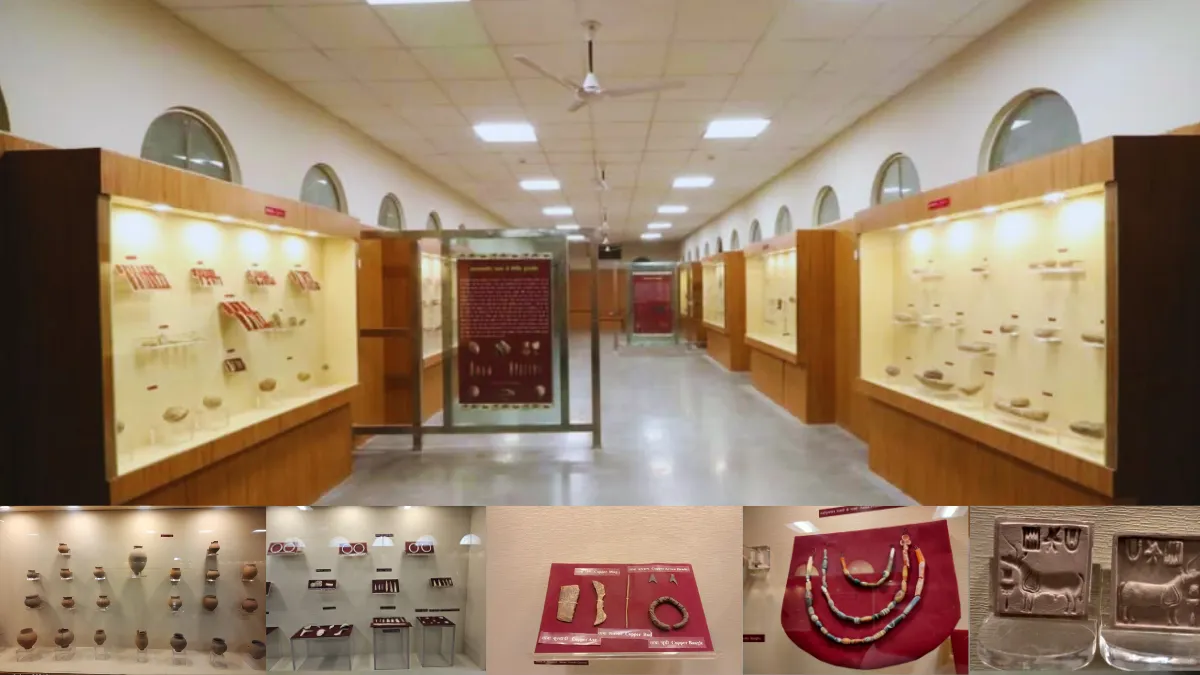
Excavations at Lothal have yielded:
- Carnelian beads
- Shell bangles
- Harappan seals
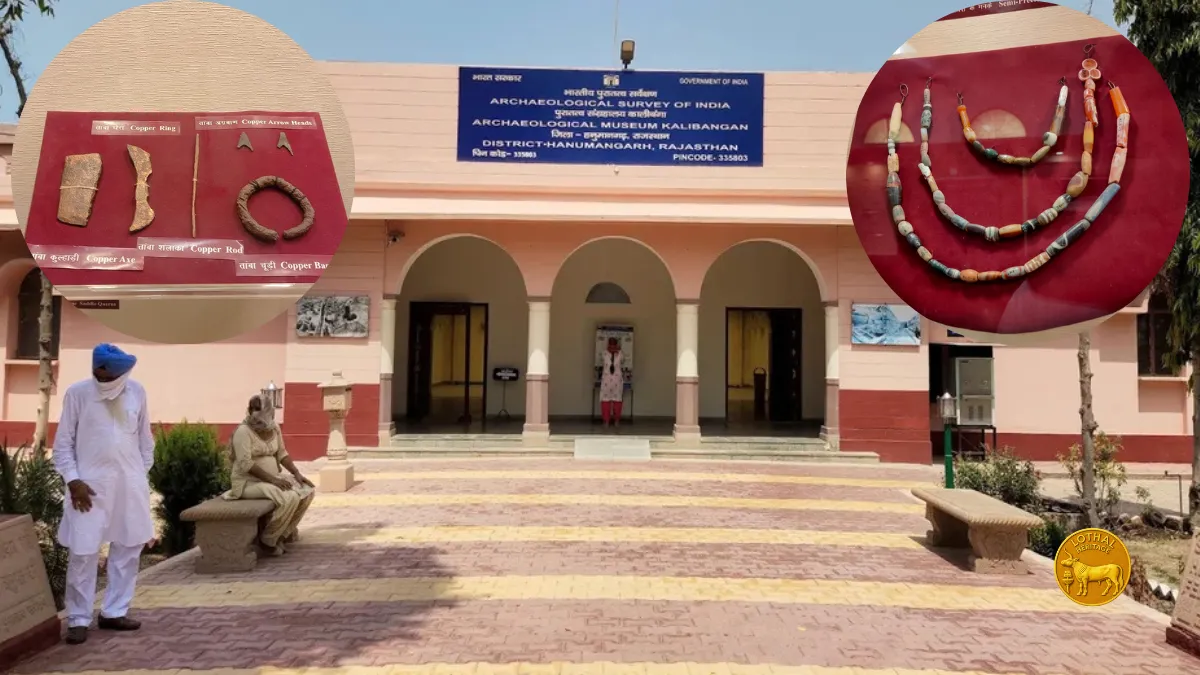
- Copper tools
- Pottery with international parallels
These items have been found as far as:
- Mesopotamia
- Elam
- Bahrain
- Oman
Such widespread distribution reaffirms Lothal’s status as a global trading hub of its time.
Also read: What Is Lothal: Exploring One of the World’s Earliest Urban Civilisations
Conclusion: A Major Step in Understanding Harappan Maritime Genius
While scholarly debate may continue, the IITGn study significantly strengthens the case that Lothal was an operational dockyard connecting the Harappan world with distant civilizations. It also deepens our understanding of the harappan script, which likely served as an administrative tool for managing complex trade systems.
Lothal stands today not just as an archaeological site but as a testament to a civilization that mastered engineering, urban design, and global commerce thousands of years before modern infrastructure emerged.
FAQs
What is the importance of Lothal in the Harappan Civilization?
Lothal was a major industrial and maritime centre that connected inland resource regions with international trade networks.
Was the harappan script used at Lothal?
Yes. Many seals and markings found at Lothal carry the harappan script, suggesting its use in trade and administration.
Why is the Lothal dockyard significant?
It may be one of the oldest dockyards in human history, showcasing the advanced engineering of the Harappans.
Is the harappan script deciphered?
No, the harappan script remains undeciphered, though its presence at trade hubs like Lothal suggests administrative importance.