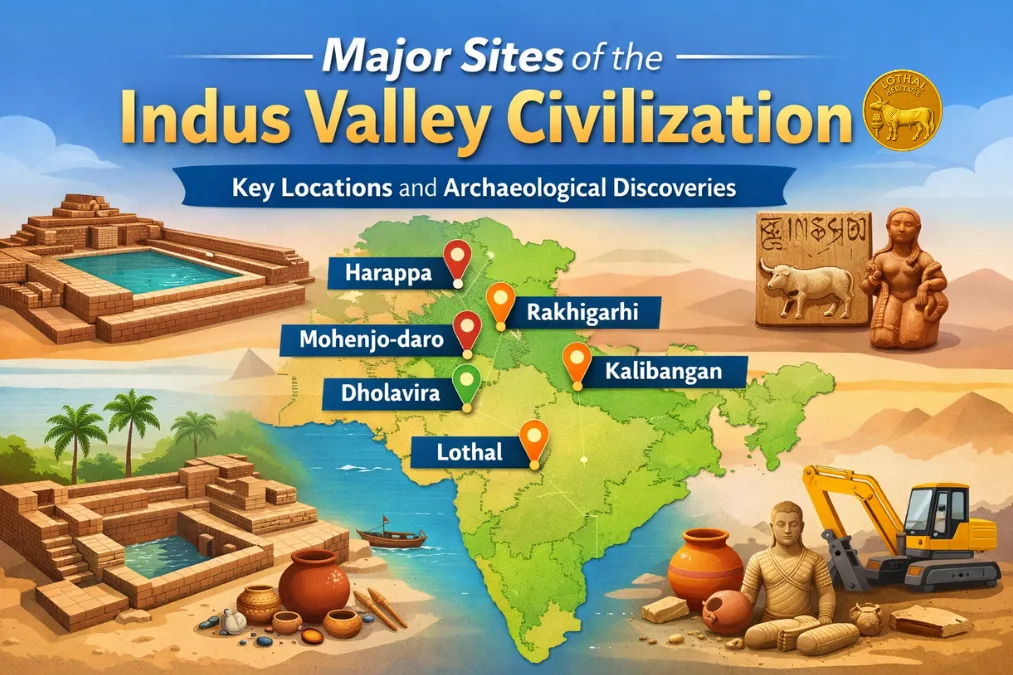
Kalibangan, one of the most significant archaeological sites of the Indus Valley Civilization, stands as a silent witness to the ingenuity, resilience, and cultural depth of early human societies in the Indian subcontinent. Located on the banks of the now-dry Ghaggar River in Rajasthan, India, Kalibangan has transformed modern understanding of Pre-Harappan and Harappan cultures through its remarkable discoveries. From the world’s earliest known ploughed agricultural field to ritual fire altars and advanced town planning, Kalibangan occupies a unique position in global archaeological history.
This ancient settlement not only sheds light on early urbanisation but also reveals how humans adapted to their environment, organised society, practiced agriculture, and developed belief systems thousands of years ago. Today, Kalibangan is recognised as one of the most important provincial capitals of the Indus Valley Civilization and a cornerstone for studying South Asia’s prehistoric past.
Kalibangan: Meaning, Name, and Cultural Identity
The name Kalibangan originates from two Hindi words-Kali, meaning black, and Bangan, meaning bangle. The site earned this name because of the large number of broken black terracotta bangles discovered during excavations. These bangles were scattered across the surface long before systematic archaeological work began, drawing early attention to the area’s ancient origins.
The name itself symbolises the everyday life of Kalibangan’s inhabitants, offering a glimpse into their craftsmanship, domestic habits, and aesthetic sensibilities. Unlike many ancient sites named after rulers or dynasties, Kalibangan reflects a connection to ordinary people and their material culture.
Geographic Location and Environmental Context
Kalibangan is situated in the Hanumangarh district of Rajasthan, approximately 310 kilometres northwest of Delhi, along the left bank of the Ghaggar River. Although the river is dry today, geological and archaeological evidence suggests that it was once a perennial water source, supporting large settlements.
The Ghaggar River is often associated with the ancient Saraswati River mentioned in early Indian texts, though this remains a subject of scholarly debate. Regardless of its identification, the river played a crucial role in sustaining agriculture, trade, and daily life at Kalibangan.
The region’s semi-arid environment makes Kalibangan’s success even more remarkable, highlighting the advanced agricultural and water-management practices developed by its inhabitants.
Discovery and Archaeological Exploration
The prehistoric significance of Kalibangan first came to light in the early 20th century. Luigi Pio Tessitori, an Italian Indologist working in Rajasthan, identified the site during his surveys between 1917 and 1919. However, its true importance was recognised later.
Former Archaeological Survey of India (ASI) Director General Amalananda Ghosh was the first to formally identify Kalibangan as a Harappan site. This recognition paved the way for systematic excavations.
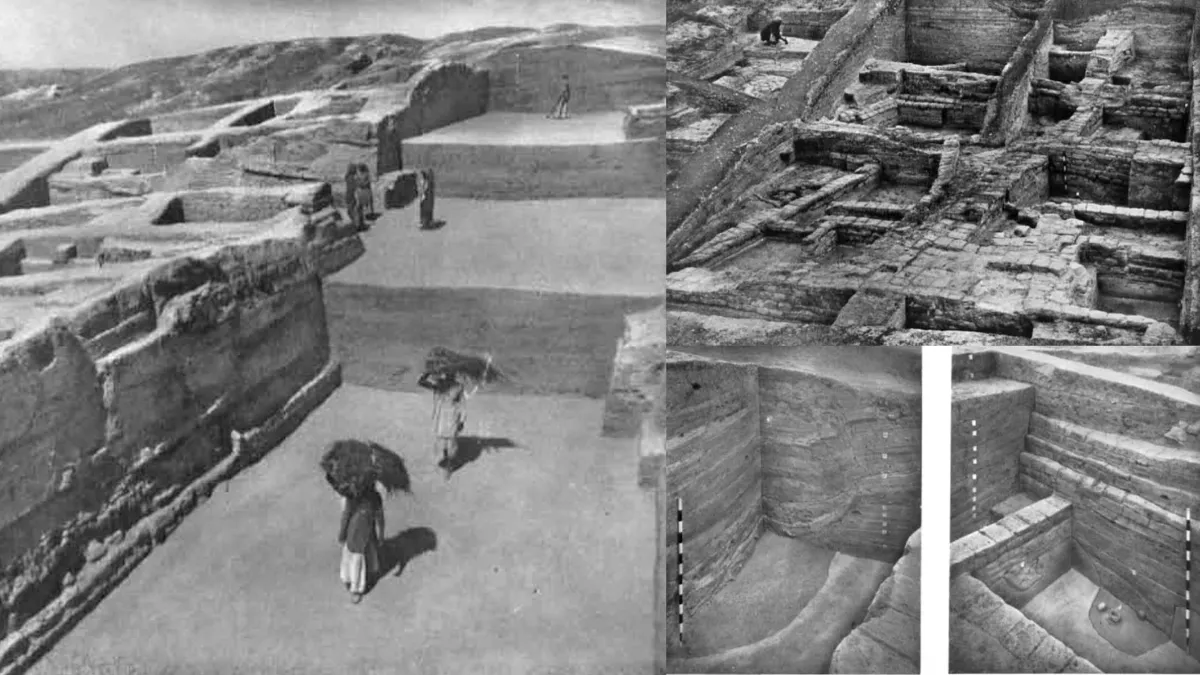
Between 1960 and 1969, extensive excavations were conducted under the supervision of B. B. Lal, then Director General of ASI. The fieldwork was carried out by a team that included B. K. Thapar, M. D. Khare, K. M. Shrivastava, and S. P. Jain. Over nine years, archaeologists uncovered layers of settlement that fundamentally changed perceptions of the Indus Valley Civilization.
Structural Layout and Urban Planning
Kalibangan consists of three distinct mounds:
- A central mound, the largest and most prominent
- A western mound, smaller in size
- An eastern mound, also smaller but archaeologically rich
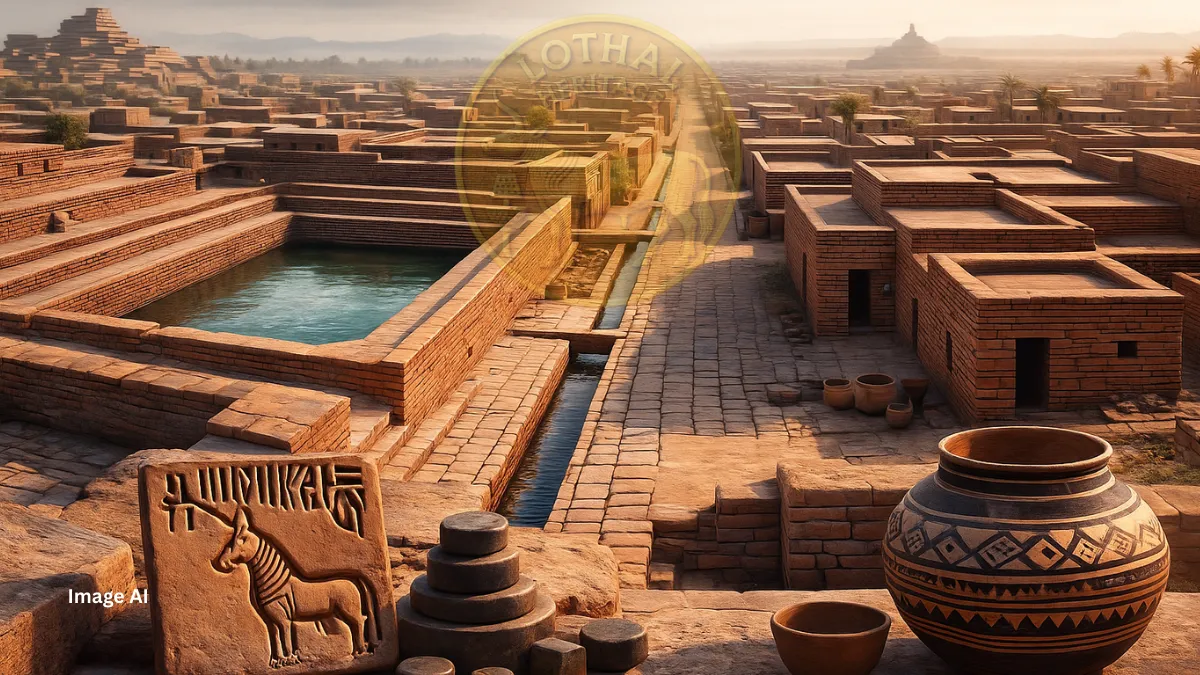
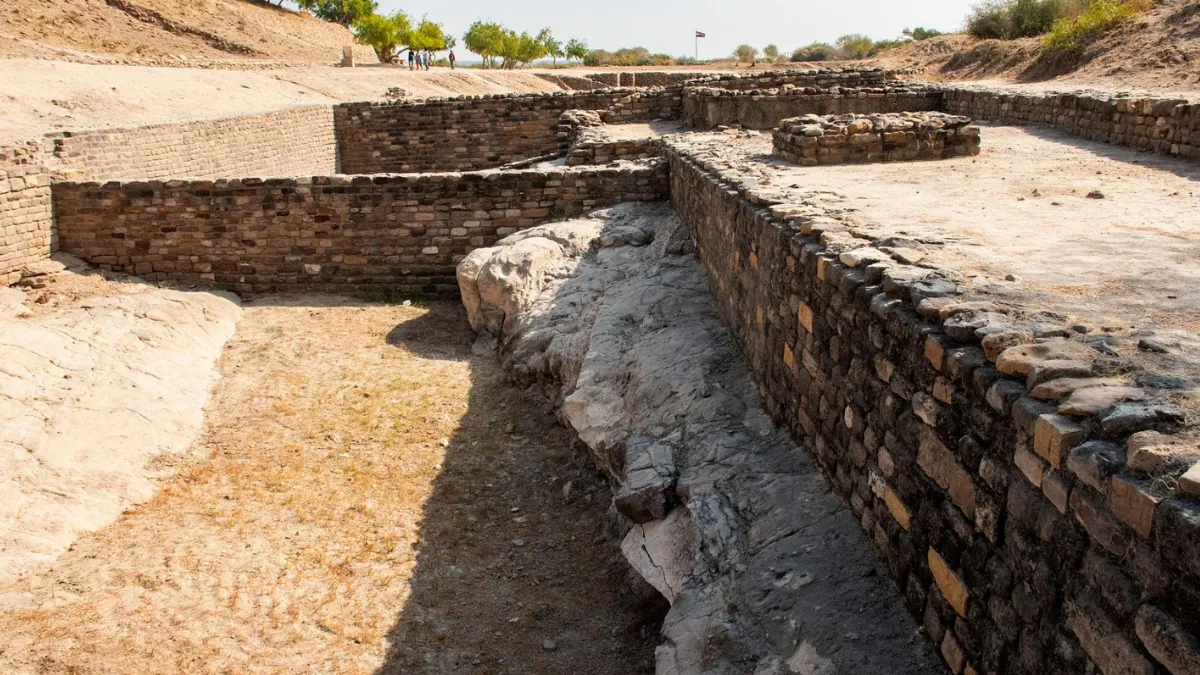
Excavations revealed a well-planned urban layout, marked by streets laid out in a grid pattern, fortified structures, and carefully designed residential and public spaces. This layout demonstrates that Kalibangan followed sophisticated principles of urban planning comparable to other major Indus Valley cities.
What sets Kalibangan apart is the discovery of a Pre-Harappan settlement beneath the Harappan layers, making it one of the earliest sites where cultural continuity and transition can be clearly traced.
After Amri, Harappa, and Kot Diji, Kalibangan became the fourth major site to provide conclusive archaeological evidence of Pre-Harappan culture.
Kalibangan I: The Pre-Harappan Phase
The earliest phase of occupation at Kalibangan, known as Kalibangan I, dates back to approximately 2450–2300 BCE. This phase represents a fortified Pre-Harappan settlement closely associated with the Soti-Siswal culture, an early cultural tradition in northwestern India.
Key Features of the Pre-Harappan Settlement
The settlement was shaped like a fortified parallelogram, surrounded by mud-brick defensive walls. Houses were typically single-storeyed, constructed with mud walls and arranged along narrow lanes.
One of the most intriguing features of this phase is the presence of underground ovens resembling modern tandoors, suggesting early cooking techniques and communal food preparation.
Cylindrical pits lined with lime plaster were also found. Archaeologists believe these pits were used for storing drinking water, demonstrating early water-management strategies.
Artifacts and Daily Life
Artifacts from this period include:
- Small blades made of chalcedony and agate
- Terracotta objects such as toy cart wheels
- Beads and bangles
- A notable copper bull, reflecting early metallurgical skill
Pottery found in this phase shares similarities with ceramics discovered at nearby Soti sites, reinforcing the cultural link between Kalibangan and the broader Soti-Siswal tradition.
Kalibangan II: The Mature Harappan Phase
The second phase, known as Kalibangan II, marks the full integration of the site into the Harappan Civilization, beginning around 2300 BCE and continuing until approximately 1750 BCE.
Division of the City
During this period, Kalibangan was divided into two main parts:
- The citadel, located on the western side
- The lower city, situated to the east
Both sections were fortified, indicating concerns for security and organised civic administration.
The Citadel
The citadel was built on massive platforms and contained residential buildings and ceremonial structures. It likely served administrative, religious, and elite residential functions.
The Lower City
The lower city was laid out in a rectangular grid, with streets intersecting at right angles. Houses here followed uniform construction standards, reflecting social organisation and civic regulation.
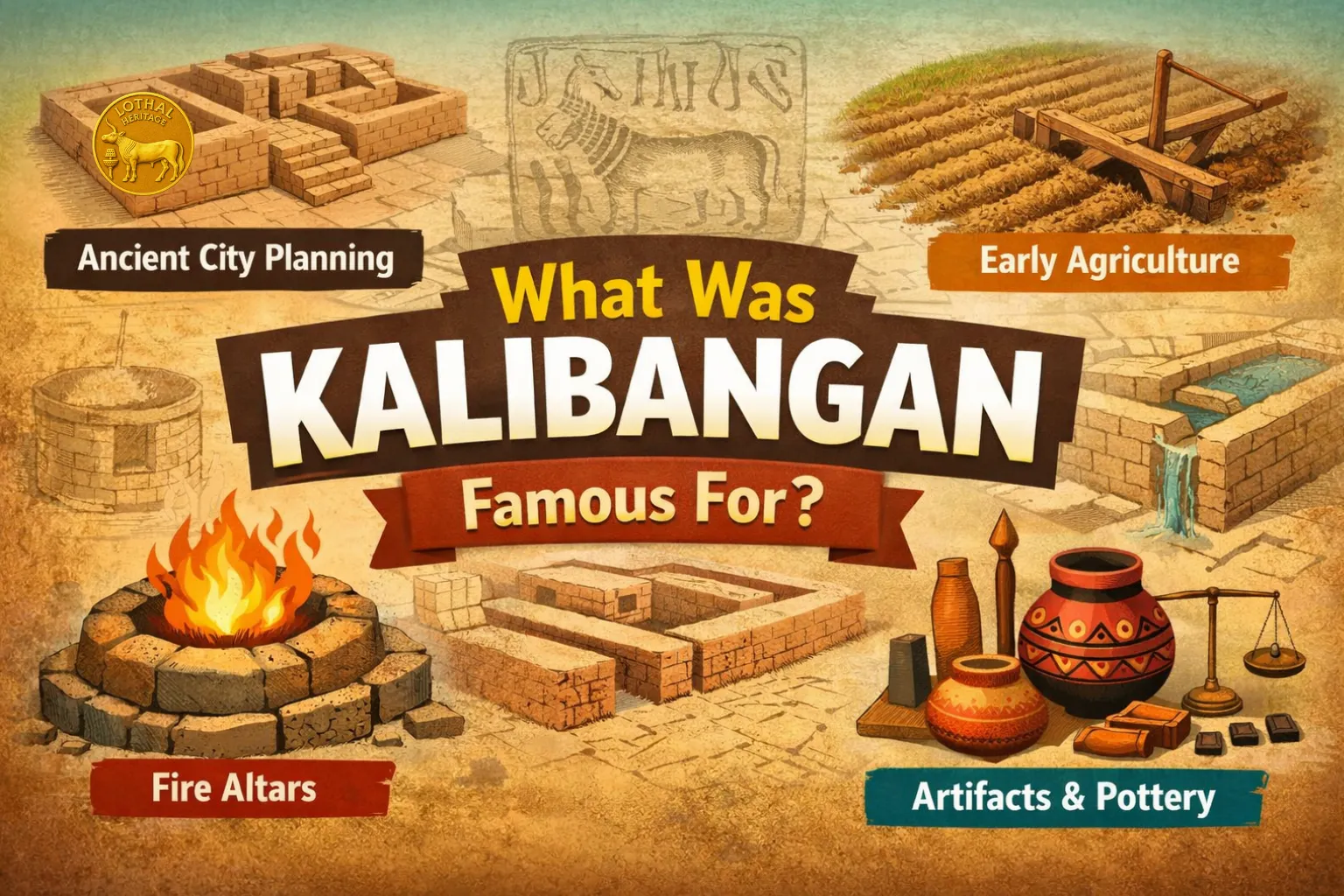
One of the most striking discoveries in the lower city is the presence of fire altars, indicating ritual practices that were central to Harappan religious life.
Archaeological Discoveries That Changed History
Kalibangan has yielded an extraordinary range of archaeological finds that provide insight into agriculture, trade, religion, medicine, and social structure.
The World’s Earliest Ploughed Field
Perhaps the most celebrated discovery at Kalibangan is the earliest archaeologically attested ploughed field in the world. The field shows furrows intersecting at right angles, indicating a sophisticated understanding of multi-cropping.
This pattern suggests that different crops were grown simultaneously, possibly seasonal combinations such as cereals and pulses. Evidence of manure and gypsum (calcium sulphate) use points to early fertilisation techniques.
The discovery firmly establishes Kalibangan as a pioneer in ancient agricultural innovation.
Irrigation and Farming Techniques
Archaeological evidence indicates that the people of Kalibangan practised one of the earliest forms of artificial irrigation. Water from the Ghaggar River was likely diverted to fields through channels, allowing agriculture to flourish in a challenging environment.
The use of cattle for ploughing further demonstrates the integration of animal husbandry into agricultural life.
Burial Practices and Social Structure
Burial practices at Kalibangan reveal a socially stratified society with distinct customs for different groups.
Types of Burials
- Extended burials: Likely used for ordinary individuals
- Urn burials: Possibly associated with lower social strata due to their compact nature
- Pot burials: Symbolic burials involving earthen pots containing precious items, reflecting beliefs in the afterlife
These varied practices suggest complex social norms and spiritual beliefs.
Evidence of Early Surgery
One of the most surprising findings at Kalibangan is evidence of trepanning, a surgical procedure involving drilling into the skull. This discovery indicates an advanced understanding of human anatomy and medical practices, far earlier than previously assumed.
Trade and External Contacts
Kalibangan was not an isolated settlement. Archaeological evidence points to extensive trade networks.
Trade Artifacts
- Mesopotamian pottery, indicating long-distance trade
- Semi-precious stones such as shell, moonga, maulla, and lapis lazuli
Since these materials were not locally available, their presence highlights Kalibangan’s role as a trading hub within the Indus Valley Civilization.
Metallurgy and Craftsmanship
Kalibangan imported copper from the Khetri mines of Rajasthan and chert from the Rohri Hills in present-day Pakistan. Artifacts include:
- A finely crafted copper bull
- Copper pins and tools
These objects reflect skilled craftsmanship and advanced metallurgical knowledge.
Terracotta Art and Daily Objects
Terracotta artifacts found at Kalibangan provide insight into daily life and artistic expression:
- Toy carts and wheels
- Human figurines and animal motifs
- A terracotta feeding cup with a cow’s head on the rim
- Bangles made of terracotta, shell, and copper
- An incomplete terracotta graduated scale
These items demonstrate both practical utility and artistic creativity.
Seals and Symbolism
One of the most intriguing finds is a cylindrical seal depicting a female figure flanked by two men wielding spears. This scene has been interpreted as symbolic of ritual conflict, mythology, or authority.
Such seals were likely used for trade, administration, or religious purposes.
Fire Altars and Religious Practices
The discovery of fire altars is one of Kalibangan’s defining features. Brick platforms arranged in rows suggest ritual use. In one location, archaeologists uncovered seven fire altars alongside a pit containing animal bones and antlers.
This evidence strongly points to animal sacrifice and fire worship, offering rare insight into Harappan religious traditions.
Pottery and Material Culture
Pottery from Kalibangan was mostly wheel-turned and made from fine clay, though it was not as highly fired as pottery from other Harappan centres. Decorative patterns and shapes indicate regional styles and cultural preferences.
Why Kalibangan Matters Today
Kalibangan holds exceptional importance for understanding the Indus Valley Civilization.
Archaeological Significance
It is one of the few sites that provides clear evidence of both Pre-Harappan and Harappan phases, demonstrating cultural continuity.
Urban Planning
The city’s layout reflects advanced planning, zoning, and civic organisation.
Agricultural Innovation
The ploughed fields and irrigation systems mark Kalibangan as a milestone in agricultural history.
Medical Knowledge
Evidence of trepanning highlights early surgical expertise.
Social Structure
Distinct residential zones and burial practices reveal a complex, hierarchical society.
Cultural Life
Artifacts illustrate trade, craftsmanship, religious rituals, and daily domestic activities.
Read also: Where Is Dholavira: Tracing the Location of an Ancient Civilization
Kalibangan in Comparative Perspective
When compared with other Indus Valley sites:
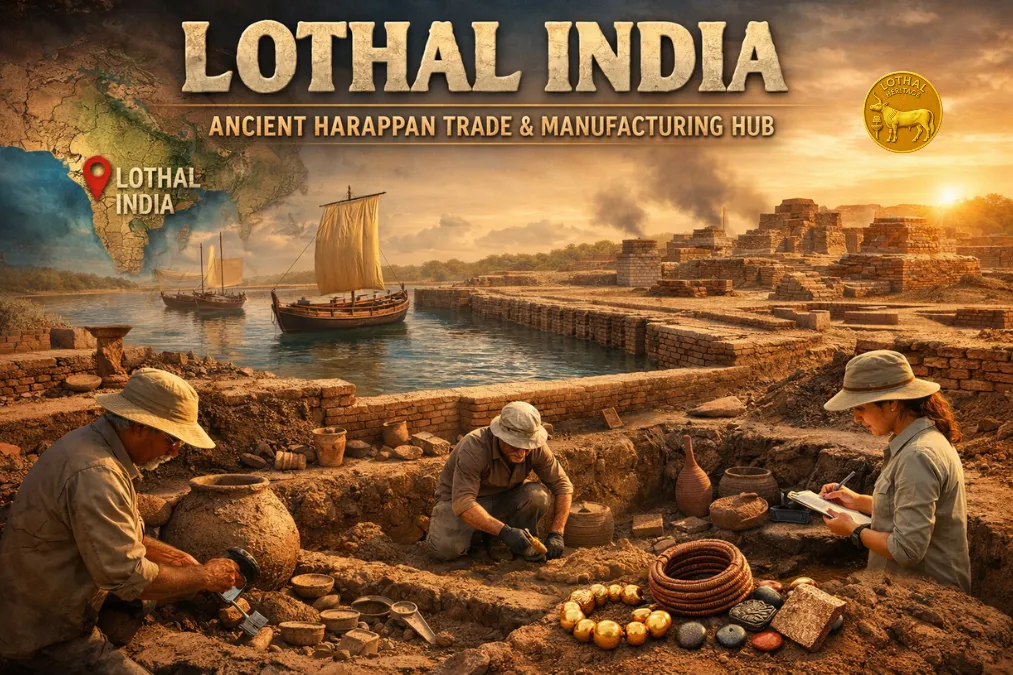
- Lothal is known for its dockyard
- Dholavira for its inscriptions and water management
- Banawali for terracotta agricultural tools
Kalibangan stands apart for its ploughed fields, fire altars, and evidence of ritual sacrifice.
Read also: Dholavira Harappan Site: The Rise, Glory, and Legacy of One of the World’s Greatest Ancient Cities
Conclusion: Kalibangan’s Enduring Legacy
Kalibangan is more than an archaeological site—it is a testament to human innovation, adaptability, and cultural richness. Its discoveries have reshaped global understanding of early urban societies and agriculture.
As research continues, Kalibangan remains a vital reference point for archaeologists, historians, and scholars worldwide. Its legacy underscores the sophistication of ancient South Asian civilizations and their lasting contribution to human history.