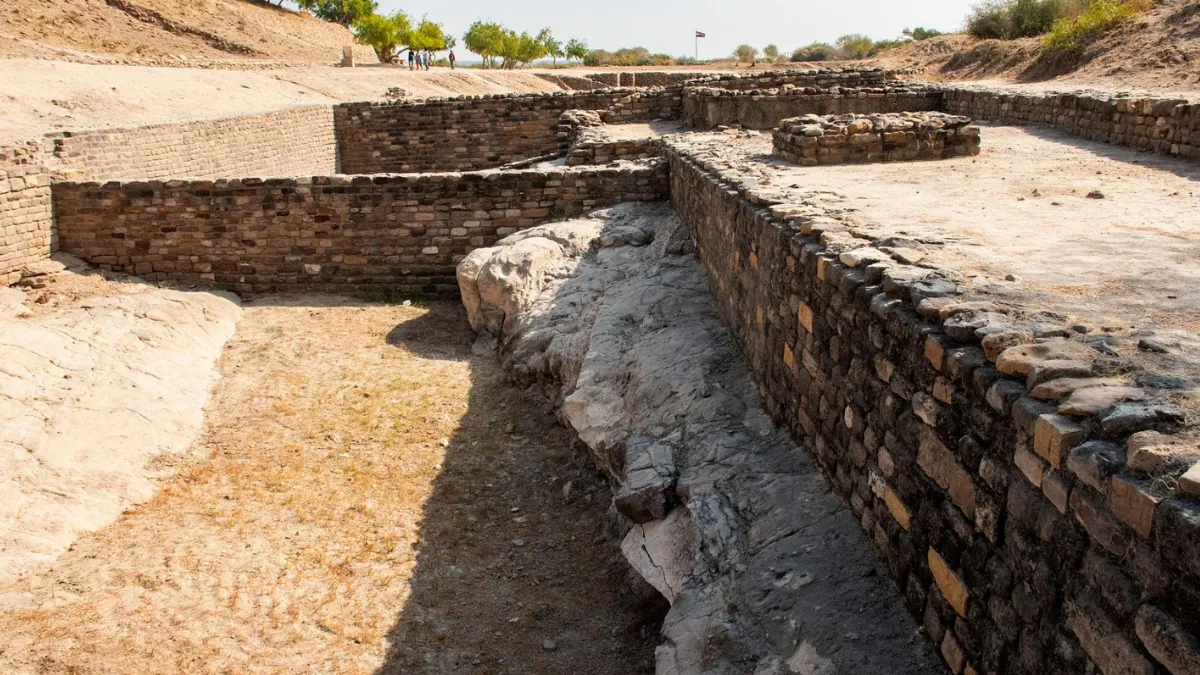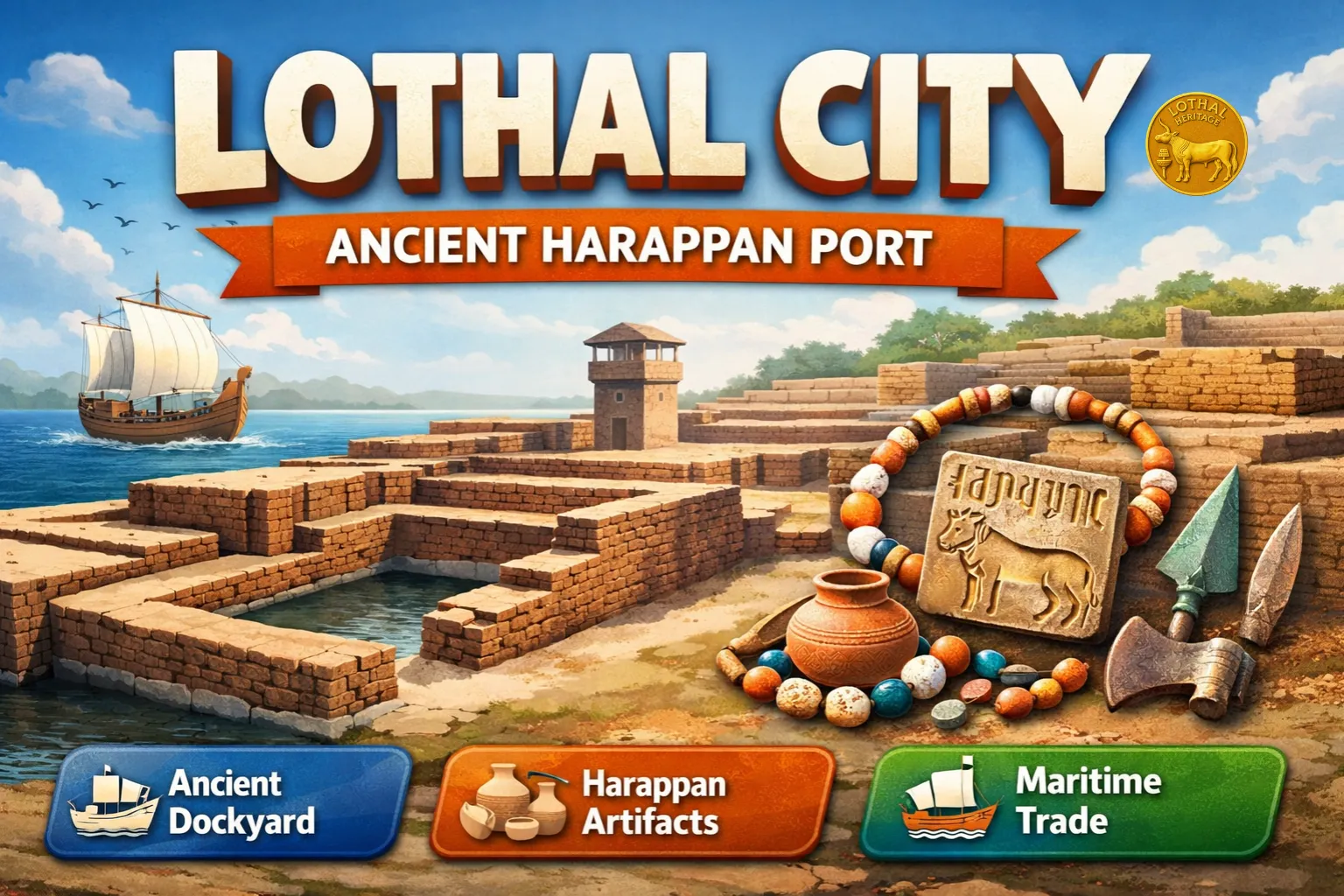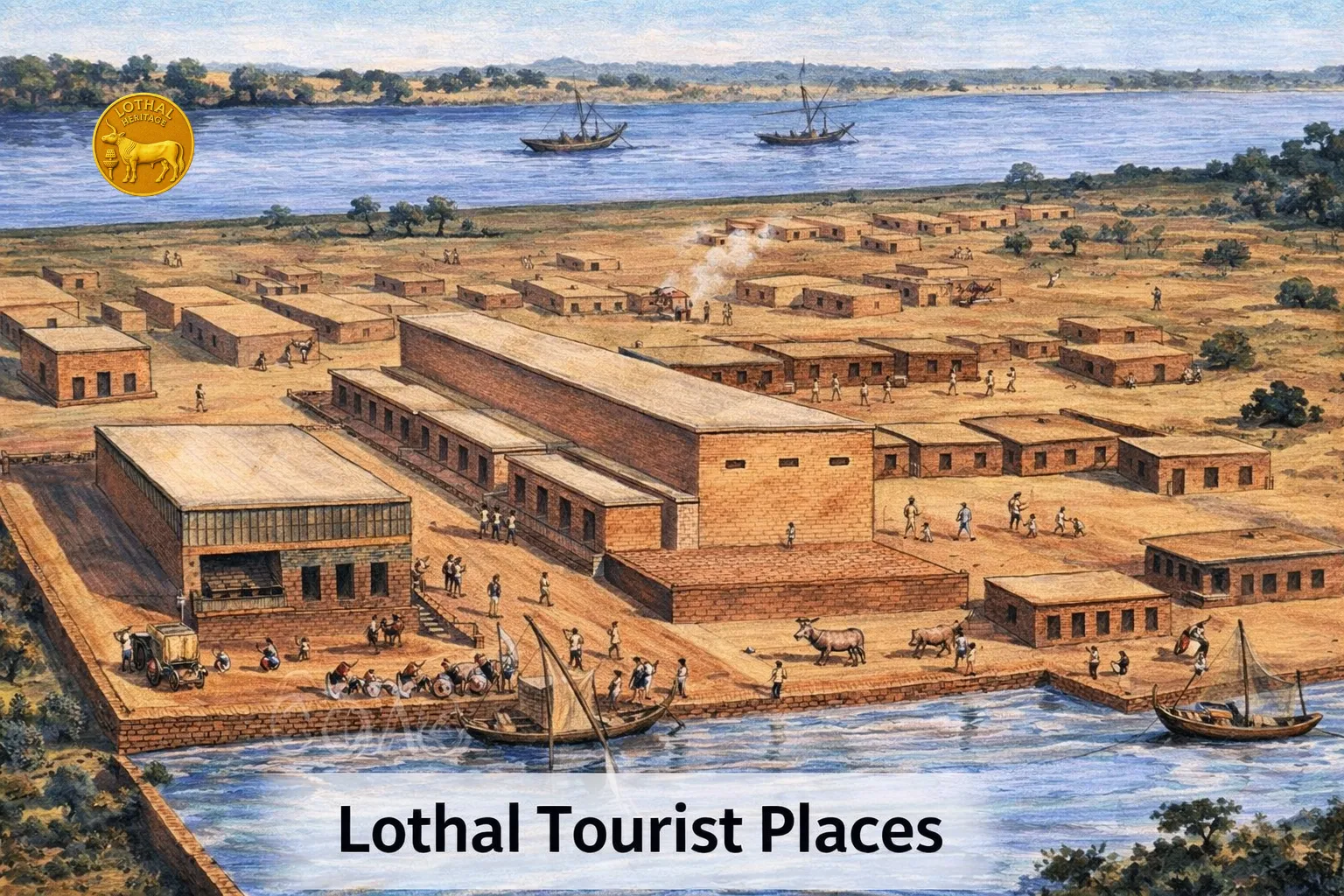
Lothal, Gujarat — One of the most remarkable archaeological sites of the Indus Valley Civilization is once again at the center of national and international attention. After a gap of more than six decades, excavation work has resumed at Lothal, the ancient Harappan port city located around 80 kilometers from Ahmedabad.
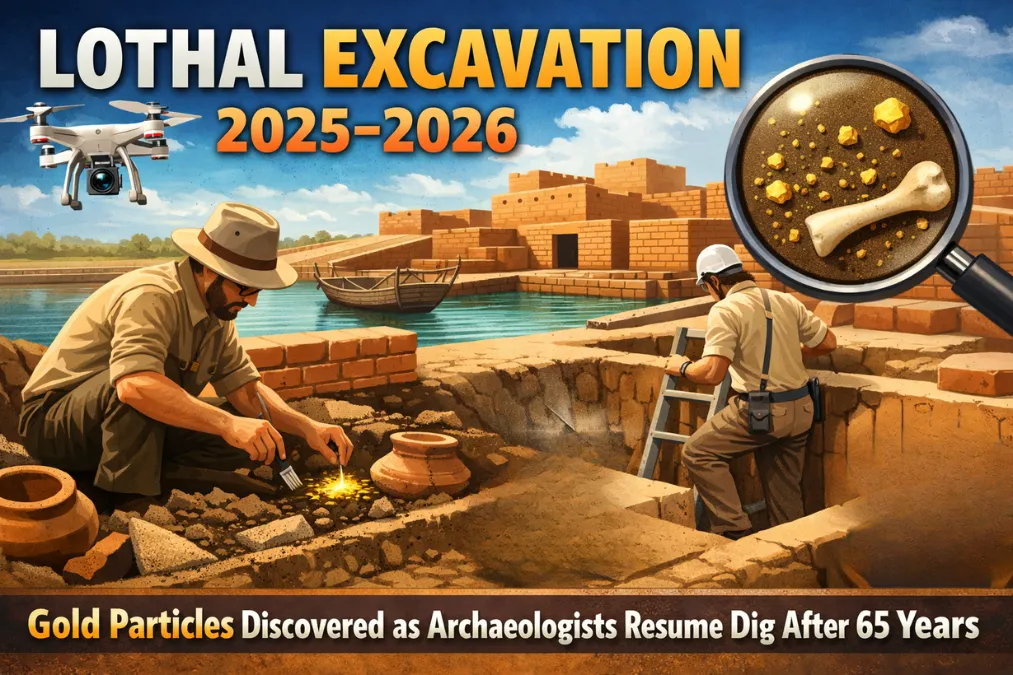
The renewed scientific exploration has already yielded significant findings — including tiny gold particles, bone fragments, seals, brick structures, marine remains, and craft tools — sparking fresh excitement in the archaeological community.
The site, famous for housing what is widely regarded as the world’s oldest known dockyard, is now being re-examined using modern technologies such as drone surveys, digital mapping, scientific sampling, and interdisciplinary research methods. Archaeologists believe that this new phase of excavation could reshape understanding of trade, settlement planning, and environmental history in the Harappan era.
Why Excavations at Lothal Have Resumed After 65 Years
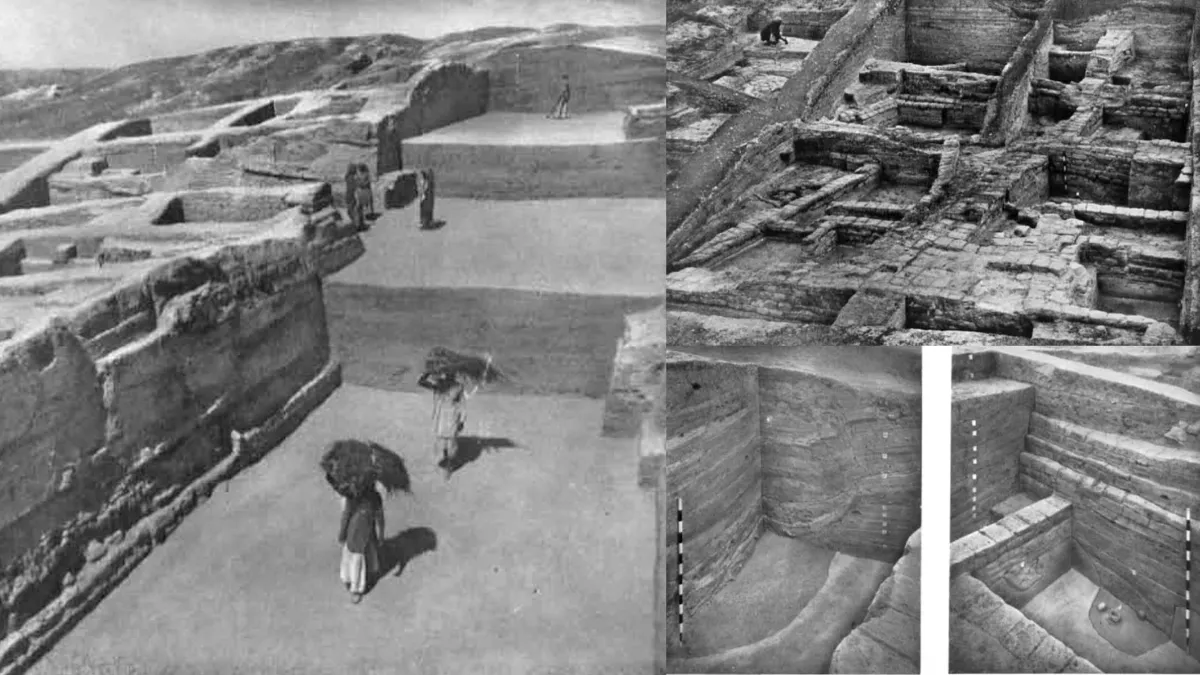
The original large-scale excavation at Lothal was conducted between 1955 and 1962 under the leadership of Dr. S. R. Rao, one of India’s most respected archaeologists. His work revealed the dockyard, warehouse structures, lower town planning, seals, and a vast number of sealings — making Lothal one of the most important Harappan discoveries in independent India.
After India gained independence in 1947, many prominent Harappan sites remained in present-day Pakistan. The Government of India directed the Archaeological Survey of India (ASI) to identify and investigate potential Harappan locations within Indian territory. It was during this effort that Lothal was formally excavated.
Now, after 65 years, the site is undergoing fresh excavation for several key reasons:
- Advancements in technology allow deeper and more precise scientific analysis.
- Earlier excavation gaps may have left unexplored areas.
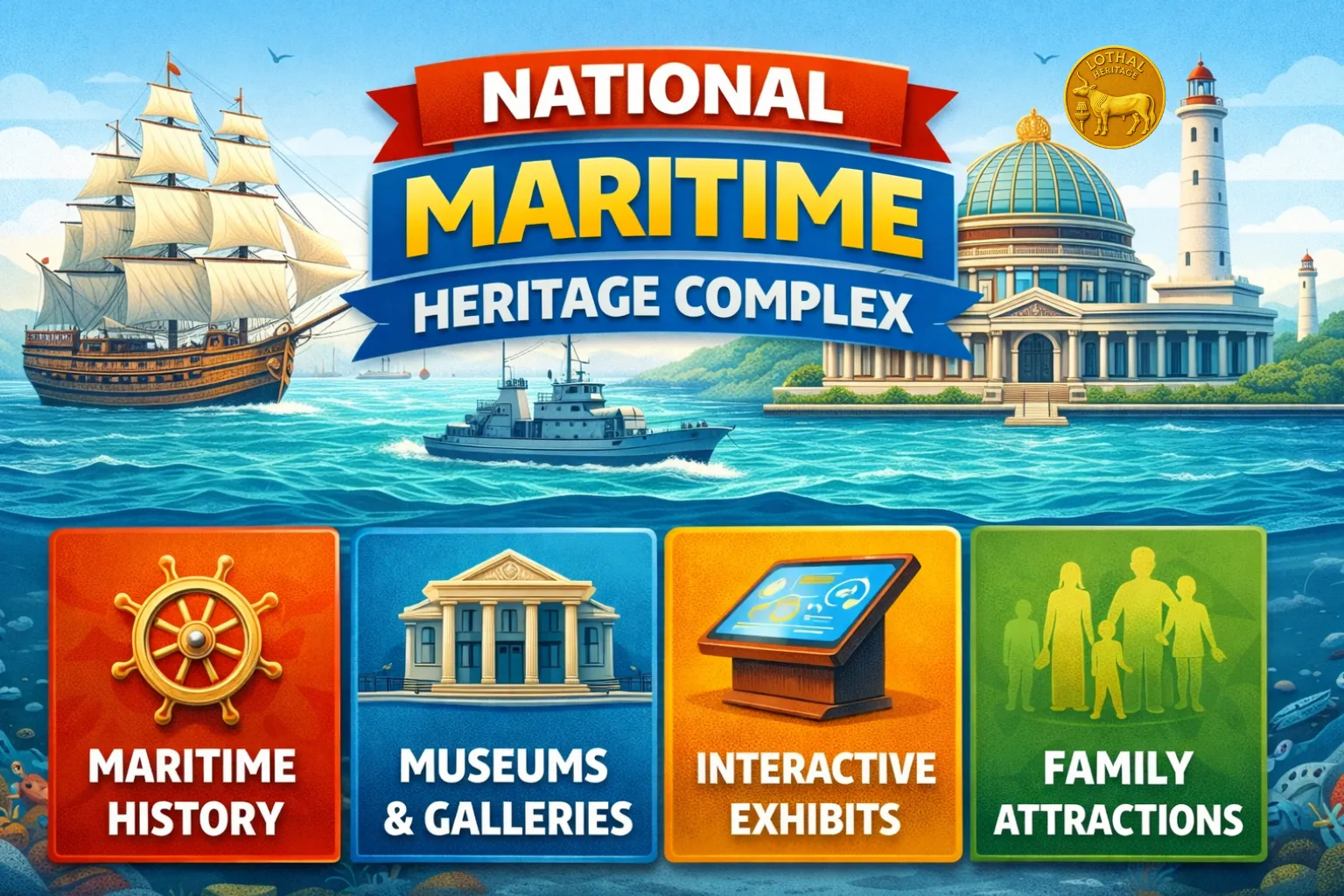
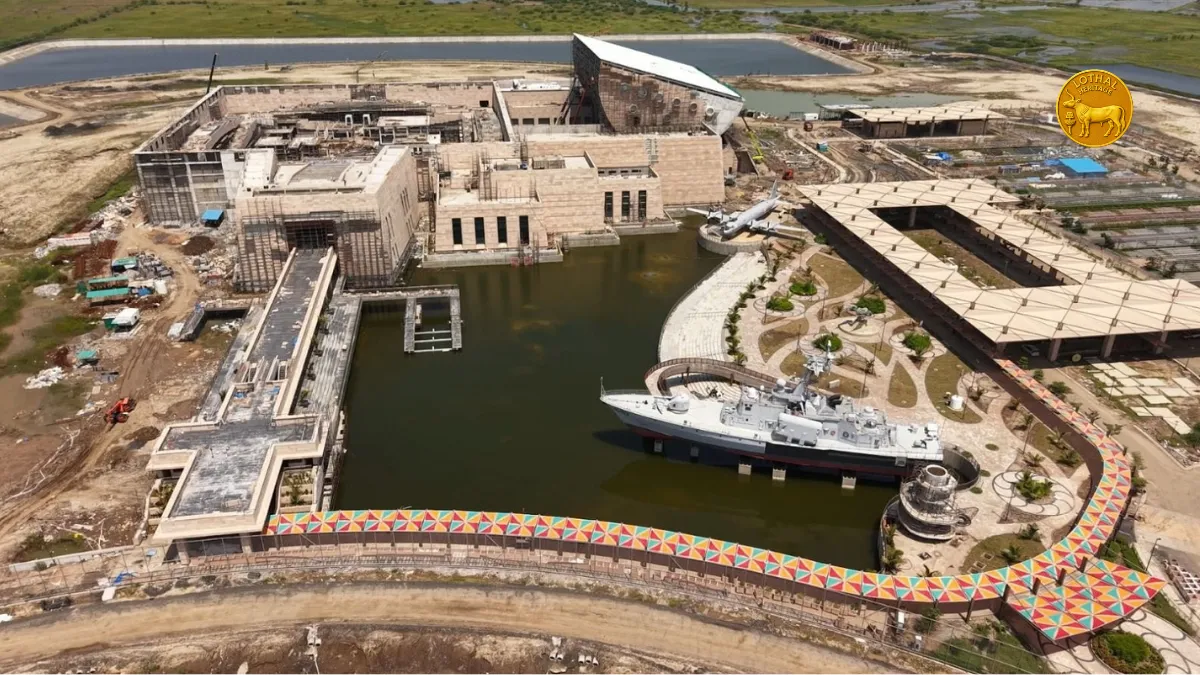
- The construction of the National Maritime Heritage Complex, considered a dream project of Prime Minister Narendra Modi, has renewed focus on Lothal.
- The aim is to enable visitors to witness live excavation alongside museum exhibitions, making history more interactive.
Dr. Shubh Mukundar, Superintending Archaeologist of the Vadodara Circle, explained that the team carefully studied Dr. Rao’s original reports before restarting work. Areas that had not been excavated earlier were marked and mapped using contour planning.
Excavation orders were issued in January 2025, and active digging began in March 2025. The project is scheduled to continue until May 2026, with further extensions possible.
Scientific Documentation: How Every Discovery Is Recorded at Lothal
Modern archaeology demands meticulous documentation. At Lothal, every discovered object is scientifically recorded according to strict site supervisor guidelines.
The documentation process includes:
- Site name
- Trench number
- Quadrant number
- Layer from which the object was recovered
- Exact depth of discovery
- Date of discovery
- Object identification number
- Material type
- Name of supervising officer
Santosh Kori, Site Supervisor, stated:
“Whenever we find something during excavation, we first document it scientifically. Only after proper recording do we continue excavation.”
This ensures accuracy, traceability, and research integrity.
Tools Used in the Lothal Excavation
Despite advanced technology supporting the process, excavation at Lothal still relies heavily on traditional manual tools to preserve delicate remains. These include:
- Three types of sand brushes
- Hand brushes
- Small trowel scrapers
- Large and small soil scrapers
- Brick scrapers
- Section scrapers
- Knives for precision cleaning
Excavated soil is collected in separate heaps and then carefully sieved using fine mesh screens to identify even the smallest particles — including gold dust.
Gold Particles and Other Key Discoveries
Among the most remarkable findings of the renewed excavation are:
- Tiny gold particles
- Small bone fragments
- Fish remains
- Otoliths (ear stones of fish)
- Drill bits used for bead-making
- Raw materials from craft production
- Brick structures, including ramp flooring
- Three seals — including one depicting a unicorn
- Terracotta artifacts
The discovery of gold particles suggests the presence of metal-working or trade connections. Meanwhile, fish remains are being studied using zoological and botanical analysis to determine the type of freshwater ecosystem that existed during the Harappan period.
Dr. Mukundar explained that interdisciplinary research involving archaeology, zoology, and botanical science is underway to understand:
- Water conditions of the period
- Types of fish consumed
- Food habits of the population
- Trade materials used
Dividing Lothal Into Zones for Systematic Research
The excavation site has been divided into three primary zones: A, B, and C.
Zone A
Located between the acropolis and lower town. This area was previously unexplored. Archaeologists believe findings here could reveal the connection between administrative and residential sections.
Zone B
Adjacent to the dockyard. Dr. S. R. Rao’s report mentioned that Lothal experienced two major floods, which damaged structures. The current team is attempting to trace flood evidence and settlement layers.
During excavation in this zone, a brick ramp floor was discovered two levels below the surface. However, high groundwater levels limited digging to around six meters.
Zone C
Includes areas behind the acropolis where limited trenching was done to search for wall structures. So far, conclusive evidence has not emerged from this section.
Each excavation grid measures 10 by 10 meters and is further subdivided into smaller units for systematic study. In some areas, vertical excavation has reached depths of 4 to 4.5 meters.
Drone Surveys and High-Tech Mapping at Lothal
Before digging began, drone surveys were conducted to capture aerial images of the entire Lothal site. These images were digitally analyzed to identify potential excavation points.
Periodic drone surveys continue to monitor progress. Unlike the 1950s excavation, today’s work integrates:
- Digital mapping
- Sample-based carbon dating
- Soil analysis
- High-resolution photography
- Scientific dating processes
Around 30 samples have been sent for processing, and results are expected soon.
Flood Evidence and Structural Studies
One of the primary objectives of the renewed excavation is to examine flood damage referenced in earlier reports.
Dr. Mukundar stated that the team aims to determine:
- The nature of lower structural layers
- Settlement patterns post-flood
- Construction techniques used in flood-prone conditions
A protective shed is being installed over exposed brick structures to prevent damage during the monsoon season.
Employment and Local Participation
More than 50 local workers are employed daily at the Lothal site, contributing to excavation activities under expert supervision. This has generated economic opportunities for surrounding communities.
Objects Found: What Happens Next?
After discovery, artifacts undergo sorting, marking, documentation, and research evaluation. Most common findings include:
- Pottery fragments
- Bones
- Ancient tool remnants
- Everyday usage objects
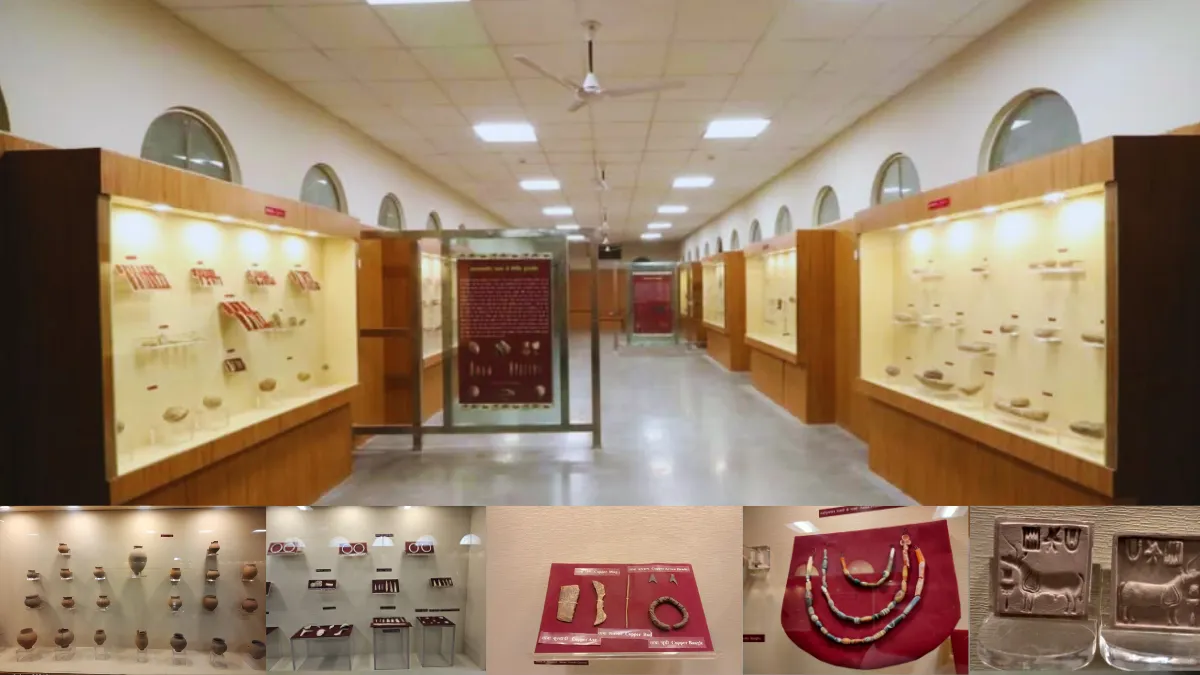
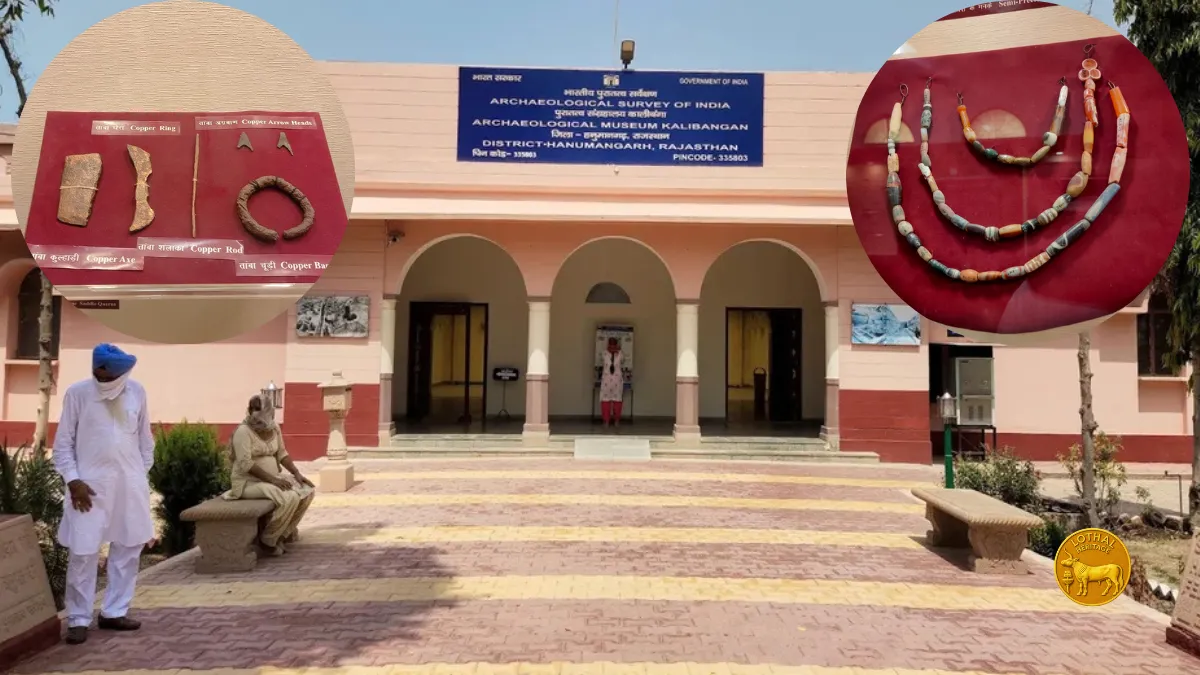
Artifacts recovered during previous excavations have been transferred to the museum. Current discoveries are also being preserved for inclusion in the upcoming National Maritime Heritage Complex.
Also read: Lothal City: A Remarkable Example of Advanced Urban Planning in Ancient India
Prime Minister’s Visit and Appreciation
Dr. Shubh Mukundar shared that before visiting Lothal, Prime Minister Narendra Modi observed the site from a helicopter from three different angles and appreciated the team’s work.
The Prime Minister’s focus on maritime heritage has significantly contributed to renewed national interest in Lothal.
Excavation Timeline at Lothal
- 1955–1962: Excavation led by Dr. S. R. Rao
- March 2025–May 2025: Renewed excavation phase
- November 2025–May 2026: Extended excavation phase
- Future continuation possible
Team Leading the Excavation at Lothal
- Dr. Shubh Mukundar – Superintending Archaeologist
- Kadambari Kankad – Assistant Archaeologist
- Kirit Rabari – Supervisor
- Mitesh Shah – Photographer
- Santosh Kori – Site Supervisor
- Deval – Supervisor
The Global Importance of Lothal
Lothal is not merely a regional archaeological site — it is a globally significant Harappan center that demonstrates:
- Early maritime trade systems
- Urban planning sophistication
- Industrial craft production
- Environmental adaptation
- Flood management strategies
The rediscovery of gold particles and renewed structural analysis may provide new insight into the economic power and trade networks of the Indus Valley Civilization.
As excavation continues, archaeologists believe Lothal may still hold secrets buried beneath layers of soil-secrets that could reshape the narrative of ancient maritime history.
With advanced technology, scientific rigor, and international interest, Lothal is once again becoming a focal point of archaeological research in India and beyond.