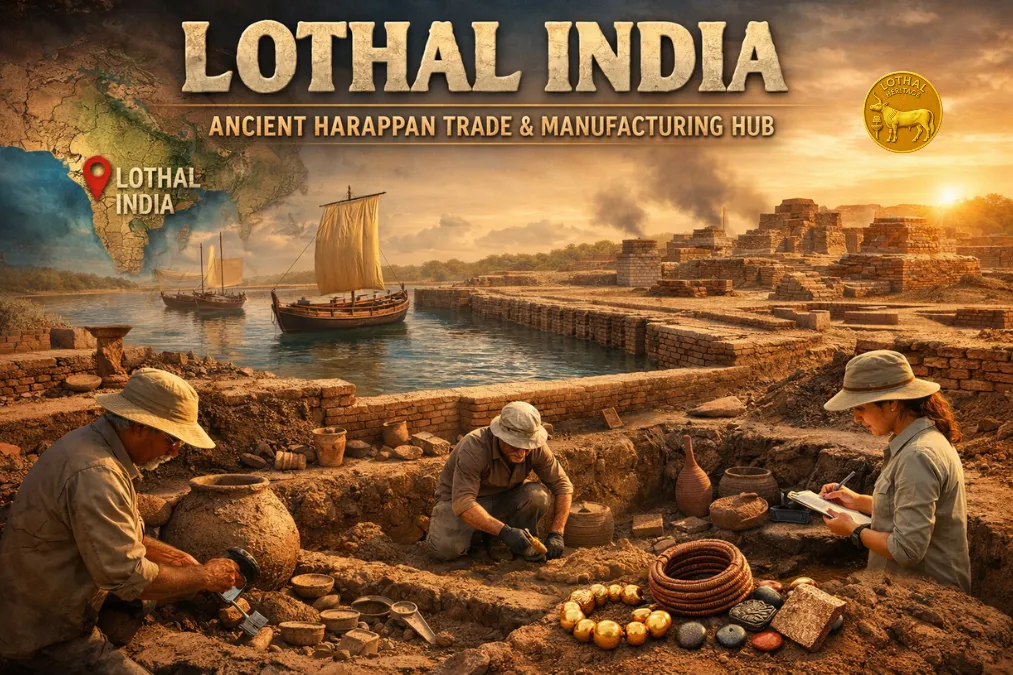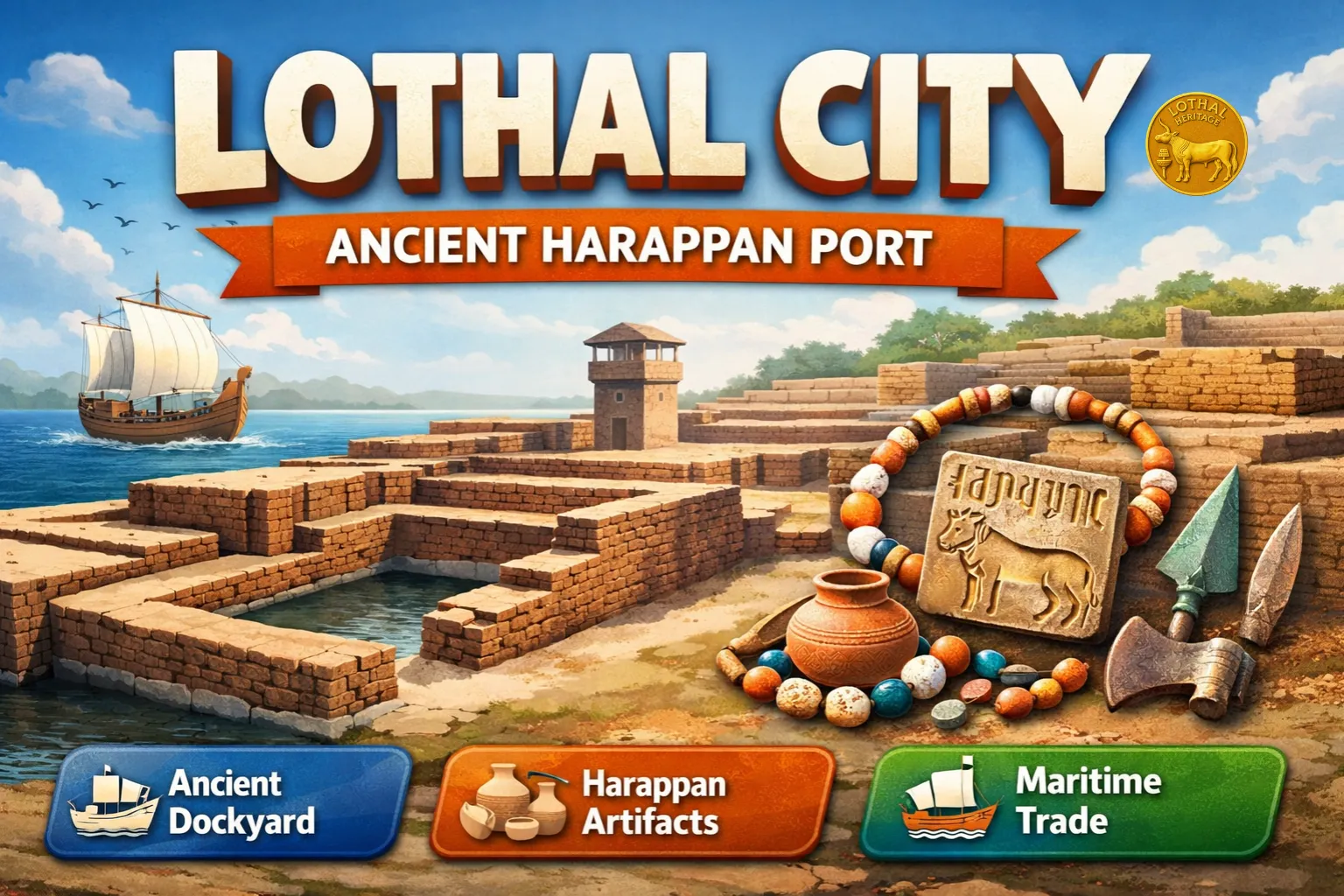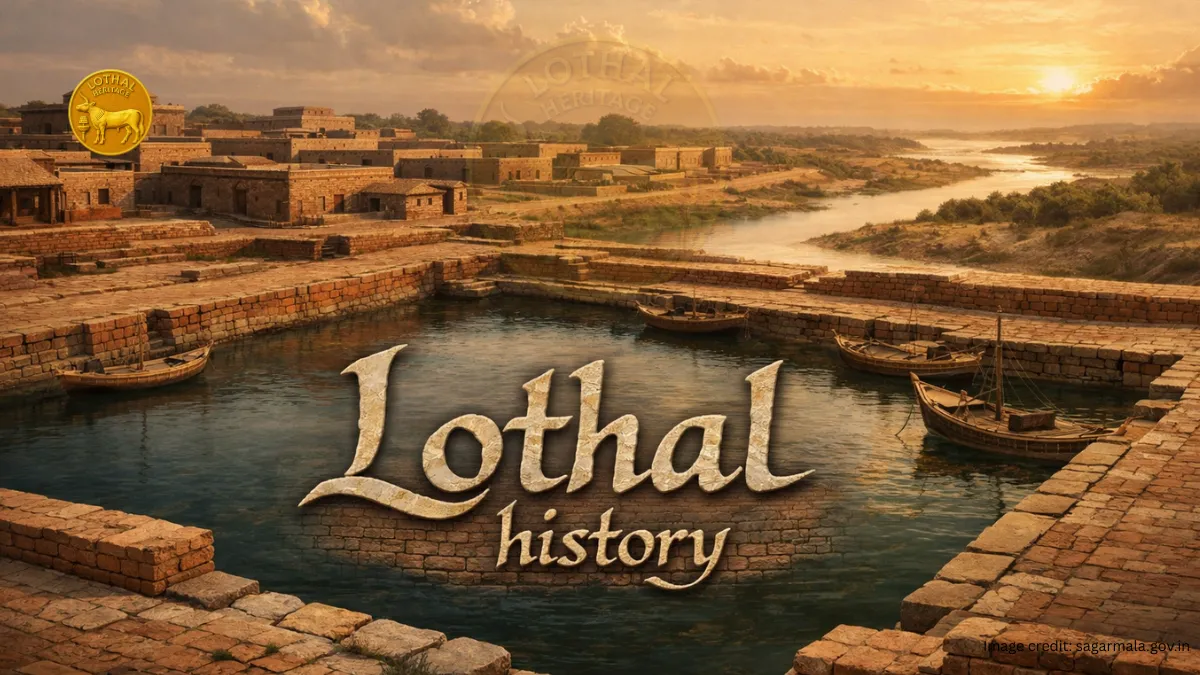
Lothal history begins with the story of one of the most remarkable urban centers of the ancient world, a city that once thrived on the edge of land and sea in what is now Gujarat, India. Situated near the Gulf of Khambhat, Lothal was a key settlement of the Indus Valley Civilization and stands out for its advanced town planning, maritime trade, and sophisticated understanding of engineering and water management. Through archaeological discoveries and scholarly interpretation, Lothal has emerged as a symbol of early human ingenuity and long-distance commerce.
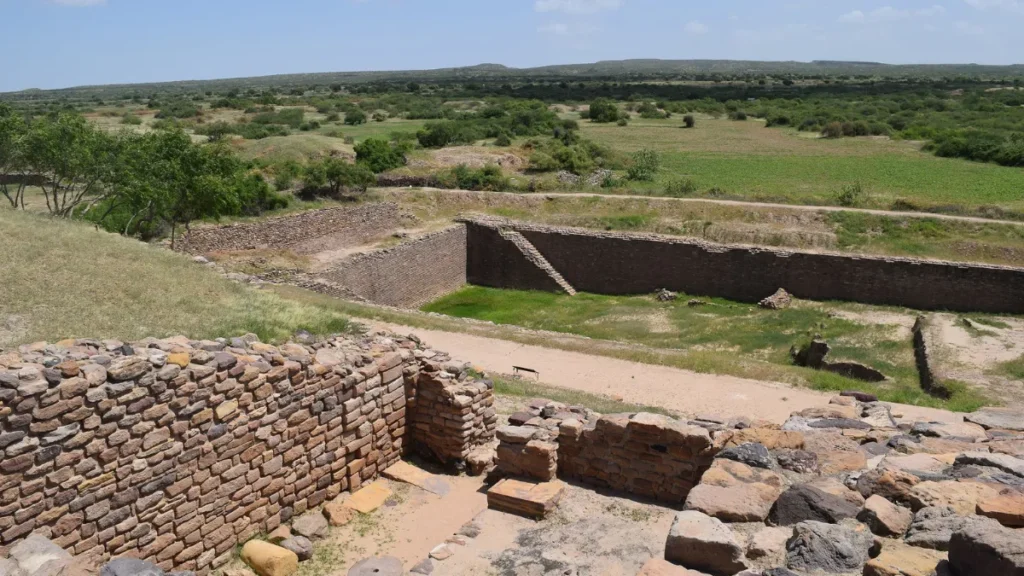
Geographic Setting and Environmental Context
Lothal was located in the semi-arid region of present-day Saurashtra, close to the Sabarmati river system and ancient tidal routes that connected the settlement to the Arabian Sea. The strategic placement of the city was no accident. The natural landscape offered fertile alluvial plains for agriculture, access to riverine transport, and proximity to the sea, which enabled overseas trade.
The climate during Lothal’s peak was more favorable than today, with more predictable monsoon patterns supporting farming and trade. Seasonal flooding, however, remained a constant challenge. The inhabitants responded by building elevated platforms, carefully designed drainage systems, and water control structures that reveal a deep understanding of their environment.
Discovery and Archaeological Excavation
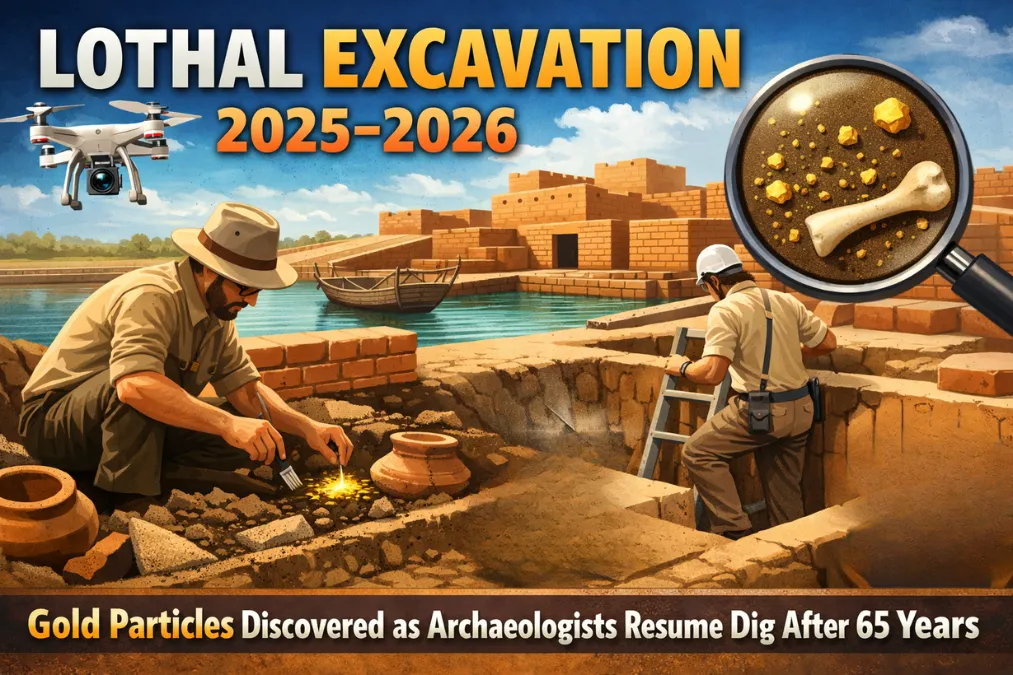
The modern world learned about Lothal in 1954, when archaeologists from the Archaeological Survey of India, led by S.R. Rao, began excavations at the site. Initial surveys suggested the presence of an ancient settlement, but systematic digging soon revealed a fully planned Harappan city with unique features not seen elsewhere in the Indus Valley Civilization.
Excavations uncovered residential blocks, warehouses, streets laid out in a grid pattern, workshops, and most notably, a massive dockyard. These findings placed Lothal history firmly within the broader narrative of Bronze Age civilizations and highlighted its special role as a port city.
Chronology and Phases of Settlement
Archaeological evidence suggests that Lothal was inhabited between approximately 2400 BCE and 1900 BCE. Scholars generally divide its occupation into several phases:
The early phase marks the foundation of the city, when basic urban planning principles were introduced. During this time, trade networks began to form, and craft production expanded.
The mature phase represents the height of Lothal’s prosperity. Large-scale construction projects, standardized brick sizes, and extensive trade contacts characterize this period.
The late phase shows signs of decline, including reduced construction quality, signs of flooding damage, and gradual abandonment.
These phases provide valuable insight into how environmental, economic, and social factors influenced the city’s rise and fall.
Urban Planning and City Layout
One of the most striking aspects of Lothal history is its meticulous urban design. The city was divided into distinct areas, typically referred to as the citadel and the lower town. This division reflects both administrative control and social organization.
Streets were laid out in straight lines, intersecting at right angles. Houses were built with baked bricks, featuring courtyards, bathing areas, and drainage connections. The drainage system was especially advanced, with covered drains running beneath the streets and inspection holes for maintenance.
Public buildings, including warehouses and platforms, were constructed on raised foundations to protect them from floods. This careful planning demonstrates a high level of civic organization and collective effort.
The Dockyard and Maritime Significance
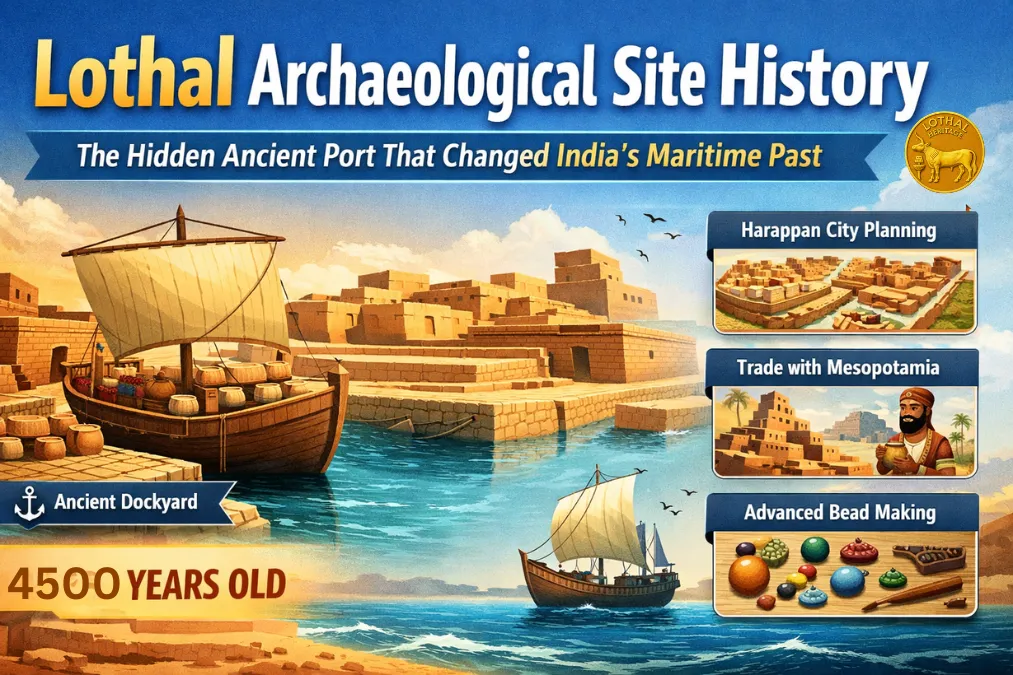
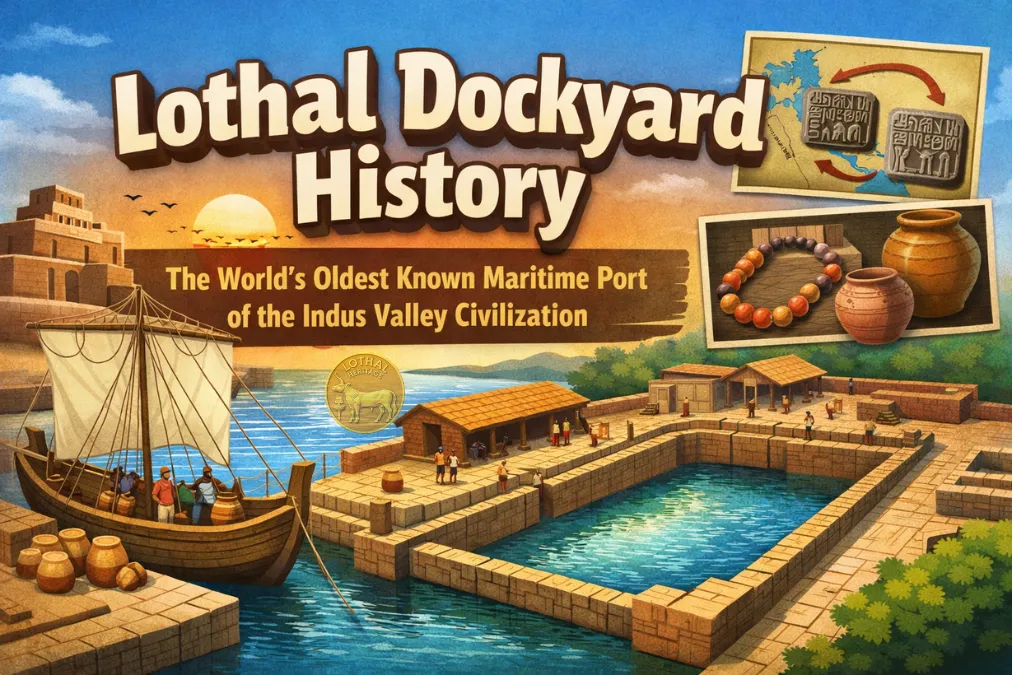
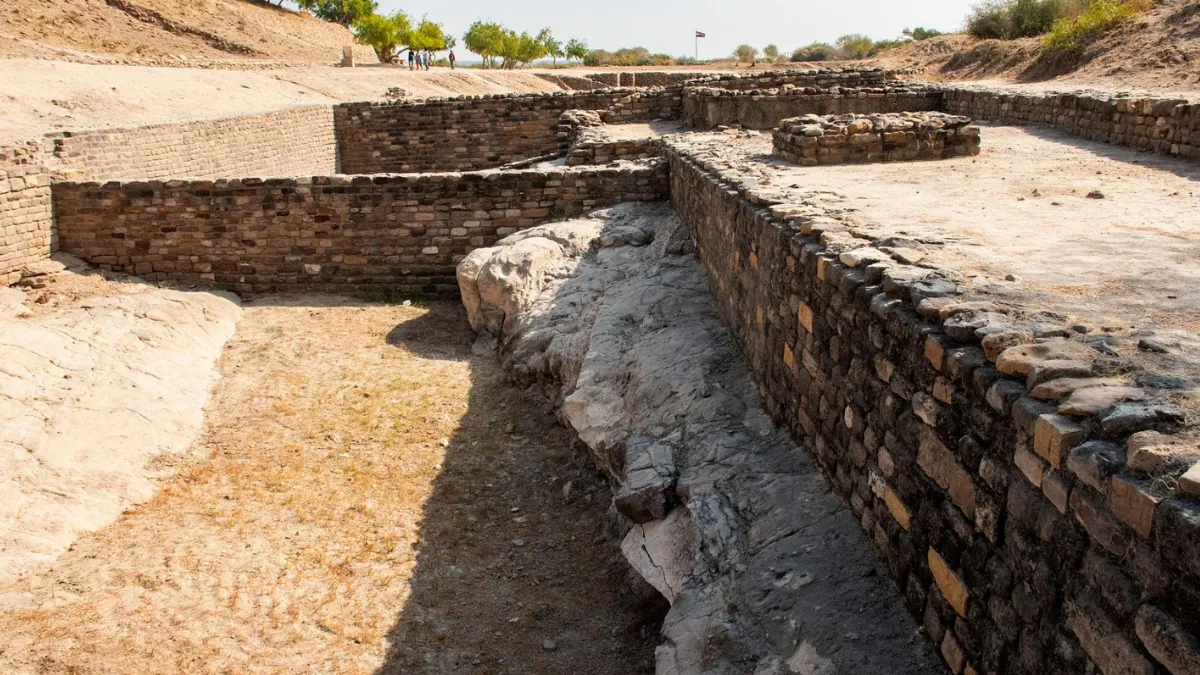
No discussion of Lothal history is complete without examining its dockyard, often considered one of the earliest known tidal docks in the world. Measuring approximately 218 meters in length and 37 meters in width, the dockyard was built with precision, using baked bricks and a trapezoidal shape to manage tidal flows.
The dockyard was connected to an ancient river channel, allowing ships to enter during high tide and remain protected during low tide. This structure reflects a sophisticated understanding of tides, hydraulics, and maritime logistics.
The existence of such a dockyard suggests that Lothal was not merely a coastal settlement but a major hub of overseas trade, linking the Indus Valley to distant regions.
Trade Networks and Economic Life
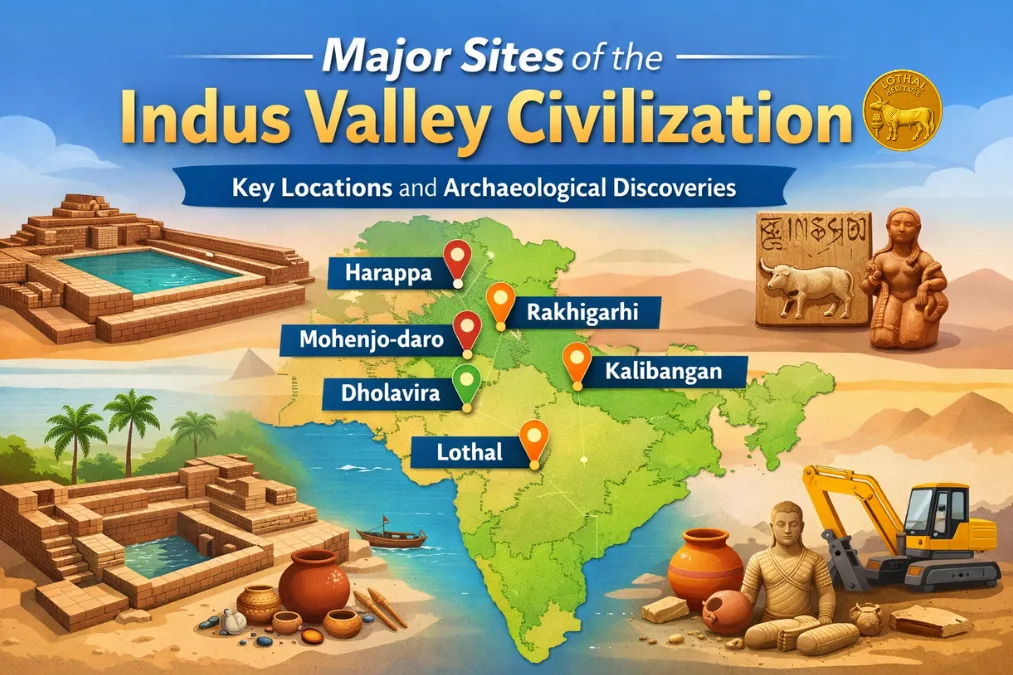
Trade formed the backbone of Lothal’s economy. Archaeological findings indicate extensive trade connections with other Harappan cities such as Mohenjo-daro, Harappa, and Dholavira, as well as with regions beyond the subcontinent.
Artifacts such as beads, seals, pottery, and weights point to standardized trade practices. Beads made of carnelian, agate, and shell were particularly significant, with evidence suggesting that Lothal was a major center for bead manufacturing.
Foreign trade links extended to Mesopotamia, the Persian Gulf, and possibly Egypt. Mesopotamian texts mention a region called “Meluhha,” widely believed to refer to the Indus Valley, strengthening the case for Lothal’s international connections.
Craft Production and Industrial Activity
Lothal was a thriving center of craftsmanship. Excavations revealed workshops for bead-making, shell cutting, pottery, and metalworking. The precision of these crafts indicates specialized labor and skilled artisans.
Bead-making workshops included furnaces, tools, and raw materials, suggesting large-scale production rather than household-level activity. The uniformity of beads found across the Indus Valley implies that Lothal played a central role in supplying these goods.
Copper tools, bronze objects, and evidence of metallurgy further highlight the city’s industrial capabilities. These activities were closely linked to trade, reinforcing Lothal’s economic importance.
Social Organization and Daily Life
Insights into daily life at Lothal come from residential structures, household artifacts, and burial practices. Houses varied in size, suggesting differences in wealth and status, though overall social inequality appears less pronounced than in later civilizations.
Most houses included private wells, bathing platforms, and storage spaces. The emphasis on cleanliness and sanitation reflects cultural values shared across the Indus Valley Civilization.
Burial practices at Lothal were relatively simple, with graves containing pottery and personal items. These practices provide clues about beliefs related to death and the afterlife, though much remains open to interpretation.
Administrative Systems and Standardization
Standardization is a hallmark of Lothal history. Uniform brick sizes, standardized weights, and consistent measurement systems point to centralized planning and regulation.
Weights made of chert followed precise ratios, enabling fair trade and economic stability. Seals bearing animal motifs and script were likely used for identification, ownership, and trade documentation.
Although the Indus script remains undeciphered, its presence on seals and pottery suggests a system of record-keeping and communication that supported administrative control.
Religion, Beliefs, and Symbolism
Unlike later Indian civilizations, Lothal did not feature monumental temples or palaces. Religious practices were likely integrated into daily life rather than centered around grand structures.
Fire altars discovered at the site suggest ritual activities, possibly related to fertility, prosperity, or protection. Figurines, seals, and symbolic motifs hint at shared beliefs across the Indus Valley, though interpretations vary among scholars.
Animals such as bulls and unicorn-like figures appear frequently on seals, possibly representing clan symbols, deities, or economic identifiers.
Water Management and Environmental Adaptation
Water management was critical to Lothal’s survival. Wells provided drinking water, while reservoirs and drains managed rainwater and wastewater.
The city’s elevated platforms and embankments were designed to protect against floods, yet repeated flooding events appear to have strained these systems over time. Sediment layers and structural repairs indicate ongoing efforts to adapt to environmental challenges.
These measures demonstrate an advanced understanding of environmental engineering, reinforcing Lothal’s reputation as a technologically sophisticated settlement.
Causes of Decline and Abandonment
The decline of Lothal remains a subject of scholarly debate. Environmental factors, particularly flooding and changes in river courses, likely played a major role. As waterways shifted or silted up, access to the sea may have become more difficult, undermining the city’s trade-based economy.
Evidence of reduced maintenance, poorer construction quality, and population decline suggests a gradual rather than sudden collapse. Broader changes affecting the Indus Valley Civilization, including climate shifts and economic disruption, likely contributed to Lothal’s abandonment.
Lothal History in Comparative Perspective
When compared with other Indus Valley sites, Lothal stands out for its maritime orientation. While cities like Mohenjo-daro and Harappa were primarily inland urban centers, Lothal’s identity was closely tied to trade and seafaring.
Its dockyard, industrial zones, and foreign trade connections highlight the diversity within the Indus Valley Civilization. This diversity challenges simplistic views of ancient societies and underscores the adaptability of Harappan urbanism.
Archaeological Findings at a Glance
| Aspect | Key Findings |
|---|---|
| Time Period | Approximately 2400–1900 BCE |
| Urban Layout | Grid-pattern streets, citadel and lower town |
| Major Structure | Brick-built dockyard |
| Economy | Agriculture, craft production, long-distance trade |
| Crafts | Bead-making, shell work, metallurgy |
| Water Management | Wells, drains, flood protection systems |
| Trade Links | Indus cities, Mesopotamia, Persian Gulf |
Read also: What happened to Lothal? Tracing the Rise and Decline of an Ancient Port City
Scholarly Interpretations and Debates
Scholars continue to debate certain aspects of Lothal history, particularly the function of the dockyard and the causes of decline. Some argue that the dockyard may have served multiple purposes, including flood control or storage, while others emphasize its maritime role.
Advances in geology, climate studies, and remote sensing are providing new data that may refine existing interpretations. These debates reflect the dynamic nature of archaeological research and the evolving understanding of ancient societies.
Read also: What was Lothal famous for? Exploring the Legacy of an Ancient Harappan Port City
Preservation and Modern Significance
Today, Lothal is a protected archaeological site and an important center for heritage tourism. Efforts to preserve the ruins and educate the public are ongoing, with museums and interpretation centers helping visitors understand the site’s historical significance.
Lothal’s legacy extends beyond archaeology. It offers valuable lessons about urban planning, environmental adaptation, and the benefits and vulnerabilities of trade-based economies.
Cultural Impact and Public Memory
In modern India, Lothal holds a special place as a symbol of ancient innovation and maritime heritage. It is frequently referenced in discussions about early Indian civilization and global trade history.
Educational curricula, documentaries, and cultural programs continue to highlight Lothal history, ensuring that the story of this ancient port city remains part of the collective memory.
Read also: Harappa Port-Town Lothal: Tracing the Life, Landscape, and Legacy of an Ancient Harappan Port
Conclusion: The Enduring Importance of Lothal
Lothal history tells the story of a city that mastered its environment, connected distant cultures, and demonstrated remarkable technological and organizational skill. From its carefully planned streets to its pioneering dockyard, Lothal stands as a testament to the achievements of the Indus Valley Civilization.
Although the city eventually declined, its legacy endures through archaeological discoveries and ongoing research. Lothal reminds us that the roots of globalization, urban planning, and environmental engineering stretch deep into the ancient past, offering insights that remain relevant in the modern world.