Lothal stands as one of the most remarkable archaeological discoveries of the ancient world, offering a rare glimpse into the advanced maritime culture of the Indus Valley Civilisation. Located in present-day Gujarat, this ancient port city continues to draw global attention for its historical, technological, and cultural significance. Recently, Lothal returned to the national spotlight after the Prime Minister reviewed the ongoing construction of the ambitious National Maritime Heritage Complex (NMHC) at the site, reaffirming its importance in India’s civilisational narrative and future tourism vision.
Why Lothal Is in the News
The renewed focus on Lothal comes amid the rapid development of the National Maritime Heritage Complex, a flagship project aimed at showcasing India’s deep-rooted maritime traditions. The Prime Minister’s review of the NMHC construction highlighted the government’s intent to transform Lothal into a global centre for heritage tourism, research, and education while preserving its archaeological integrity.
National Maritime Heritage Complex: Reviving India’s Maritime Story
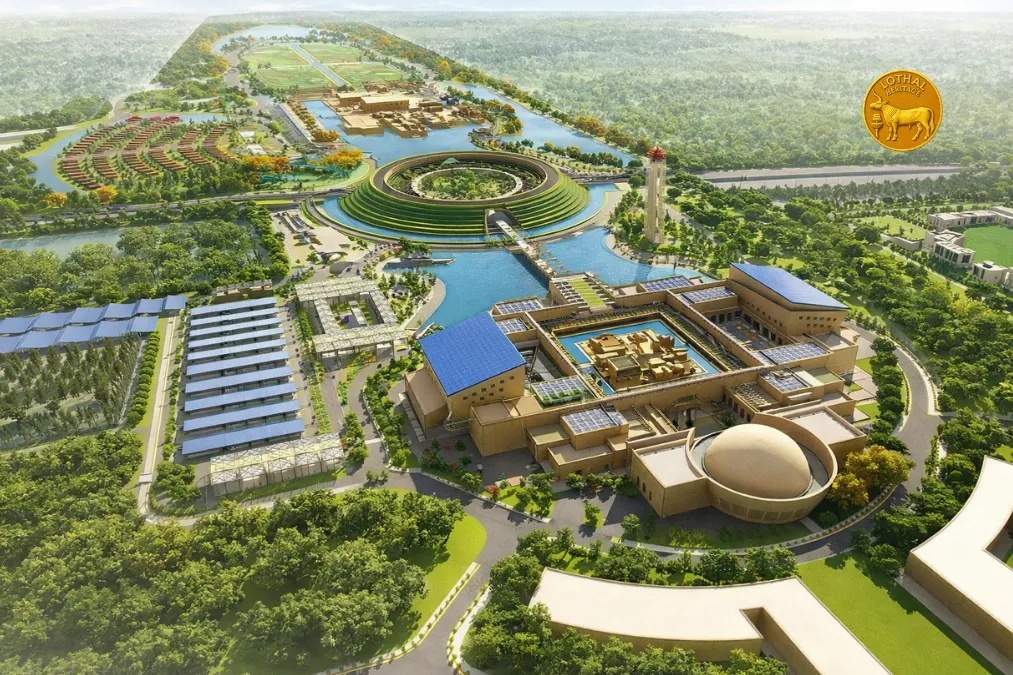
The National Maritime Heritage Complex is one of the most ambitious cultural infrastructure projects undertaken in India. Launched in March 2022, the project is being developed at an estimated cost of ₹3,500 crore. Once completed, the NMHC is expected to become the largest maritime museum complex in the world.
A key attraction of the complex will be the “Lothal Mini-Recreation,” an immersive experience that recreates Harappan architecture, town planning, and daily life using advanced digital and experiential technologies. Visitors will be able to virtually step back over 4,000 years and experience how people lived, traded, and interacted with the world beyond India’s shores.
The NMHC will feature four distinct theme parks:
- Memorial Theme Park, dedicated to maritime heroes and historic voyages
- Maritime and Navy Theme Park, showcasing India’s naval evolution
- Climate Theme Park, highlighting the relationship between oceans and climate change
- Adventure and Amusement Theme Park, designed to engage younger audiences
Beyond tourism, the complex is envisioned as a global centre for learning and research, offering insights into India’s maritime achievements from prehistoric times to the modern era. The development is also expected to significantly boost the local economy and position Lothal as an international tourist destination.
Where Is Lothal Located?
Lothal is situated in the Bhāl region of Gujarat, near the Gulf of Khambhat. It was one of the southernmost settlements of the Indus Valley Civilisation, strategically positioned to serve as a vital link between inland Harappan cities and overseas trade routes.
Archaeological evidence suggests that Lothal was established around 2200 BCE, during the mature phase of the Indus Valley Civilisation. Its geographic location allowed it to flourish as a port city with access to riverine and maritime trade networks.
Lothal as an Ancient Trade Powerhouse
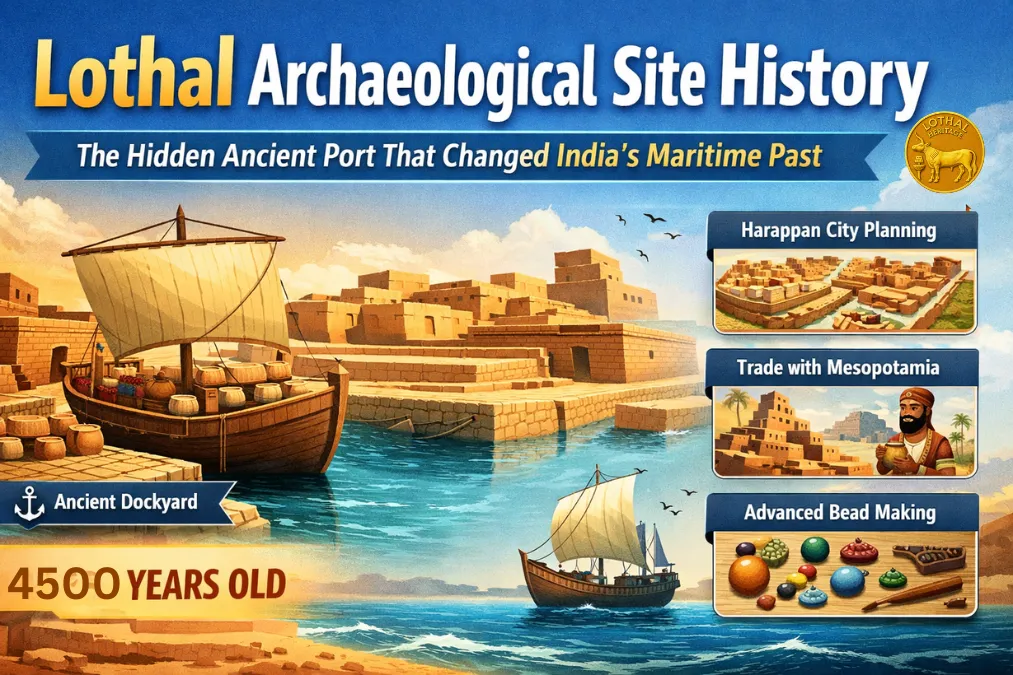
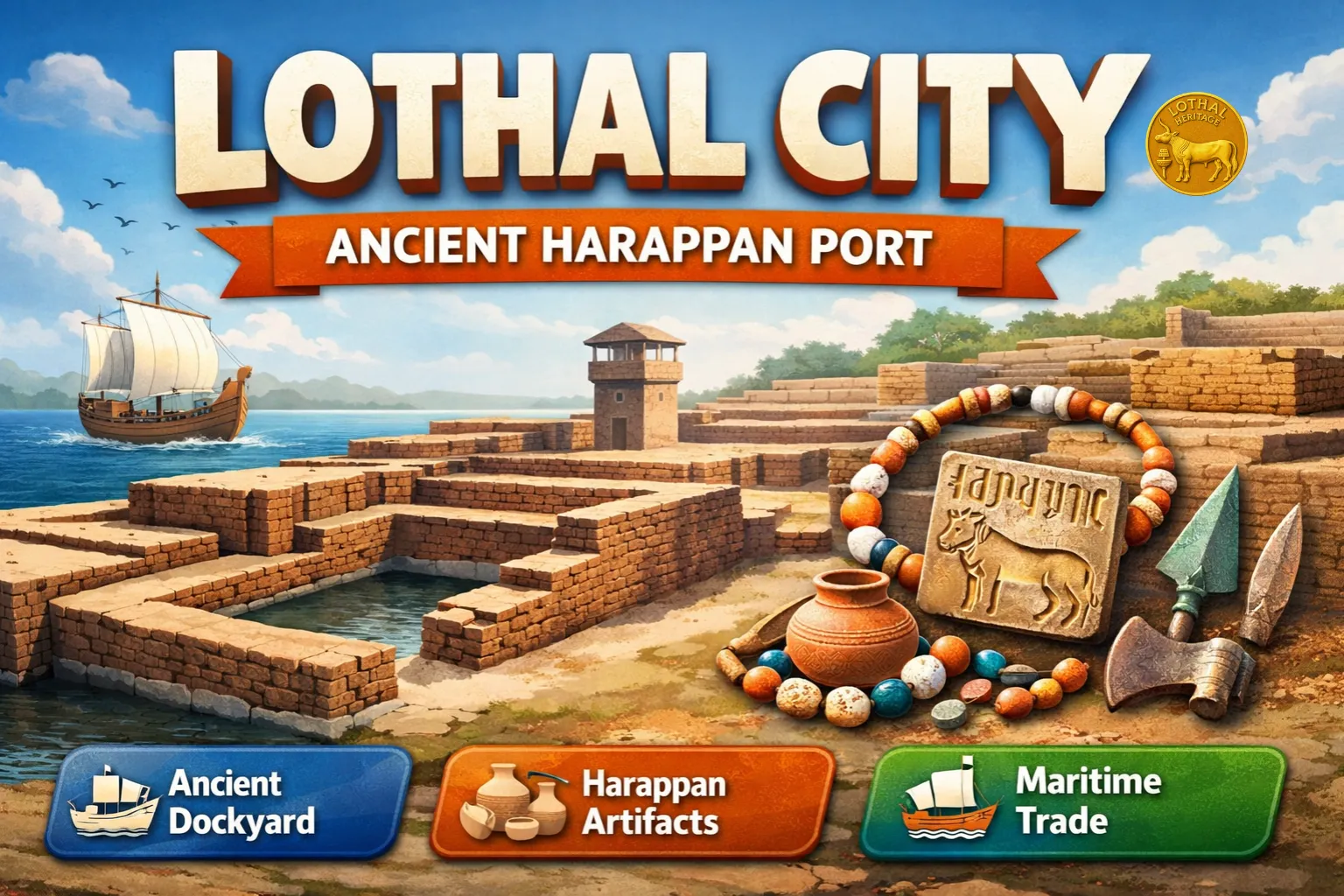
In ancient times, Lothal was a thriving centre of commerce and craftsmanship. Artifacts recovered from the site reveal extensive trade in beads, semi-precious stones, ornaments, and other luxury goods. These items reached distant regions including West Asia and parts of Africa, demonstrating the global reach of Harappan trade.
The name “Lothal” itself carries historical weight. Derived from Gujarati words “Loth” and “Sthal,” it translates to “the mound of the dead.” Interestingly, the name Mohenjo-daro-another major Indus Valley site located in present-day Pakistan—means the same in Sindhi, hinting at shared cultural interpretations across regions.
The World’s Earliest Known Dockyard
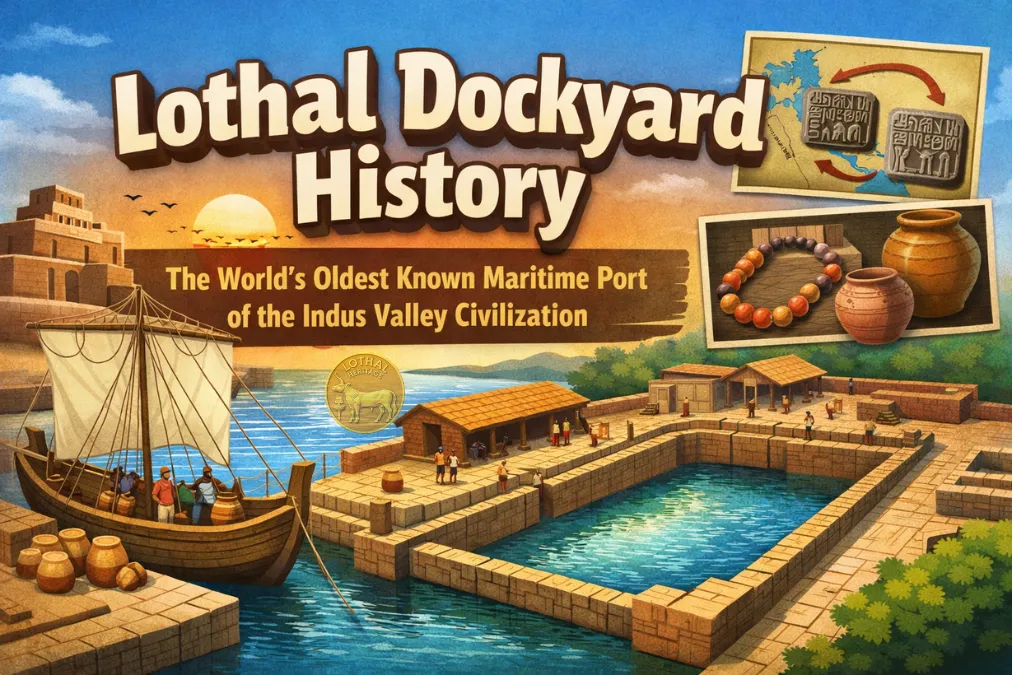
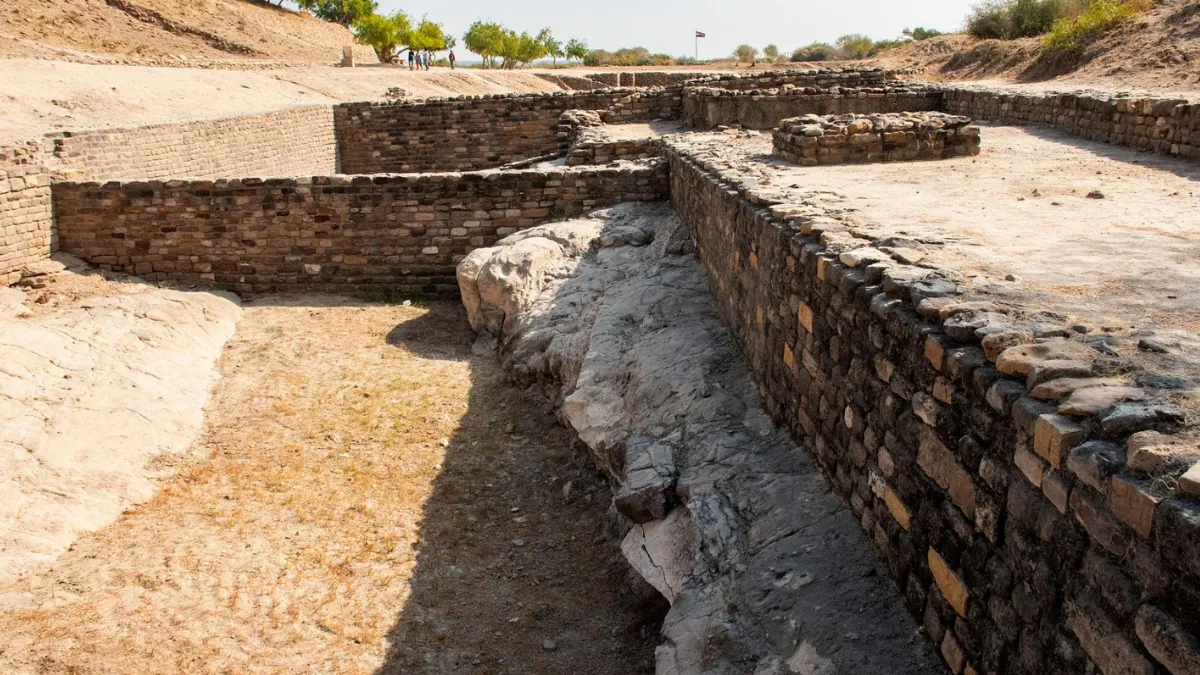
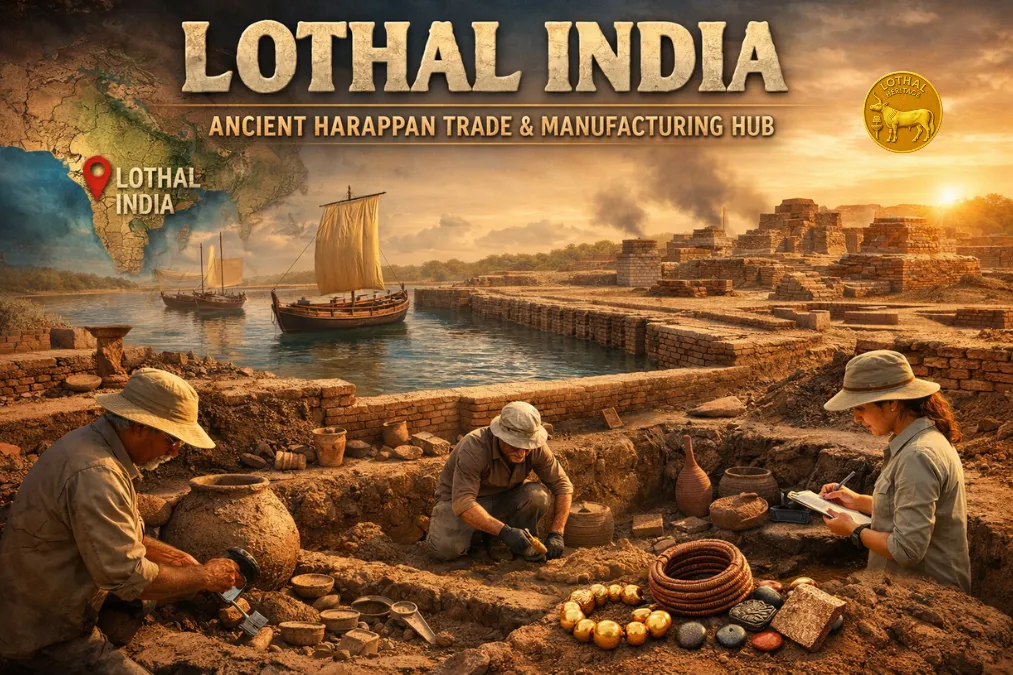
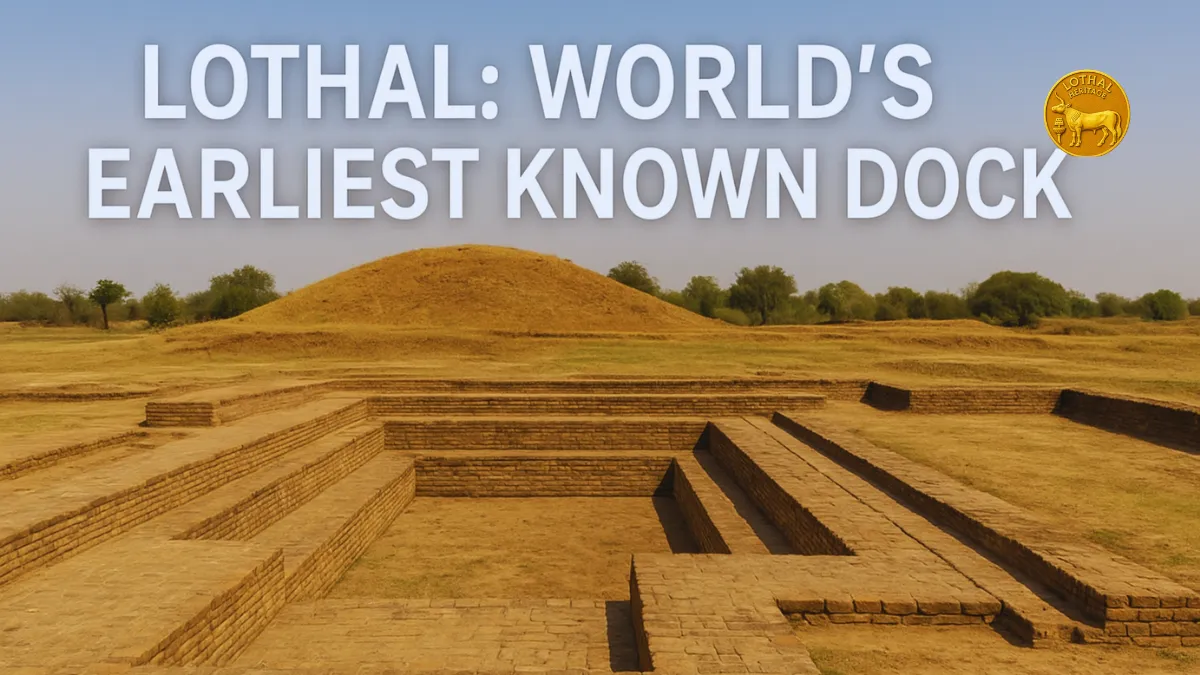
What sets Lothal apart from all other Indus Valley sites is its dockyard, widely regarded as the world’s earliest known dock. This massive structure connected the city to an ancient course of the Sabarmati River and enabled ships to navigate between Harappan cities in Sindh and the Saurashtra peninsula.
The dockyard reflects extraordinary engineering skills. Its trapezoidal design, brick-lined walls, and sophisticated water control mechanisms suggest a deep understanding of tides, sedimentation, and hydraulic engineering. Scholars believe it was constructed to allow ships to dock safely while preventing silting—an issue that continues to challenge modern ports.
Discovery and Excavation of Lothal
After India’s independence in 1947, archaeologists intensified their search for Harappan sites in Gujarat and the Saurashtra region. The breakthrough came under the leadership of renowned archaeologist S.R. Rao, who identified several Indus Valley settlements, including Lothal.
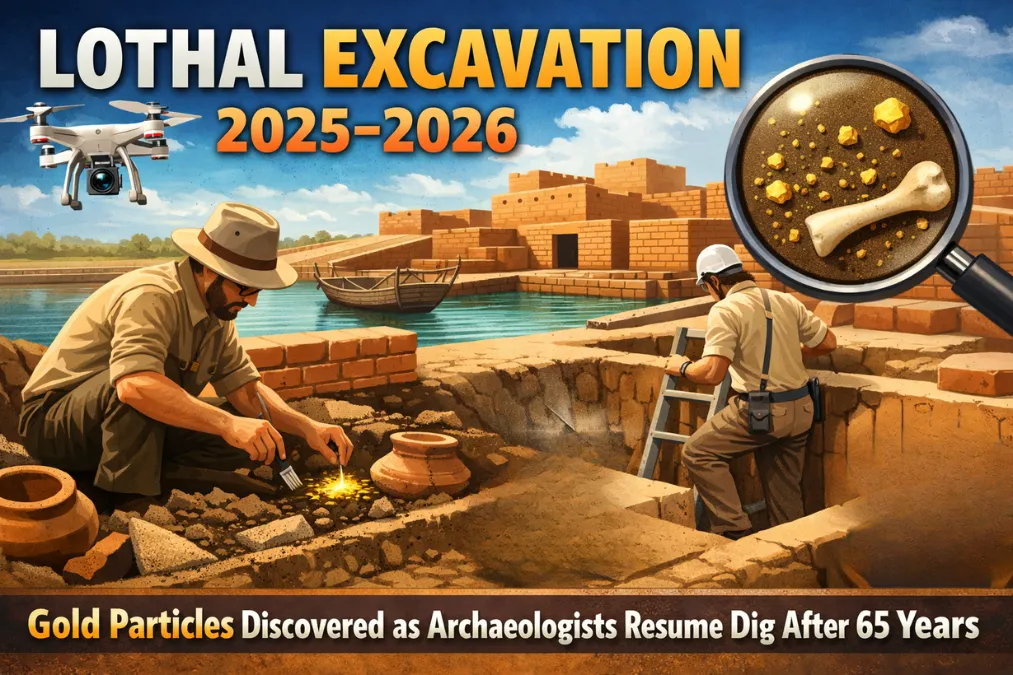
Systematic excavations were carried out between February 1955 and May 1960. These efforts uncovered a well-planned township, complete with residential areas, marketplaces, industrial zones, and the iconic dockyard. The discoveries firmly established Lothal as a major urban and commercial centre of the Indus Valley Civilisation.
Scientific Confirmation of the Dockyard
The identification of Lothal’s dockyard was further strengthened by scientific evidence. The National Institute of Oceanography in Goa обнаружed marine microfossils, salt deposits, and gypsum crystals at the site. These findings confirmed that seawater once filled the structure, eliminating doubts about its maritime function.
Subsequent excavations by the Archaeological Survey of India revealed additional features, including warehouses, streets, drainage systems, and public buildings. Adjacent to the site, an archaeological museum now houses one of India’s most significant collections of Indus-era artifacts, offering visitors a deeper understanding of Harappan life.
Read also: Where Is Lothal? Inside India’s 4,500-Year-Old Port City That Rewrote Maritime History
Heritage Value of Lothal
Recognising its universal cultural importance, Lothal was nominated for inclusion as a UNESCO World Heritage Site in April 2014. While it currently remains on UNESCO’s tentative list, experts believe its exceptional value strengthens its case for full inscription.
Lothal holds the distinction of being the only confirmed port-town of the Indus Valley Civilisation, making it unique not only in India but globally. Its heritage value is often compared with some of the world’s most iconic ancient port cities, including Xel Ha in Peru, Ostia and Carthage in the Mediterranean, Hepu in China, Canopus in Egypt, Byblos in Phoenicia, Jaffa in Israel, Ur in Mesopotamia, and Hoi An in Vietnam.
Within the South Asian context, Lothal can be compared to other Indus port settlements such as Balakot in Pakistan, Khirasa in Gujarat’s Kutch region, and Kuntasi in Rajkot district.
Read also: Lothal Gujarat: Exploring One of India’s Earliest Urban Civilizations
Lothal in the Context of the Indus Valley Civilisation
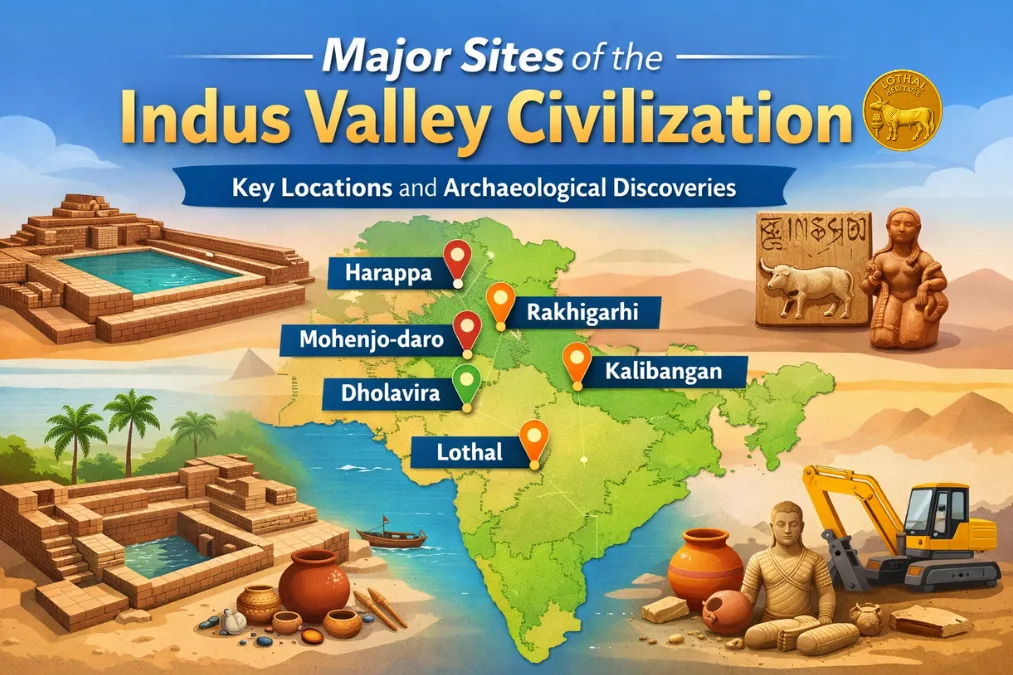
To fully appreciate the significance of Lothal, it is essential to view it alongside other major Indus Valley sites. Harappa, in present-day Pakistan, revealed massive granaries, symbolic artifacts, and agricultural evidence. Mohenjo-daro is famous for the Great Bath, bronze sculptures, and monumental architecture. Dholavira in Gujarat showcased advanced water conservation systems, stadium-like structures, and large inscriptions.
Other notable sites include Ropar in Punjab, where unique burial practices were discovered; Kalibangan and Balathal in Rajasthan, known for fire altars and industrial zones; Banawali in Haryana, featuring radial town planning; and Alamgirpur in Uttar Pradesh, which provided evidence of textile production.
Together, these sites illustrate the extraordinary sophistication of the Indus Valley Civilisation, with Lothal representing its maritime and commercial zenith.
Read also: Lothal is Situated on the Banks of Which River? Understanding the Legacy of an Ancient Port Town
A Bridge Between Past and Future
Today, Lothal stands at the intersection of history and modern ambition. The development of the National Maritime Heritage Complex aims not only to preserve the site but also to tell India’s maritime story to the world in an engaging, educational, and sustainable manner.
As research continues and infrastructure develops, Lothal is poised to reclaim its rightful place on the global heritage map. From being the world’s earliest known dockyard to becoming a future hub of cultural tourism, Lothal remains a powerful symbol of India’s ancient ingenuity and enduring connection with the seas.