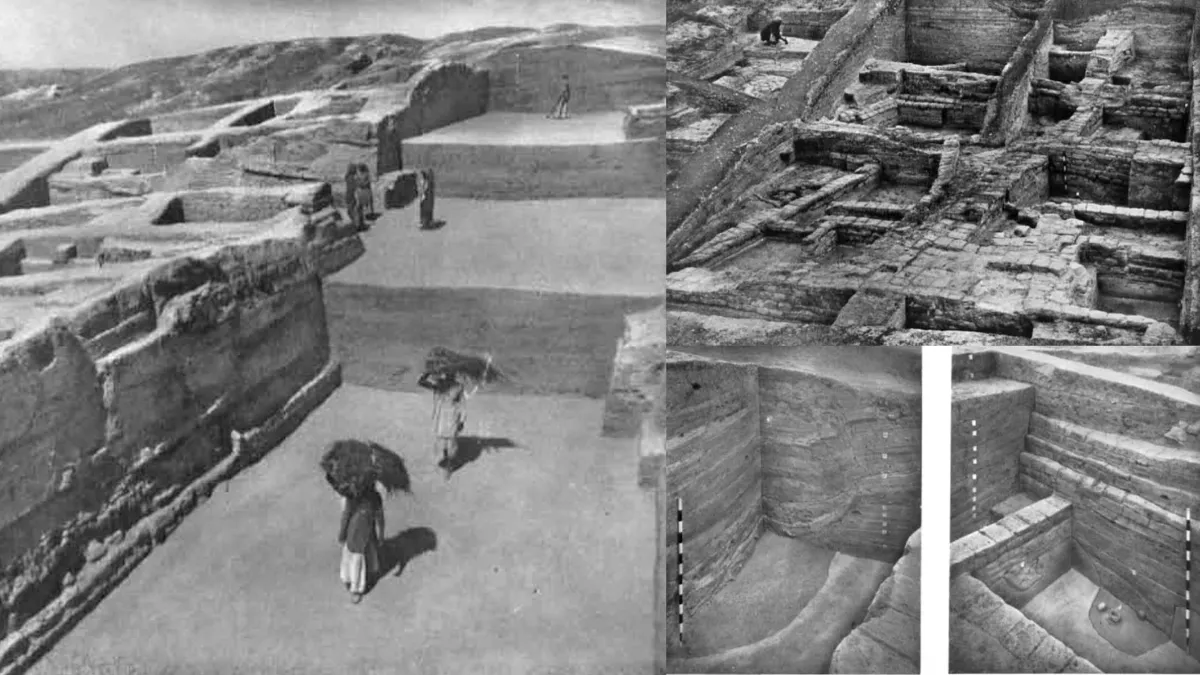
When the ruins of Lothal were first brought to light in the mid-20th century, they reshaped how historians understood the reach and brilliance of the Indus Valley Civilization. For decades, global attention had centered on the spectacular discoveries of Mohenjo-daro and Harappa, unearthed in the 1920s under the supervision of Sir John Marshall. These cities revealed an advanced Bronze Age civilization flourishing along the Indus River system.
Yet it took nearly forty more years for archaeologists to uncover another site that would prove just as significant—perhaps even more intriguing in some respects. That site was Lothal, a remarkable ancient port town located in present-day Gujarat, India. Its discovery not only restored India’s share of the Indus Valley heritage after Partition but also revealed that this civilization was far more expansive and maritime-oriented than previously believed.
Today, Lothal stands as one of the most important archaeological sites in South Asia. It offers extraordinary insight into ancient urban planning, maritime trade, engineering innovation, and craftsmanship. This in-depth report explores the history, excavation, architecture, trade networks, and enduring legacy of Lothal, presenting a comprehensive and globally relevant account of one of the world’s earliest port cities.
Post-Partition Archaeology and the Search for India’s Bronze Age Legacy
The discovery of Lothal cannot be understood without revisiting the political and historical landscape of the mid-20th century. When British India was partitioned in 1947, many of the most prominent Indus Valley Civilization sites—including Mohenjo-daro and Harappa—became part of Pakistan. This left India with relatively fewer known remnants of its ancient Bronze Age past.
Determined to recover and document India’s archaeological heritage, the Archaeological Survey of India (ASI) launched an extensive exploration and excavation programme during the early 1950s. The focus was on western and northern India—particularly Rajasthan, Haryana, Delhi, and Gujarat.
The results exceeded expectations.
Hundreds of previously unknown Harappan sites were identified across these regions. Gujarat alone accounted for approximately 50 newly discovered settlements. These findings confirmed that the Indus Valley Civilization extended far beyond the Indus River basin, spreading across the Ghaggar-Hakra river system—often associated with the mythical Sarasvati River.
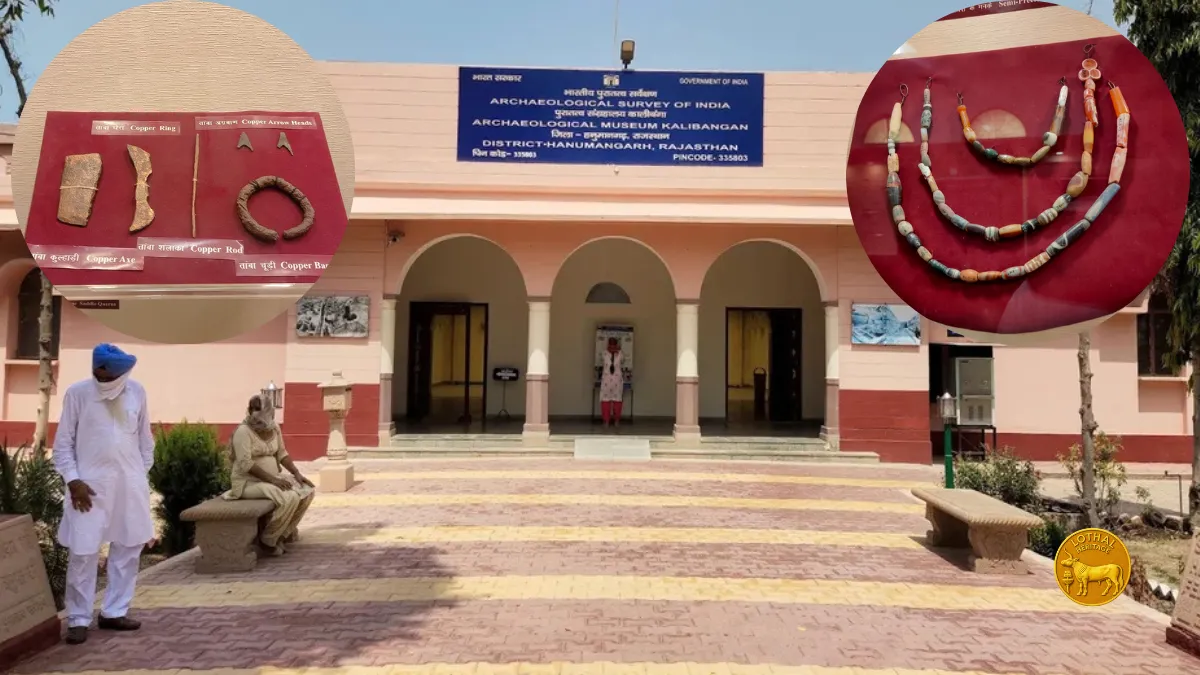
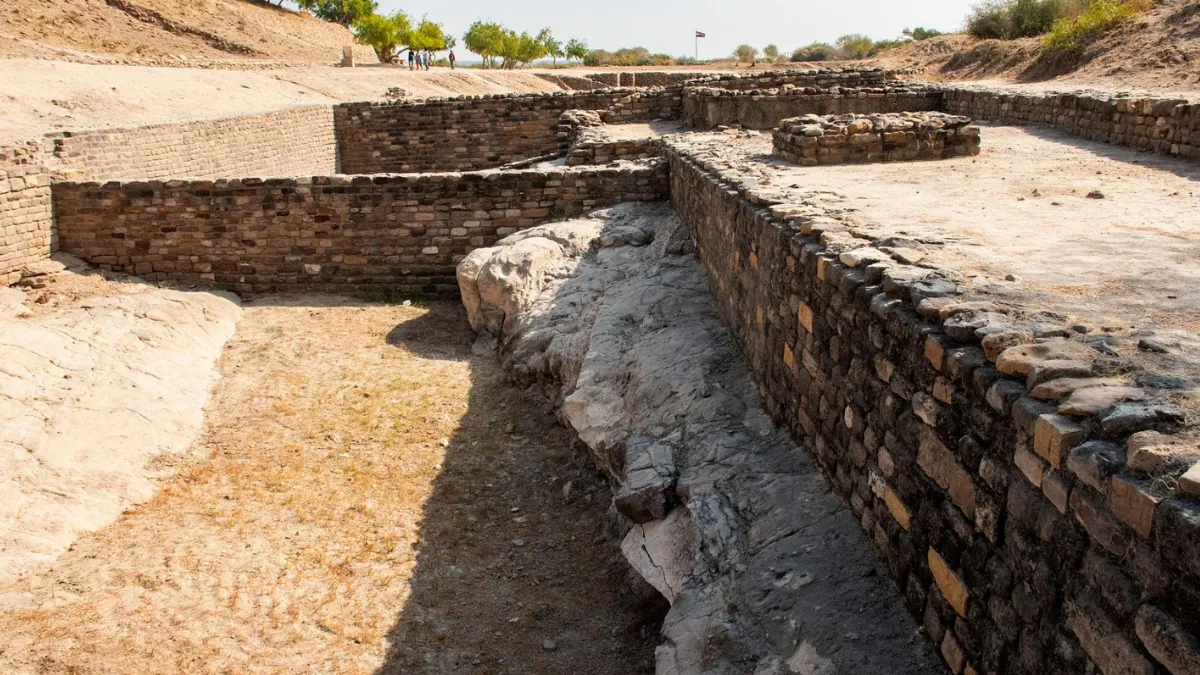
Among the numerous sites discovered during this wave of exploration were Dholavira, Kalibangan, and Rakhigarhi. Yet it was Lothal that stood apart due to its maritime character and unique engineering features.
Discovery and Excavation of Lothal
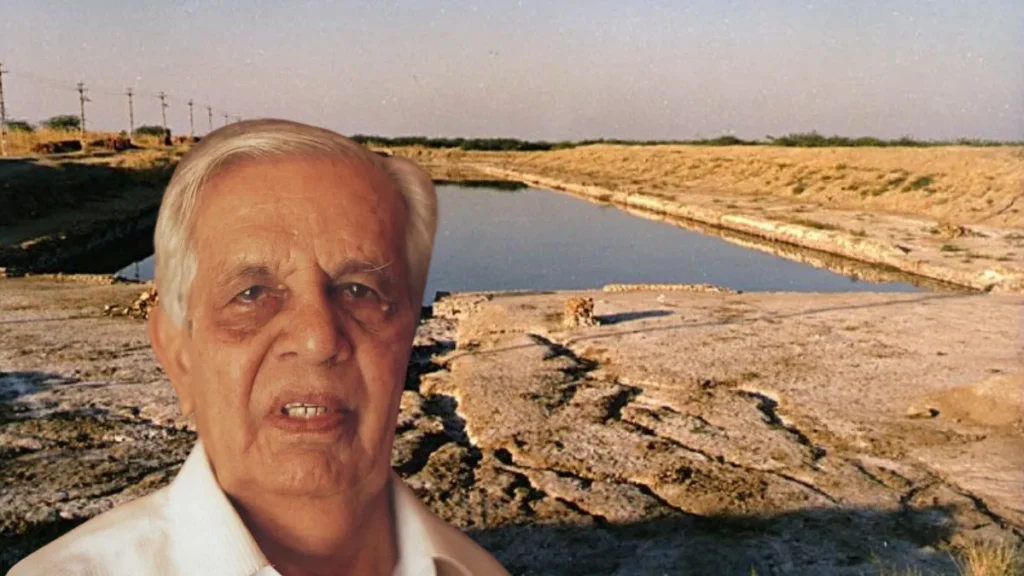
Lothal was first identified in 1954 and subsequently excavated between 1955 and 1960 under the leadership of S. R. Rao of the Archaeological Survey of India.
The name “Lothal” originates from the local Gujarati term meaning “Mound of the Dead.” Interestingly, the name mirrors the meaning of Mohenjo-daro in Sindhi, suggesting a cultural continuity in how ancient ruins were perceived across the region.
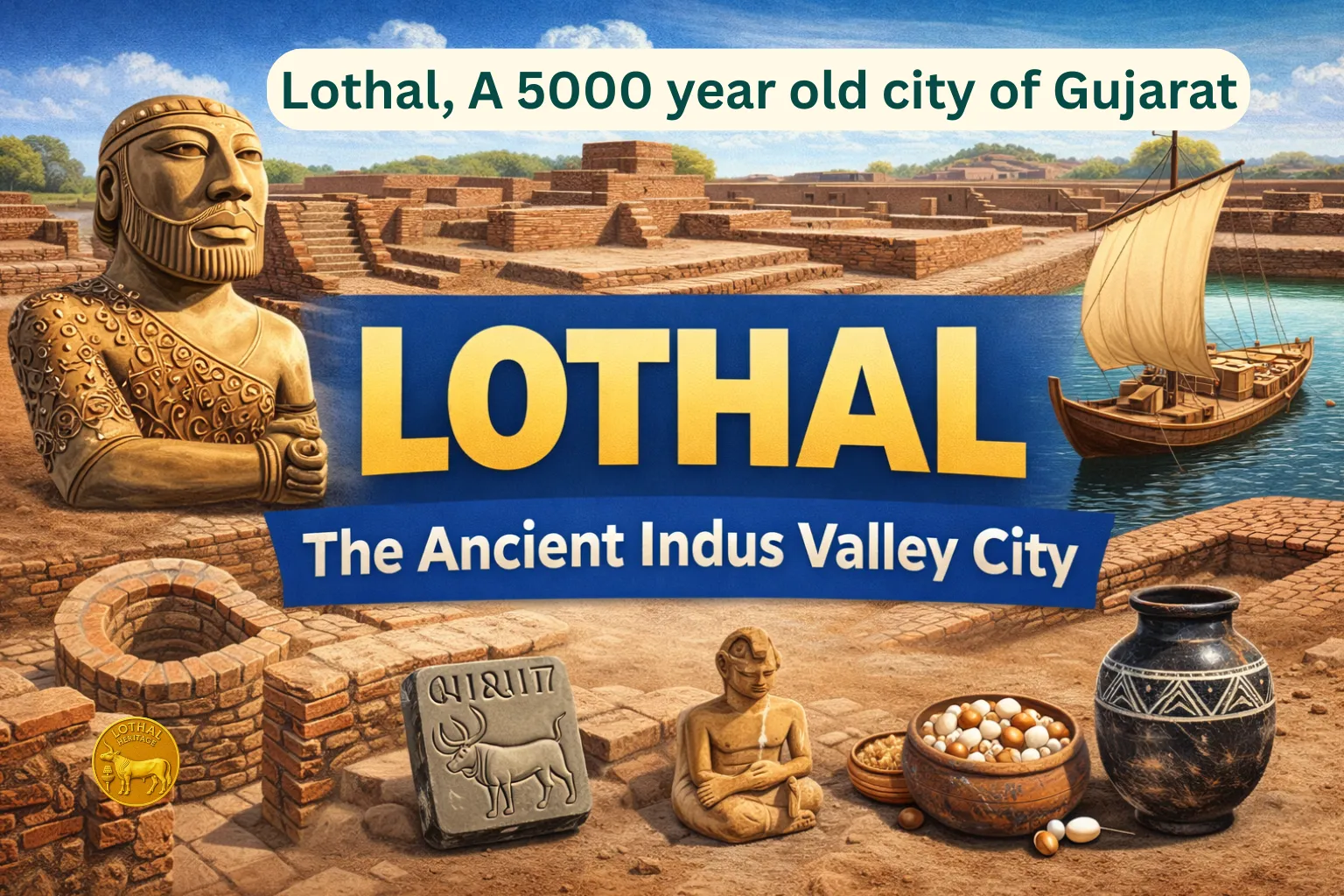
The excavation revealed a well-planned settlement dating back approximately 3,700 years, placing it within the mature phase of the Indus Valley Civilization. Although smaller in scale compared to Mohenjo-daro, Lothal’s significance lay in its function rather than its size.
Where Exactly Is Lothal?
One of the most striking aspects of Lothal is its accessibility. Located about 85 kilometres from Ahmedabad in Gujarat, it is one of the easiest Indus Valley sites to visit in western India.
Situated along the Bhogava River—a tributary of the Sabarmati—Lothal lies approximately 30 kilometres from the present-day Gulf of Khambat. Geological studies suggest that during its peak, the settlement may have been much closer to the sea, making it ideally positioned for maritime trade.
Its proximity to major heritage landmarks such as the Modhera Sun Temple and Rani ki Vav further enhances its cultural importance, even though those monuments belong to later historical periods.
Location Overview of Lothal
| Feature | Details |
|---|---|
| State | Gujarat, India |
| Nearest Major City | Ahmedabad (85 km) |
| River | Bhogava River |
| Distance from Gulf of Khambat | Approx. 30 km |
| Estimated Age | Around 3,700 years |
| Total Area | Approximately 7 hectares |
The Structure of the Ancient Town
Although modest in size—covering around 7 hectares and roughly 18 times smaller than Mohenjo-daro—Lothal displays hallmark features of Harappan urban planning.
The settlement was divided into two primary sections:
- Upper Town (Citadel)
- Lower Town
This division reflects a structured civic hierarchy common across Indus Valley settlements.
The Citadel and Lower Town
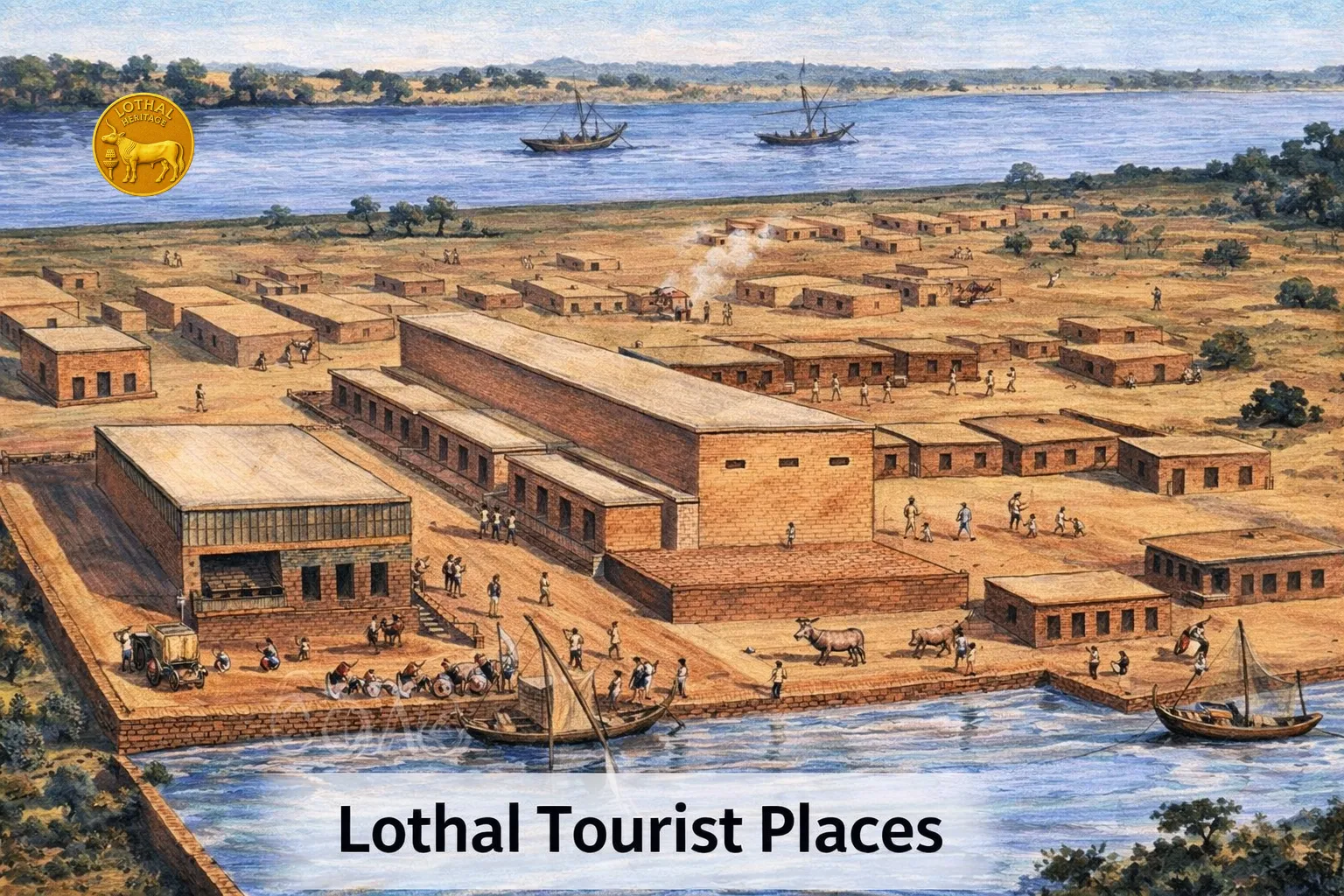
The Upper Town, located in the south-eastern part of the site, was built on mud-brick platforms approximately four metres high. Unlike heavily fortified walls seen elsewhere, Lothal relied on elevated platforms for protection.
Within the citadel, archaeologists uncovered:
- Wide streets laid out in grid patterns
- Advanced drainage systems
- Rows of bathing platforms
- A large warehouse structure
The Lower Town housed residential and commercial areas, reflecting a vibrant and organized urban community.
The Dockyard of Lothal: The World’s Oldest?
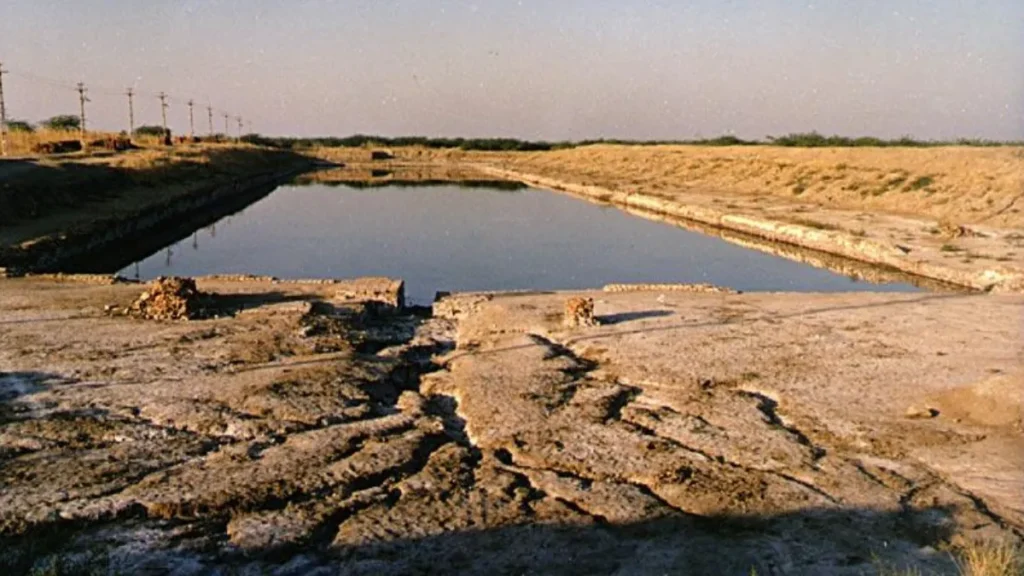
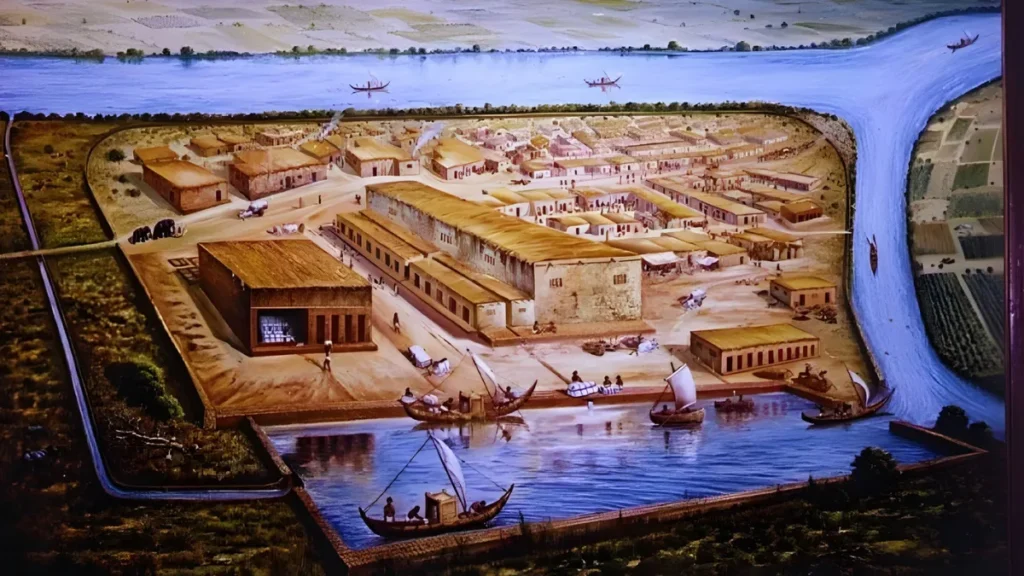
Perhaps the most debated and fascinating discovery at Lothal is its massive rectangular basin, believed by many scholars to be one of the world’s oldest known dockyards.
Located at the northern edge of the settlement, the basin features vertical walls and inlet-outlet channels. Satellite imagery indicates that an ancient river channel once connected it to tidal waters, allowing ships to enter during high tide.
Dockyard Specifications
| Feature | Description |
|---|---|
| Shape | Rectangular basin |
| Walls | Vertical brick-lined |
| Water Control | Inlet and outlet channels |
| Function | Believed to be tidal dockyard |
| Alternative Theory | Irrigation tank (disputed) |
Marine artefacts—including stone anchors, shells, and seals traced to the Persian Gulf—support the interpretation of the basin as a dock. A nearby warehouse further reinforces the theory that Lothal was a bustling port engaged in international trade.
Advanced Drainage and Urban Engineering
The drainage system at Lothal stands among the most sophisticated of the ancient world. While many modern cities still struggle with infrastructure challenges, the Harappans achieved remarkable sanitation standards nearly four millennia ago.
Key features included:
- Corbelled brick roofs over drains
- Kiln-fired brick linings
- Cesspools with filtration systems
- Wooden screens to trap solid waste
Such innovations demonstrate an extraordinary understanding of engineering and public health.
Burial Practices and Twin Burials
Harappan sites reveal diverse funerary customs, including burial, cremation, and urn burials. Lothal introduced a unique variation: twin burials, where two individuals were interred together.
This rare practice has intrigued archaeologists, prompting debates about familial relationships, ritual significance, or social customs.
Craftsmanship and Industrial Excellence
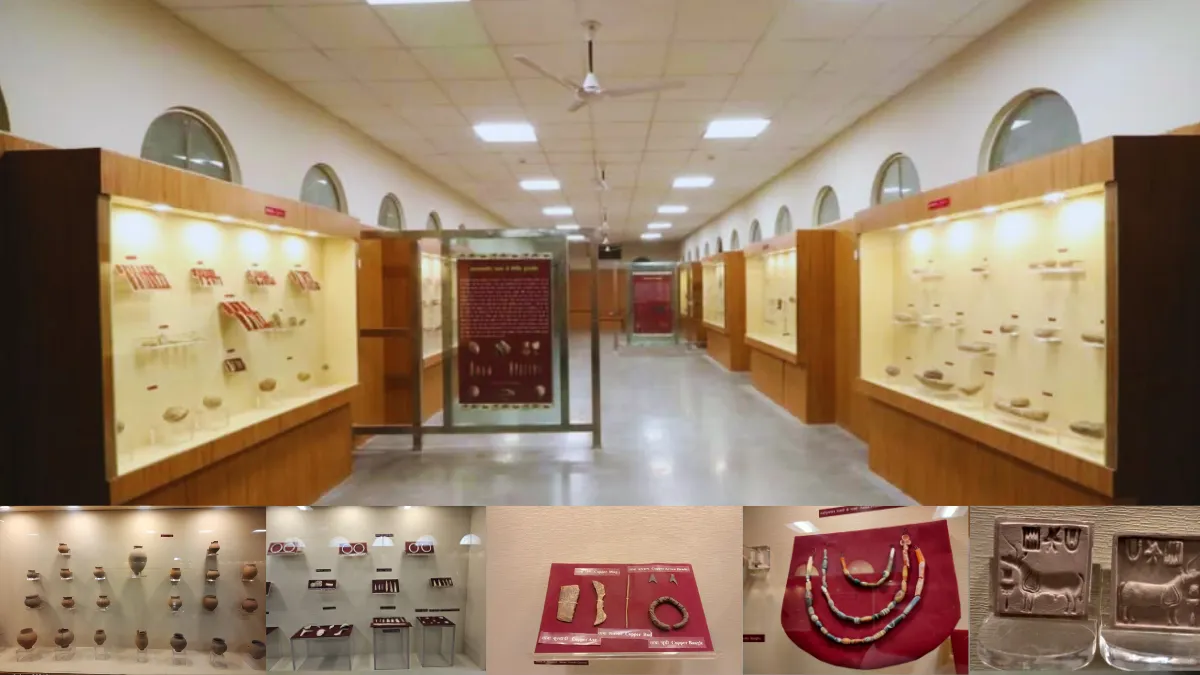
Lothal was a thriving industrial hub renowned for bead-making, metallurgy, shell-working, and gold craftsmanship.
One of the most remarkable achievements was the production of micro-beads of gold measuring less than 0.25 millimetres in diameter. This level of precision remains impressive even by modern standards.
The bead-making techniques developed in Lothal continue to influence traditional artisans in the Kathiawar region more than 4,000 years later.
Major Artefacts Found at Lothal
| Category | Examples |
|---|---|
| Tools | Fish hooks, chisels, spears |
| Ornaments | Gold microbeads, faience studs |
| Trade Seals | Persian Gulf circular seal |
| Raw Materials | Copper, chert, semi-precious stones |
| Industrial Structures | Warehouse, bead factory |
Uniform brick sizes, standardized weights, and consistent measurement systems further reflect the administrative sophistication of the civilization.
Global Trade Networks of Lothal
Evidence strongly suggests that Lothal was integrated into an extensive trade network stretching across the ancient world.
Exports likely included:
- Beads
- Gemstones
- Ivory
- Shell artefacts
Imports included:
- Copper
- Semi-precious stones
- Chert
Trade connections extended as far as Egypt, Bahrain, and Sumer. The discovery of a Persian Gulf–style seal at Lothal provides tangible proof of these interactions.
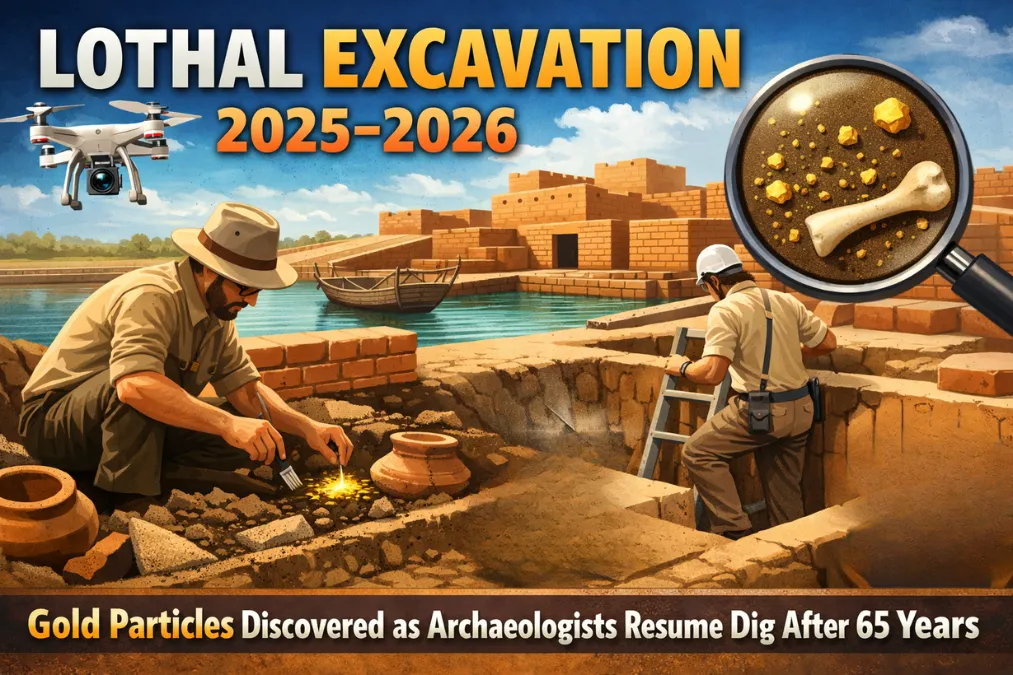
Also read: Lothal Excavation 2025–2026: Gold Particles Discovered as Archaeologists Resume Dig After 65 Years
The Rise and Decline of Lothal
The Indus Valley Civilization thrived on trade. However, shifts in river systems, climatic changes, and the collapse of interconnected Bronze Age economies contributed to its gradual decline.
Lothal, vulnerable to tidal floods, may have suffered repeated environmental damage. Over time, sedimentation and river course changes likely rendered its dock unusable.
Eventually, the once-bustling port fell silent.
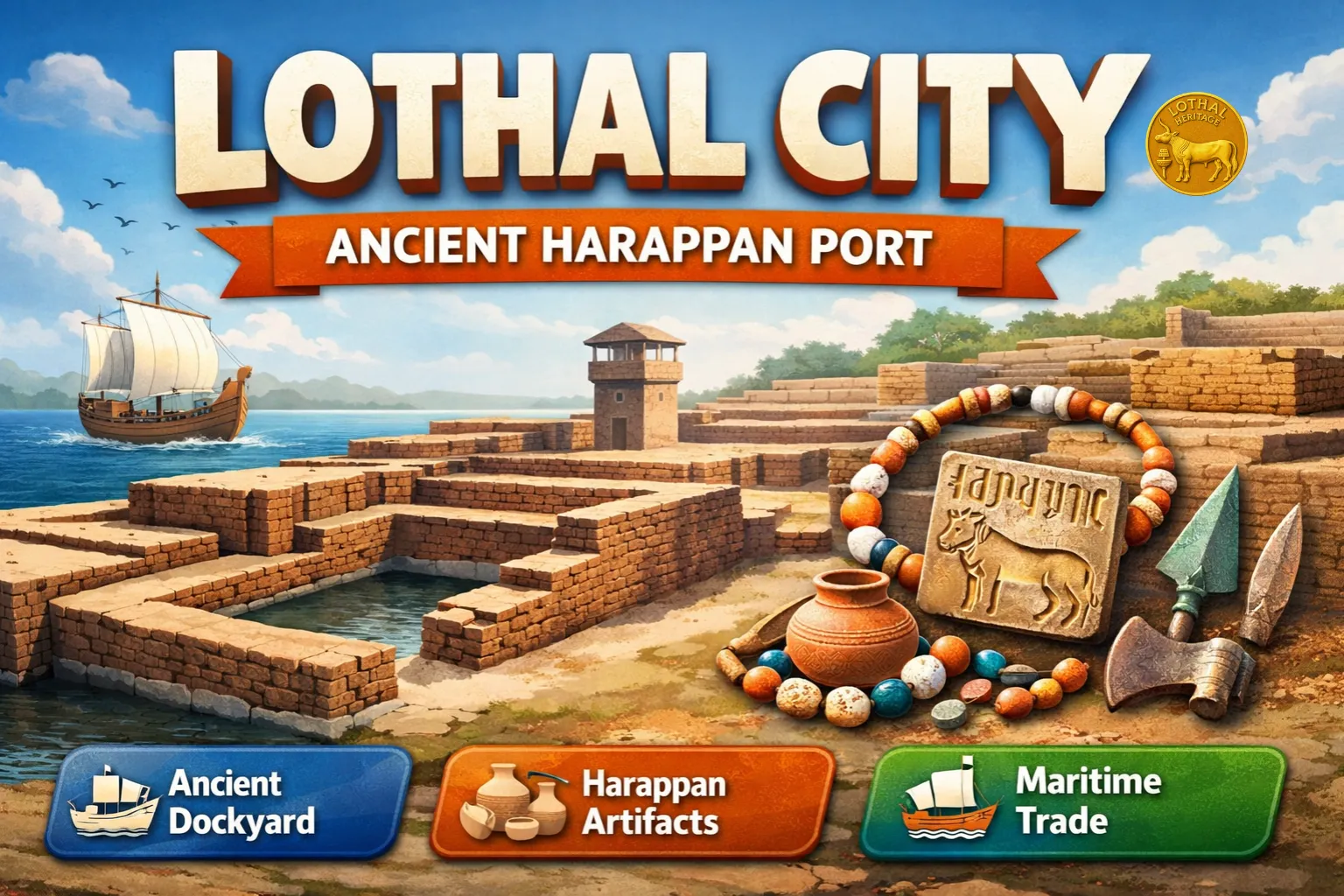
Also read: Lothal City: A Remarkable Example of Advanced Urban Planning in Ancient India
Lothal’s Enduring Legacy
Despite its abandonment, Lothal remains a testament to human ingenuity. It illustrates that maritime trade, urban planning, and scientific precision were already highly developed nearly 4,000 years ago.
Its story also symbolizes resilience—representing India’s rediscovery of its ancient heritage after Partition.
Today, Lothal continues to attract historians, archaeologists, and visitors from across the globe. It stands not merely as a relic of the past but as evidence that globalization, engineering innovation, and cultural exchange are far older than many assume.
In the annals of world history, Lothal is more than an archaeological site. It is a reminder that civilization’s foundations were laid not only along rivers but also along coastlines, where trade and ideas flowed freely across continents.
As research continues and new technologies refine our understanding, Lothal’s importance in the story of human progress only grows stronger.