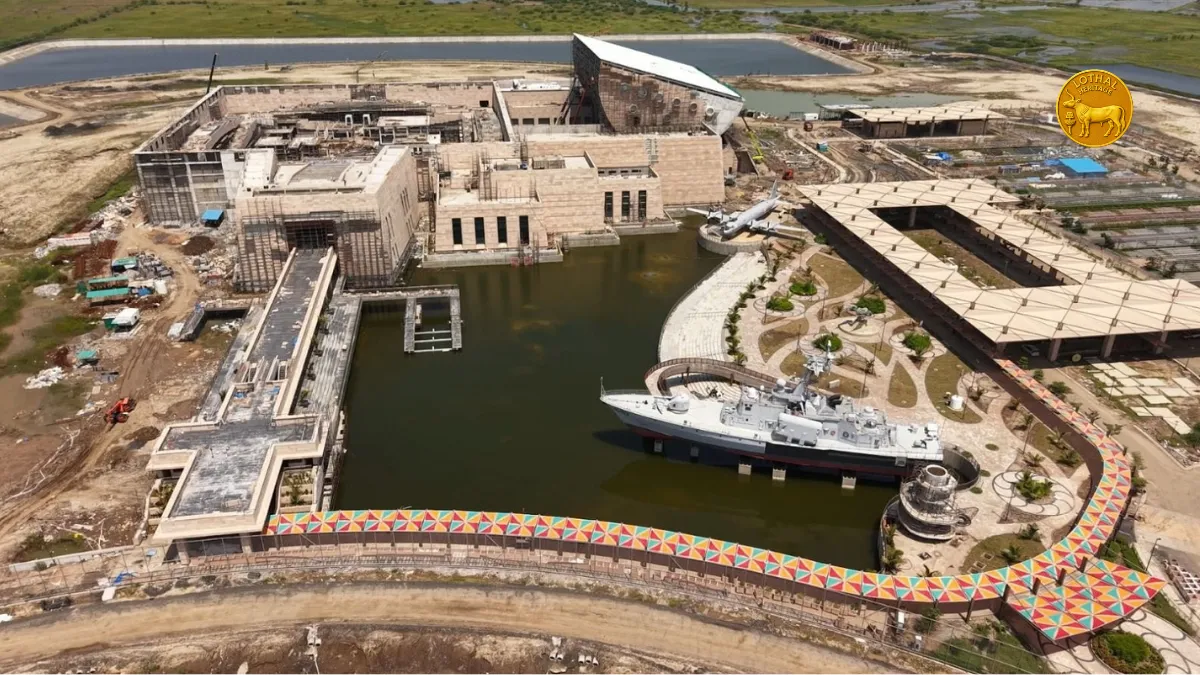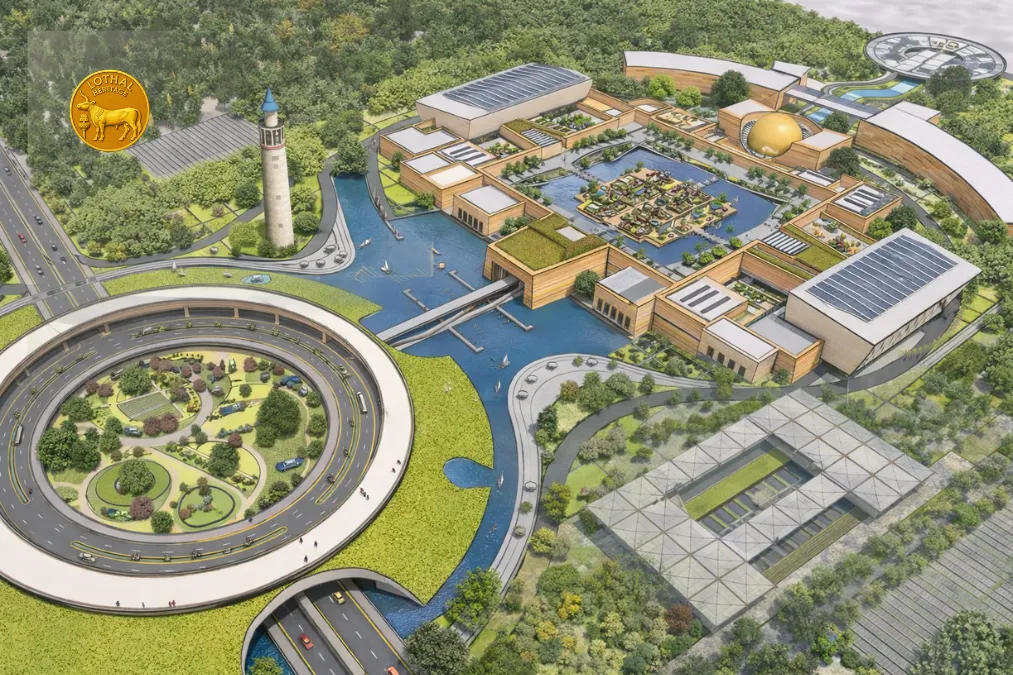
India is moving forward with one of the most ambitious cultural and tourism infrastructure projects in its history — the National Maritime Heritage Complex Lothal, a ₹4,500-crore mega development near Ahmedabad in the state of Gujarat. Designed to highlight India’s rich maritime traditions spanning over five millennia, the project aims to transform the ancient Harappan port town of Lothal into a world-class destination where history, technology, tourism, and education converge.
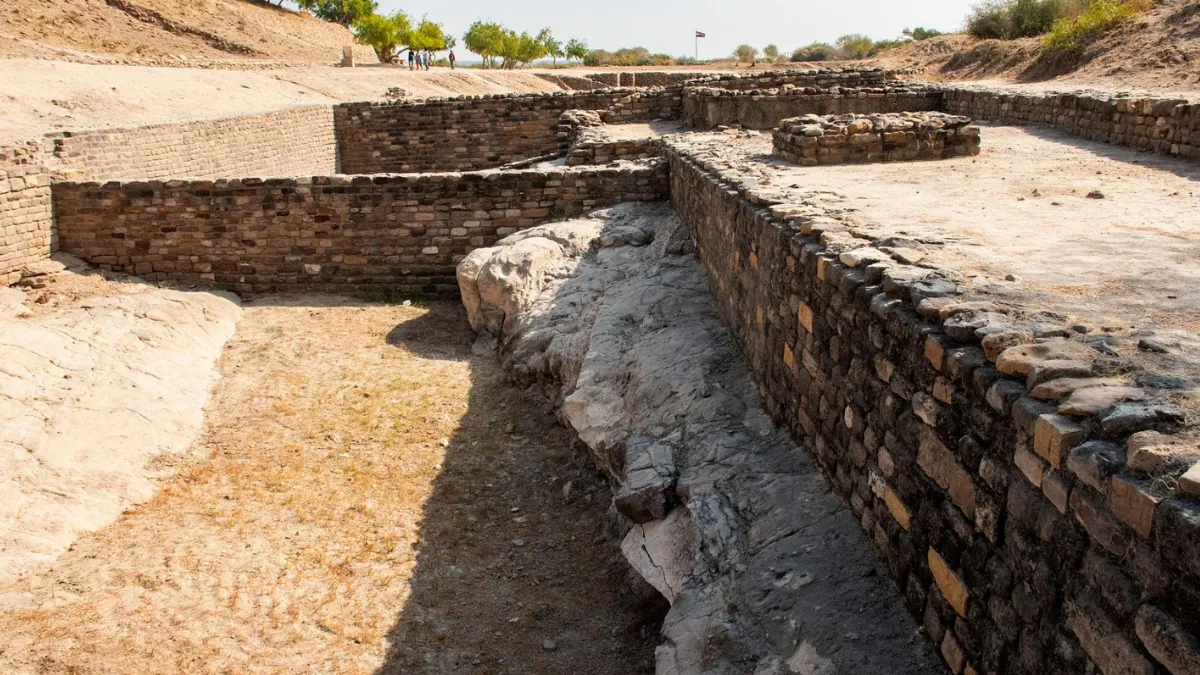
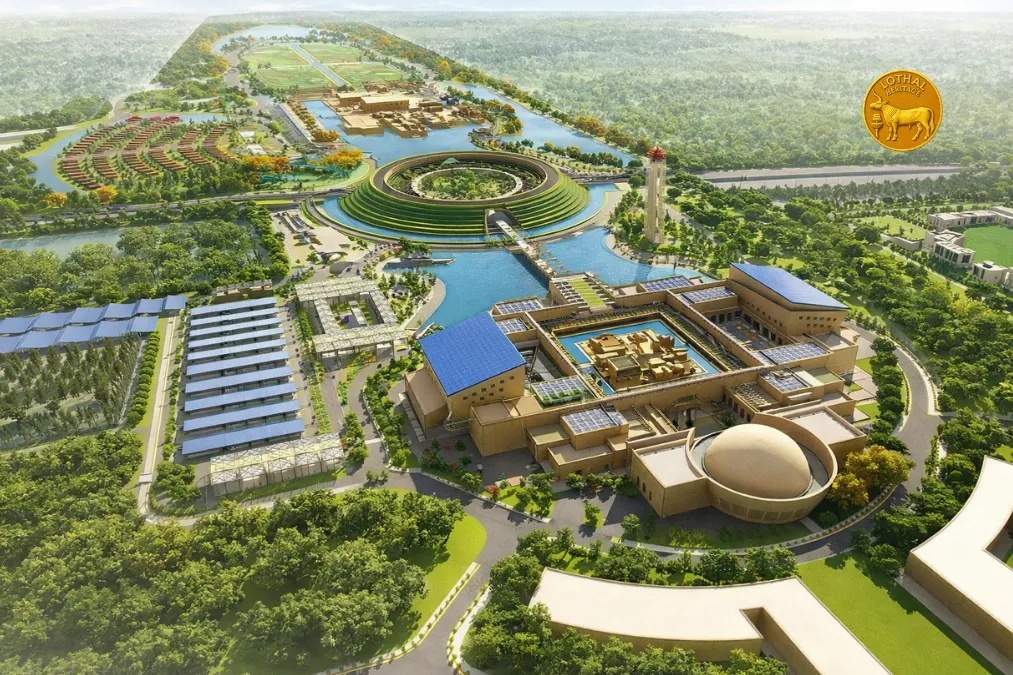
The National Maritime Heritage Complex Lothal will be constructed on approximately 400 acres of land adjacent to the archaeological site of Lothal, which dates back around 5,000 years and is believed to contain one of the world’s earliest known dockyards. The project is being developed by the Ministry of Ports, Shipping and Waterways, Government of India, and represents a significant effort to showcase India’s long-standing connection with the seas.
Once completed, the National Maritime Heritage Complex Lothal is expected to become a global cultural landmark that celebrates India’s maritime achievements — from the trading networks of the Harappan civilization to the modern growth of Indian shipping and naval power. The complex will include a technologically advanced museum, themed heritage parks, a replica Harappan city, and the world’s tallest lighthouse museum, among many other attractions.
Lothal: The Ancient Maritime Gateway of the Indus Valley Civilization
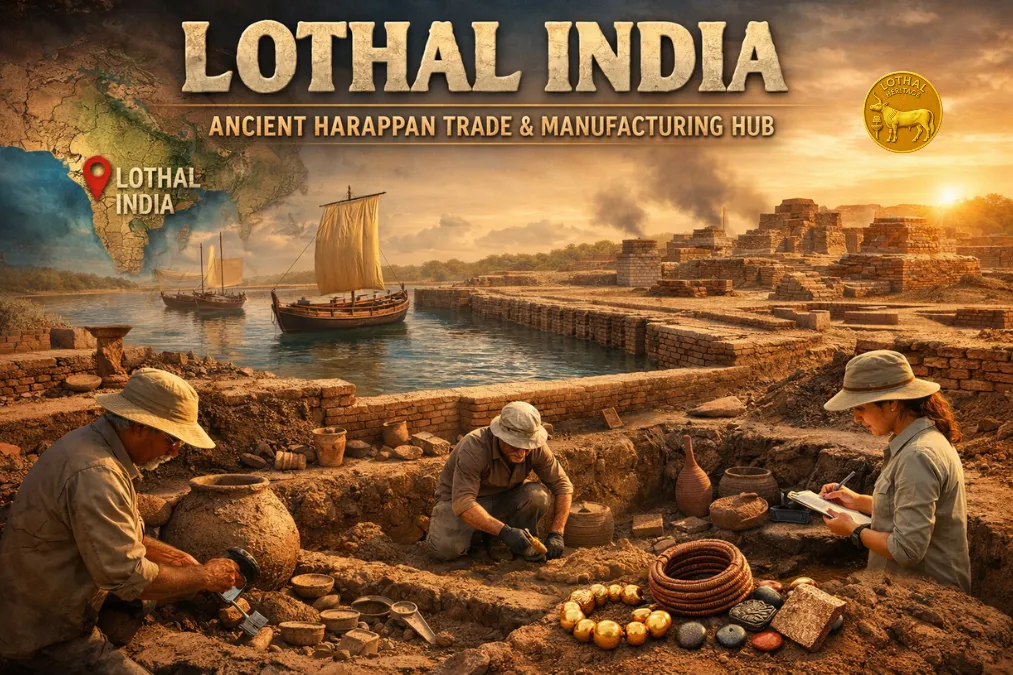
The choice of Lothal for this monumental project is far from accidental. Located in Gujarat’s Ahmedabad district, Lothal holds immense archaeological and historical significance. The site was part of the Indus Valley Civilization, also known as the Harappan civilization, one of the world’s earliest urban cultures.
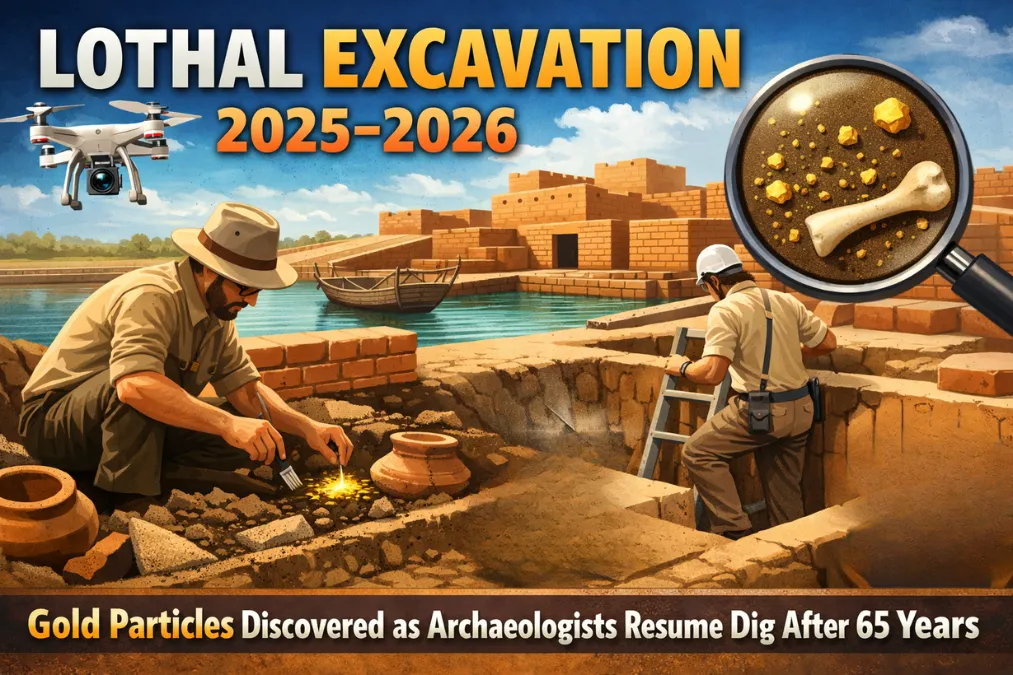
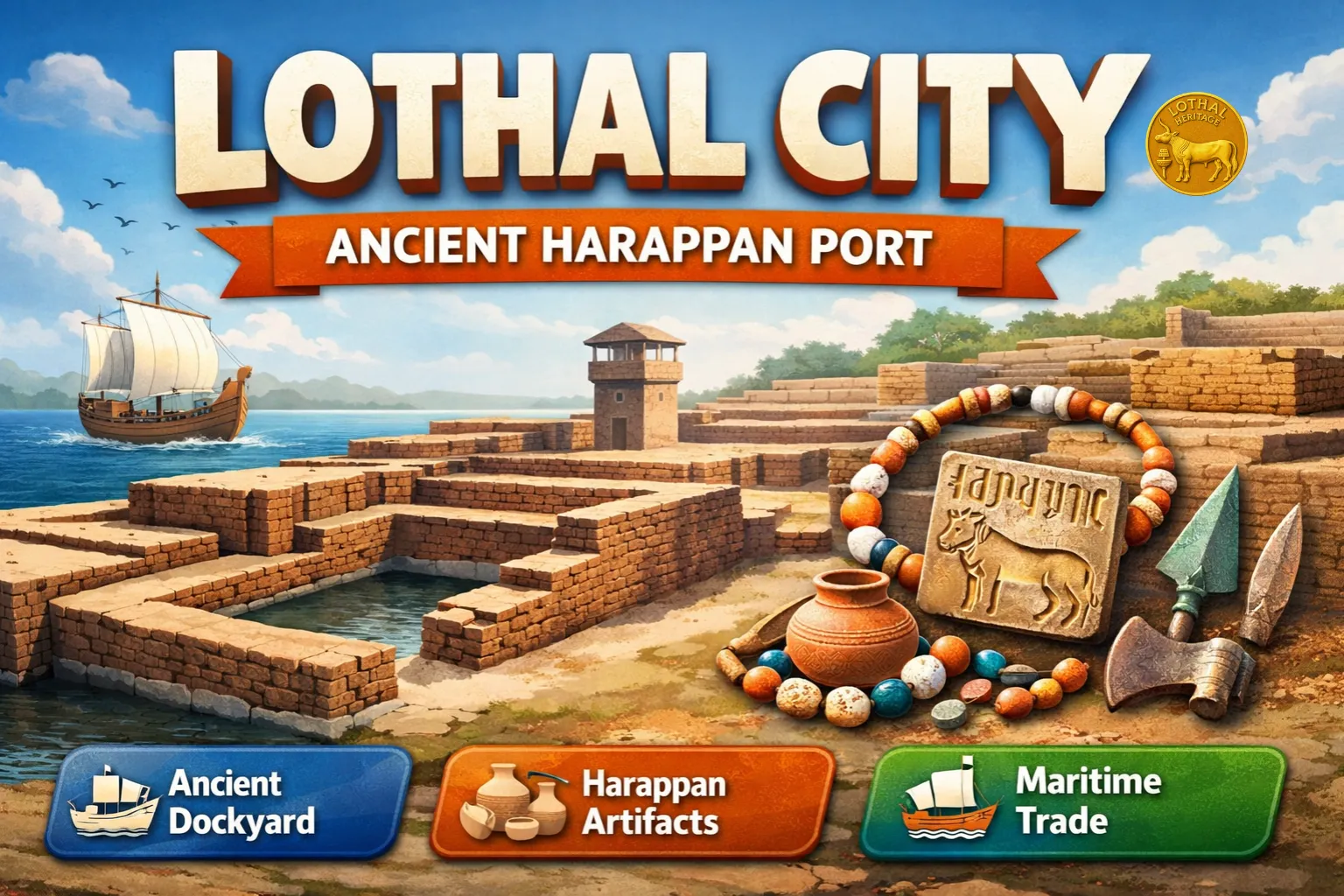
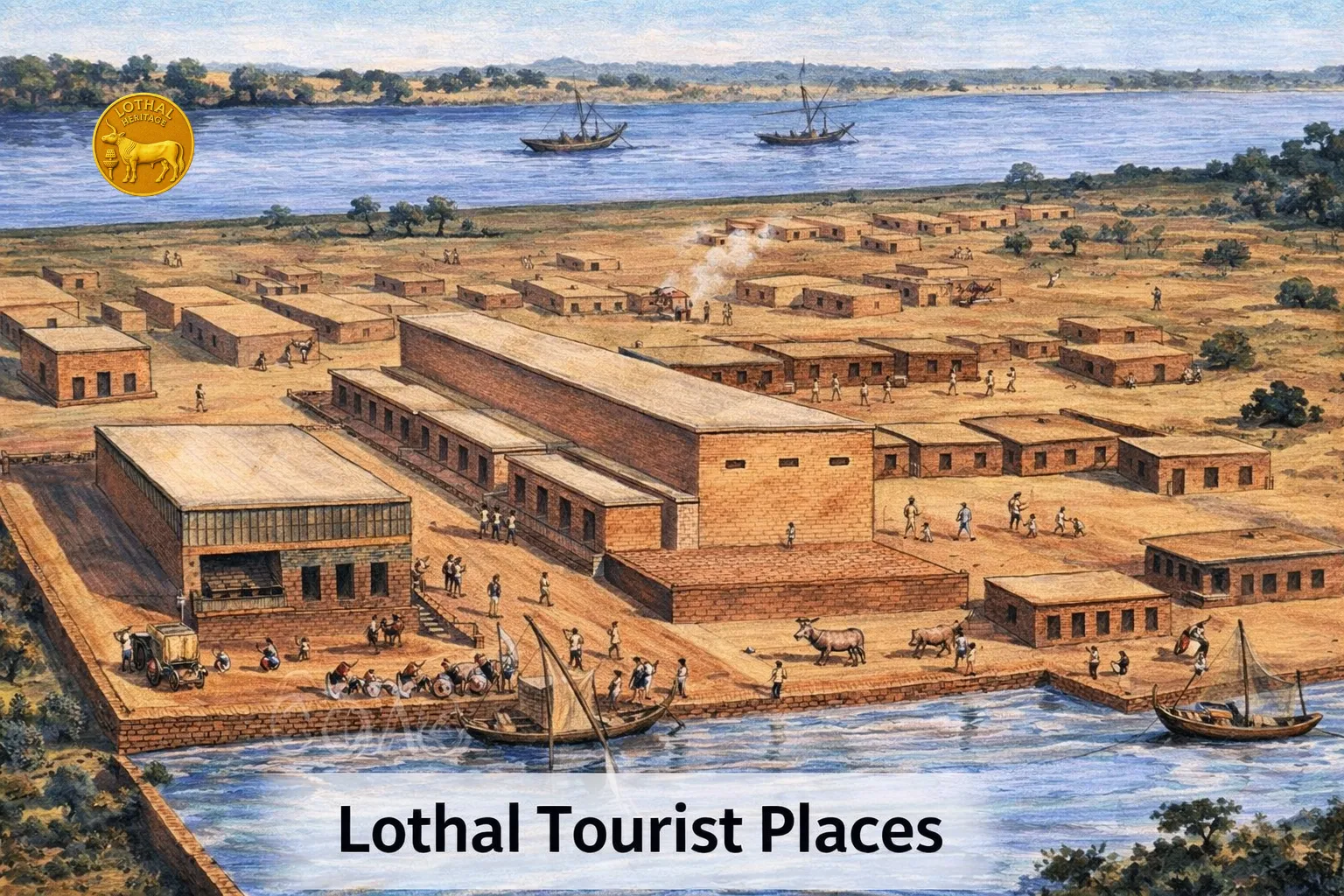
Archaeological excavations have revealed that Lothal was a thriving port city around 2400 BCE. The settlement contained an advanced dockyard, warehouses, drainage systems, bead-making workshops, and evidence of international trade.
Historians and archaeologists believe that Lothal served as a major maritime trading center connecting the Indian subcontinent with distant regions such as Oman, Mesopotamia, and the Persian Gulf.
Key Historical Facts About Lothal
| Feature | Details |
|---|---|
| Civilization | Indus Valley (Harappan Civilization) |
| Estimated Age | Around 5,000 years |
| Location | Near Ahmedabad, Gujarat |
| Key Discovery | One of the world’s earliest known dockyards |
| Trade Links | Oman, Mesopotamia, Persian Gulf |
| Major Industries | Bead-making, metallurgy, pottery |
The presence of the ancient dockyard suggests that the people of Lothal possessed advanced knowledge of shipbuilding, tidal movements, and maritime navigation. These discoveries demonstrate that maritime trade played a crucial role in India’s early economic and cultural development.
The Maritime Heritage Complex Lothal seeks to bring this remarkable legacy back into public consciousness by creating a platform where visitors can explore and understand India’s deep-rooted relationship with the seas.
Vision Behind the Maritime Heritage Complex Lothal
The concept of the Maritime Heritage Complex Lothal emerged as part of a broader vision to celebrate India’s maritime past while promoting cultural tourism and academic research.
According to officials associated with the project, the idea is to create a destination that combines heritage preservation, education, tourism, and technological innovation.
Professor Vasant Shinde, an advisor to the project and a renowned archaeologist, has described the upcoming complex as an engineering and cultural marvel that will redefine how maritime history is presented to the world.
He explained that the project aims to offer visitors a unique immersive experience where they can explore India’s maritime story from ancient times to the modern era.
Project Overview
The Maritime Heritage Complex Lothal is one of the largest heritage infrastructure projects ever undertaken in India.
Basic Project Details
| Aspect | Information |
|---|---|
| Project Name | Maritime Heritage Complex Lothal |
| Estimated Cost | ₹4,500 Crore |
| Location | Lothal, near Ahmedabad, Gujarat |
| Total Area | Approximately 400 acres |
| Implementing Authority | Ministry of Ports, Shipping and Waterways |
| Main Purpose | Showcasing India’s maritime heritage |
| Expected Completion | Within the next few years |
The complex is designed to integrate modern architecture with historical themes. Advanced technologies such as digital projections, interactive exhibits, and immersive storytelling will allow visitors to explore different periods of maritime history in engaging ways.
National Maritime Museum: The Heart of the Complex
At the center of the Maritime Heritage Complex Lothal will stand the National Maritime Museum, an iconic structure designed to narrate India’s maritime journey through a series of themed galleries.
The museum will consist of fourteen specialized galleries, each focusing on a different chapter of India’s maritime history.
Proposed Galleries in the National Maritime Museum
| Gallery Theme | Description |
|---|---|
| Ancient Maritime Trade | Early seafaring routes and trade networks |
| Harappan Civilization | Dockyard and maritime activities at Lothal |
| Shipbuilding Traditions | Traditional Indian shipbuilding techniques |
| Maritime Navigation | Evolution of navigation tools |
| Naval Warfare | Development of naval defense strategies |
| Lighthouse Heritage | Role of lighthouses along India’s coastline |
| Maritime Culture | Influence of maritime trade on culture |
| Modern Shipping | Growth of India’s shipping industry |
| Port Development | Evolution of Indian ports |
| Marine Ecology | Relationship between maritime activities and environment |
| Global Trade Routes | India’s historical trade connections |
| Maritime Archaeology | Underwater discoveries and research |
| Coastal Communities | Lives of people dependent on the sea |
| Future of Maritime India | Innovations in shipping and marine science |
Each gallery will feature artifacts, digital installations, historical films, artworks, and immersive exhibits designed to make maritime history accessible and engaging for visitors.
The Bagicha Complex: Gateway to Maritime History
Another major attraction within the Maritime Heritage Complex Lothal will be the Bagicha Complex, which will function as the main entry point for visitors.
The Bagicha Complex is envisioned as a landscaped cultural plaza that introduces visitors to India’s maritime legacy before they begin exploring the rest of the complex.
Key features expected in the Bagicha Complex include:
- Visitor orientation center
- Exhibition halls
- Cultural performance spaces
- Restaurants and cafes
- Landscaped gardens and water features
The idea is to create an inviting and educational environment that prepares visitors for the immersive journey through maritime history awaiting them inside the complex.
Four Major Maritime Theme Parks
One of the most exciting aspects of the Maritime Heritage Complex Lothal is the development of four large themed parks, each offering a different experience connected to maritime heritage and environmental awareness.
Theme Parks Planned in the Complex
| Theme Park | Key Focus |
|---|---|
| Maritime and Naval Theme Park | History of Indian navy and maritime defense |
| Climate Change Theme Park | Environmental impact on oceans and coastal areas |
| Adventure and Amusement Theme Park | Recreational activities for visitors |
| Monuments Theme Park | Replicas of iconic maritime structures |
These parks will combine entertainment with education, making the complex attractive not only for historians and researchers but also for families and tourists.
World’s Tallest Lighthouse Museum
Among the most iconic features of the Maritime Heritage Complex Lothal will be the world’s tallest lighthouse museum.
The structure is planned to rise more than 75 meters, making it a landmark visible from far distances.
Features of the Lighthouse Museum
| Feature | Description |
|---|---|
| Height | Over 75 meters |
| Viewing Gallery | Panoramic views of the entire complex |
| Exhibitions | History of Indian lighthouses |
| Interactive Displays | Navigation technology and maritime safety |
| Observation Deck | Tourist viewing platform |
Visitors reaching the viewing gallery will be able to enjoy a sweeping view of the complex while learning about India’s long coastline and the role of lighthouses in maritime navigation.
Engineering Innovations and Climate-Responsive Design
The main museum building at the Maritime Heritage Complex Lothal has been designed with innovative engineering solutions to cope with the extreme temperatures often experienced in Gujarat.
The structure will include temperature-controlled architecture to maintain comfortable indoor conditions for visitors.
Key Construction Features
| Feature | Description |
|---|---|
| Stone Material | Imported from Jodhpur |
| Assembly Method | Sequential stone assembly |
| Wall Structure | Concrete core with stone outer layers |
| Climate Control | Designed to maintain stable interior temperature |
According to project officials, the layered wall construction — with concrete sandwiched between stone layers — helps regulate heat and ensures durability.
This innovative design approach allows the building to maintain moderate temperatures even during peak summer months.
India’s First E-Transport Heritage Destination
The Maritime Heritage Complex Lothal will also become India’s first heritage tourism site powered entirely by eco-friendly transport systems.
Private fuel-based vehicles will not be allowed inside the complex. Visitors will transition to sustainable transport modes once they arrive.
Eco-Friendly Transport Options
| Transport Mode | Purpose |
|---|---|
| Electric Buggies | Short-distance movement |
| Personal Electric Bikes | Individual travel within complex |
| Segways | Tourist exploration |
| Water Boats | Travel through interconnected canals |
The inclusion of water channels connecting various sections of the complex will allow visitors to travel by boat, adding a unique maritime experience to the visit.
Showcasing India’s Naval Strength
Visitors arriving at the Maritime Heritage Complex Lothal will be welcomed by displays of decommissioned defense equipment that highlight India’s naval capabilities.
Among the major exhibits planned are:
- IL-38 maritime patrol aircraft
- INS Nishank, a decommissioned naval vessel
Both of these defense assets served in India’s armed forces and played roles in protecting the nation’s maritime interests.
Their presence at the entrance will symbolize the evolution of India’s maritime power — from ancient trading vessels to modern naval defense systems.
Replica Harappan City: Recreating Life 5,000 Years Ago
Perhaps the most fascinating attraction planned at the Maritime Heritage Complex Lothal is the replica Harappan city.
This reconstruction will recreate the lifestyle, architecture, and trading practices of the ancient Harappan civilization.
Features of the Replica City
| Feature | Description |
|---|---|
| Architecture | Based on Harappan archaeological findings |
| Lifestyle | Reenactment of ancient daily activities |
| Trade System | Barter system instead of modern currency |
| Cultural Activities | Traditional crafts and practices |
Visitors entering the replica city will experience what life might have been like in Lothal 5,000 years ago.
Interestingly, modern currency will not be accepted within this section. Instead, visitors will participate in simulated barter trade, just as ancient merchants did.
International Collaboration and Research
The development of the Maritime Heritage Complex Lothal also involves collaboration with multiple countries.
India has signed Memorandums of Understanding (MOUs) with several nations to gather information related to historical maritime connections and to access advanced museum technologies.
These partnerships aim to enrich the exhibits and ensure that the complex presents a globally accurate and comprehensive narrative of maritime history.
Expected Impact on Tourism and Economy
The Maritime Heritage Complex Lothal is expected to significantly boost tourism in Gujarat and across India.
Experts believe the project could become one of the most important heritage tourism destinations in Asia.
Potential Benefits
| Sector | Expected Impact |
|---|---|
| Tourism | Increased international visitors |
| Employment | Thousands of jobs during construction and operation |
| Education | Research and academic opportunities |
| Culture | Preservation of maritime heritage |
| Economy | Boost to regional development |
With its combination of history, architecture, technology, and entertainment, the complex is likely to attract historians, archaeologists, students, families, and international tourists alike.
Timeline and Development Progress
While construction work is progressing steadily, officials have indicated that certain sections of the Maritime Heritage Complex Lothal may open earlier than others.
Development Timeline (Expected)
| Phase | Progress |
|---|---|
| Phase 1 | Initial galleries and infrastructure |
| Phase 2 | Theme parks and cultural areas |
| Phase 3 | Lighthouse museum and replica city |
| Final Completion | Within the next few years |
Conclusion
The Maritime Heritage Complex Lothal represents a bold attempt to bring India’s maritime history into the spotlight. By combining archaeological heritage with cutting-edge museum technology, the project aims to tell the story of how seafaring shaped India’s cultural and economic development over thousands of years.
From the ancient dockyards of the Harappan civilization to the naval strength of modern India, the complex will offer visitors an unforgettable journey across time.
Once completed, the Maritime Heritage Complex Lothal is expected to stand not only as a tribute to India’s maritime achievements but also as a symbol of how heritage preservation and modern innovation can work together to create a destination of global significance.