Lothal, Gujarat:
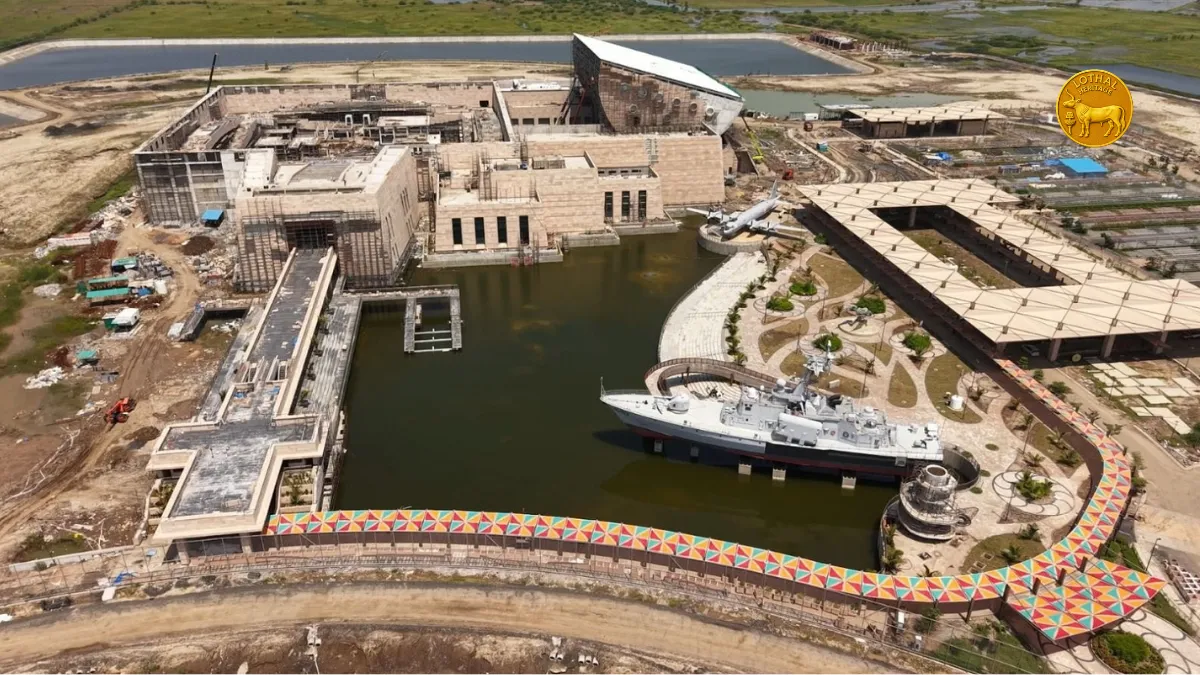
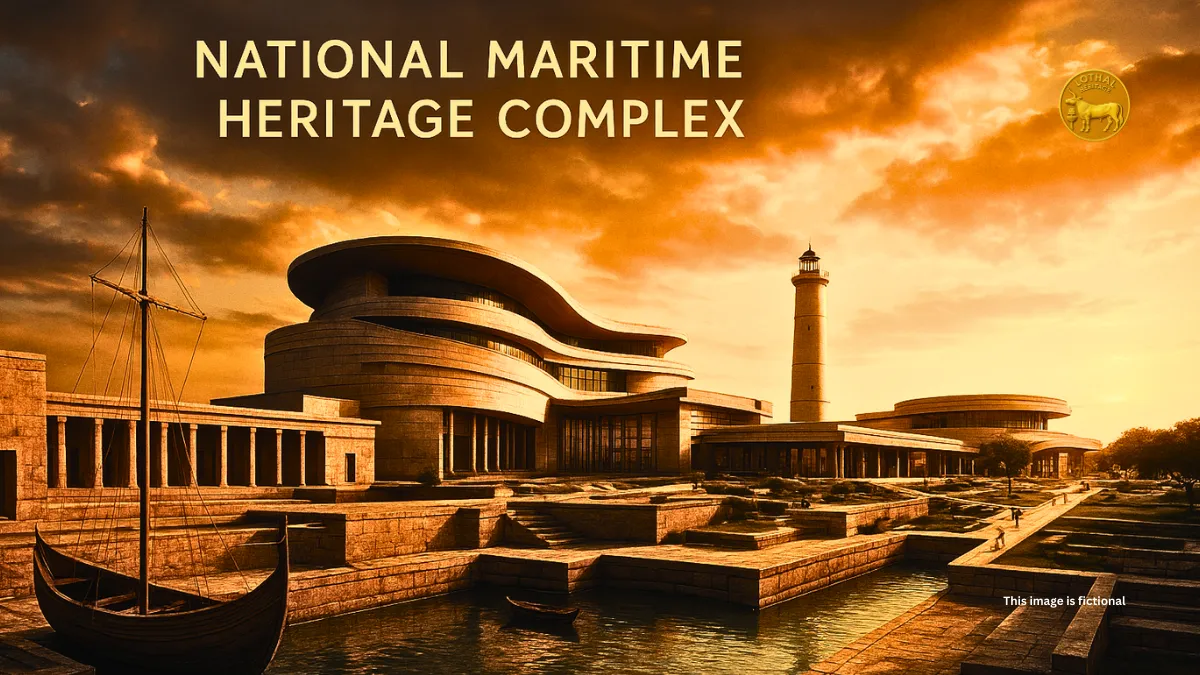
National Maritime Heritage Complex: In a major push to highlight India’s ancient maritime legacy, the Central Government has announced an ambitious Rs 4,000-crore plan to establish a world-class National Maritime Heritage Complex at Lothal-the famed port city of the Indus Valley Civilization. Union Minister for Ports, Shipping and Waterways Sarbananda Sonowal confirmed that the multibillion-rupee project is expected to be completed by 2029 and is poised to transform Lothal into one of the most significant international cultural and tourism destinations.
The announcement marks one of India’s largest cultural infrastructure investments, aimed at showcasing the nation’s 5,000-year-old maritime history to global audiences while creating a thriving hub for research, tourism, and heritage conservation.
A Monumental Investment in India’s Maritime Identity
Speaking about the project, Sonowal emphasized that India’s maritime prowess is far older than commonly acknowledged, with Lothal serving as one of the earliest examples of organised port-based commerce in human history.
He explained that the government has sanctioned Rs 4,000 crore over the next five years to build the museum complex, develop tourist facilities, and strengthen Lothal’s infrastructure. The goal is not only to preserve heritage but also to create an immersive, educational, and globally attractive environment for visitors.
Alongside government funding, the project is expected to receive significant private investment. The Ministry of Ports, Shipping and Waterways has already identified over Rs 5,000 crore worth of projects that will be executed under the Public-Private Partnership (PPP) model. These investments are aimed at improving accessibility, hospitality, transport connectivity, and modern amenities around the historic site.
According to ministry officials, tenders for PPP contracts will be floated in phases as the redevelopment progresses.
Lothal: The Ancient Port That Connected Civilizations
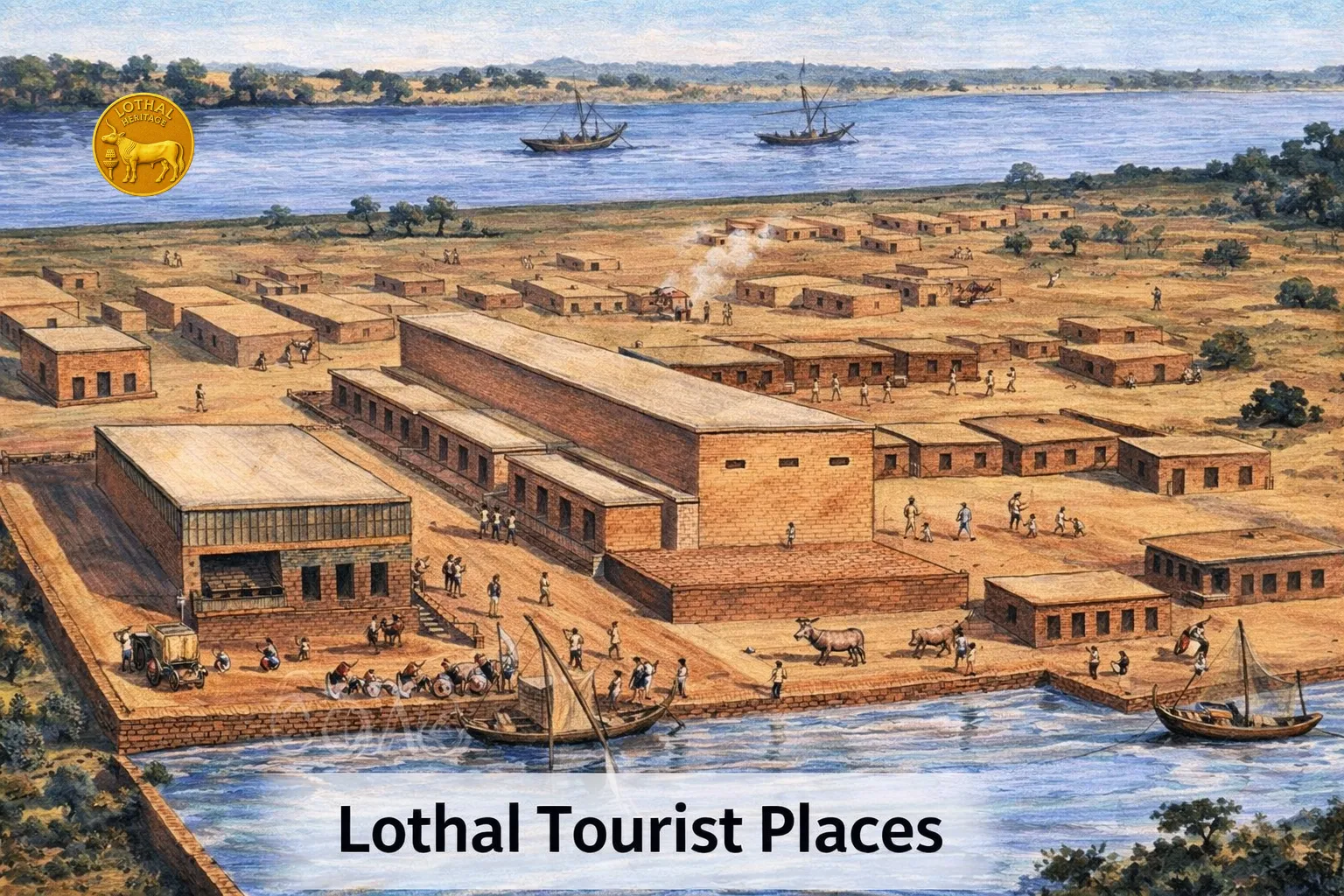
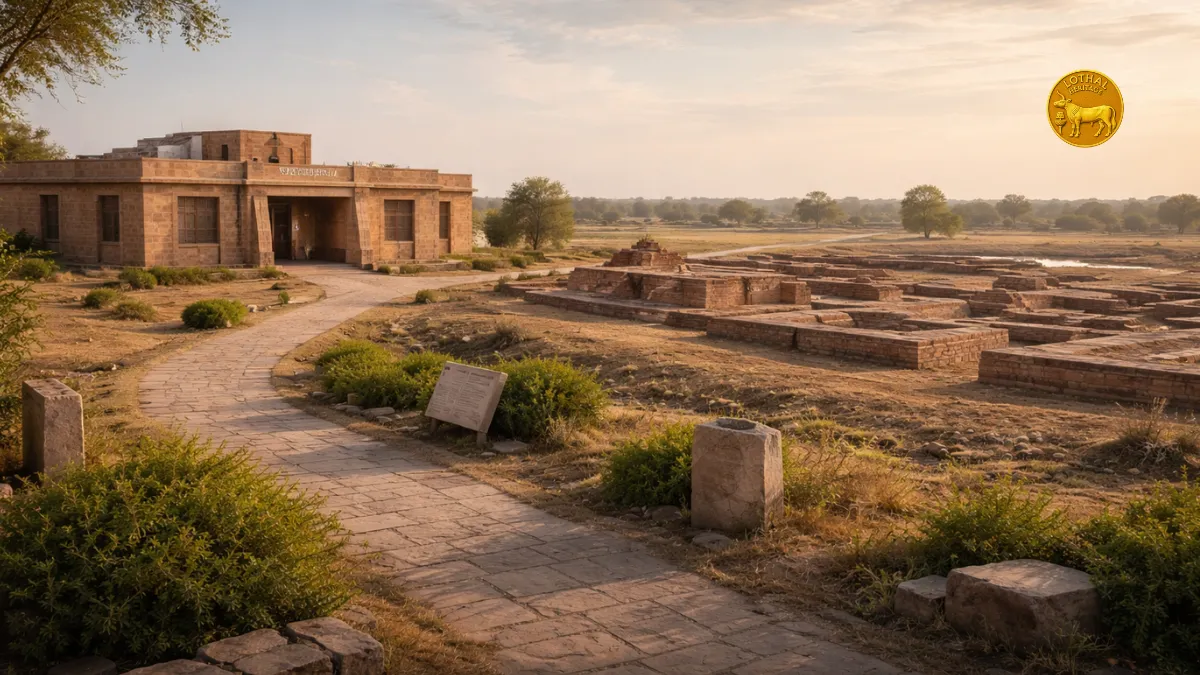
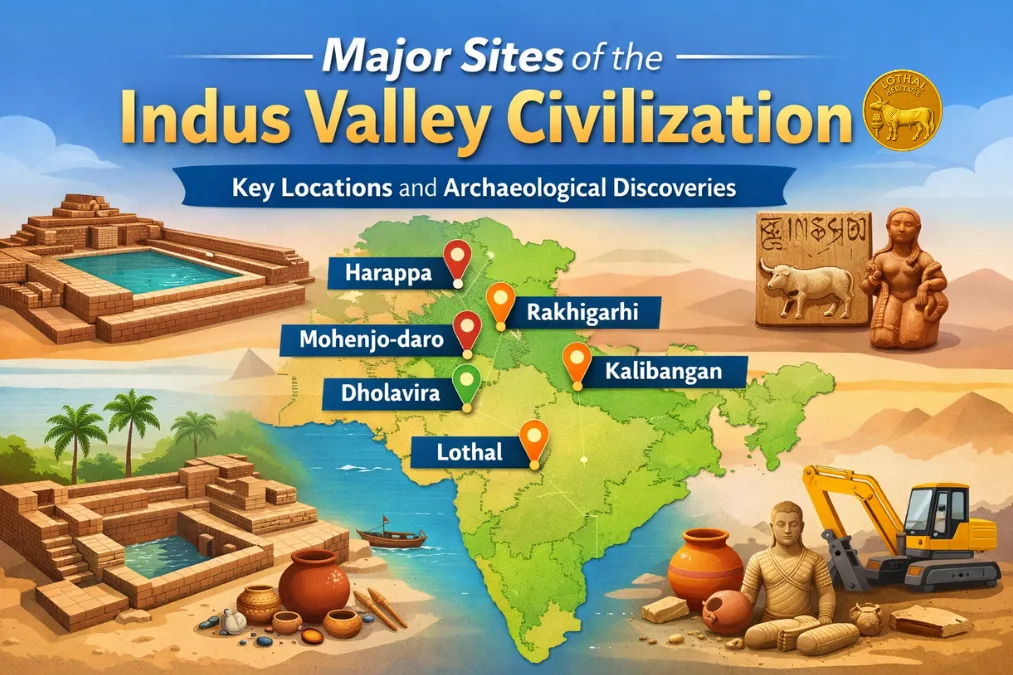
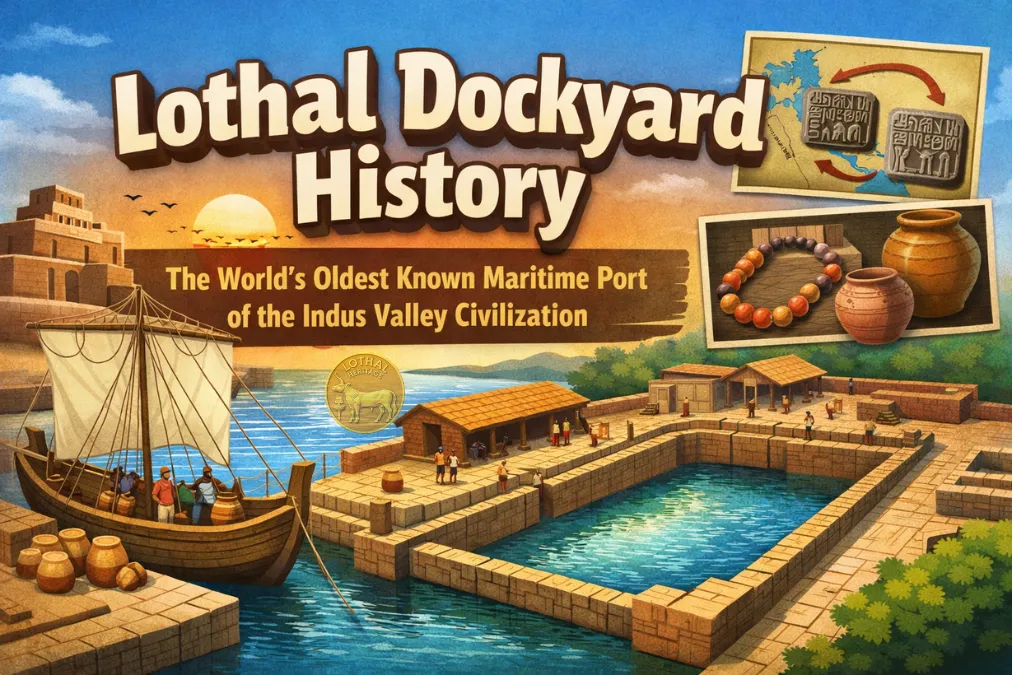
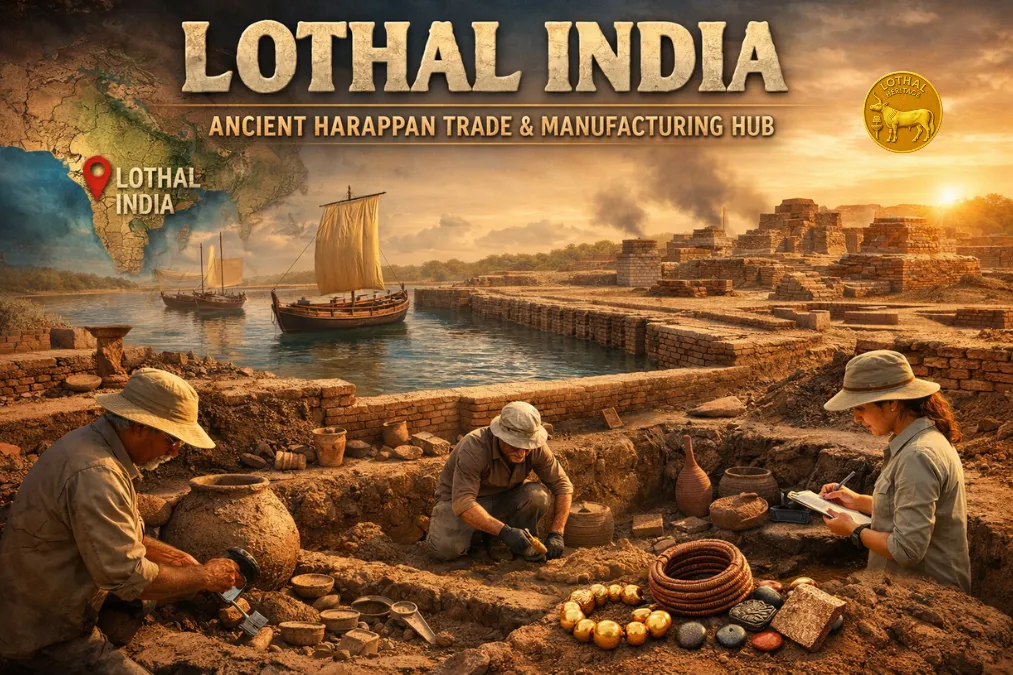
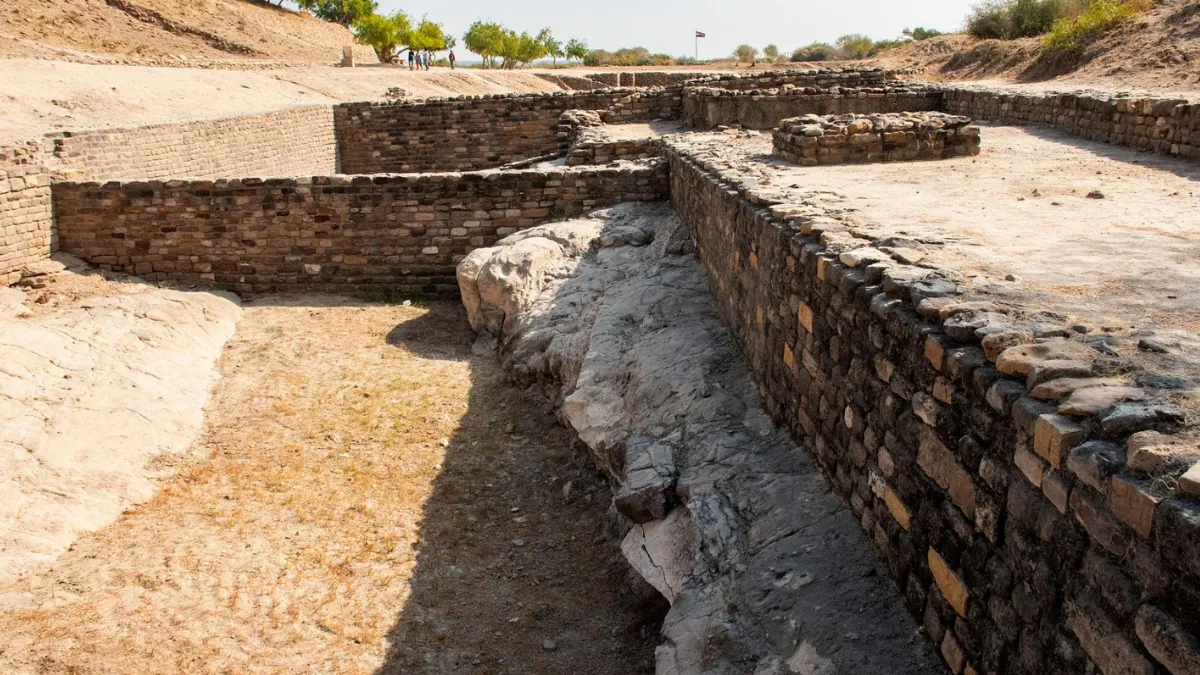
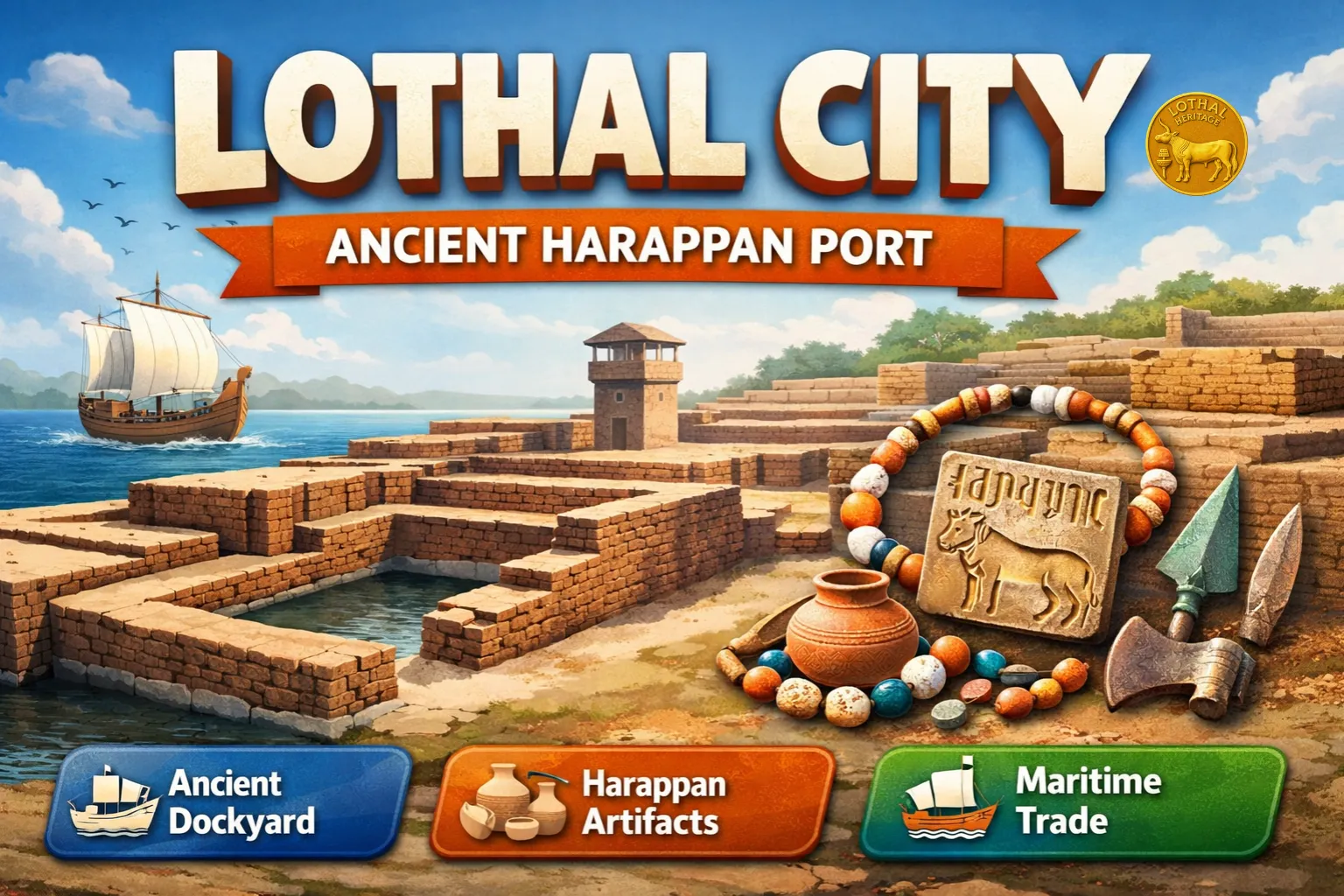
Lothal holds a special place in global archaeological history. Dating back to around 2600 BC during the height of the Harappan or Indus Valley Civilization, it was one of the world’s earliest planned port towns. Excavations by the Archaeological Survey of India (ASI) uncovered what is considered the world’s oldest known man-made dockyard, a marvel of ancient engineering built with precise understanding of tides, water channels, and maritime movement.
The dockyard allowed Lothal to serve as a crucial maritime gateway connecting the Indus Valley to civilizations such as:
- Mesopotamia
- Ancient Egypt
- Persia
- Oman
- Bahrain
- Dilmun and Magan cultures
Lothal’s presence on ancient trade routes made it a flourishing centre for bead-making, metallurgy, shell-work, ceramics, and precious stone craftsmanship. Its strategic location near the Gulf of Khambhat enabled merchants to ship goods like gemstones, ornaments, pottery, cotton textiles, copper items, and spices.
Because of its rich heritage, Lothal is also recognized by UNESCO as a World Heritage site, a status that adds global responsibility to preserve and promote it effectively.
Reviving India’s 5,000-Year-Old Maritime Story
Sonowal stated that the new National Maritime Heritage Complex will serve as an iconic symbol of India’s time-tested maritime strength.
“Around 5,000 years ago, India played a central role in connecting the world through commerce, maritime trade, culture, and civilizational exchange. The redevelopment of Lothal will highlight this extraordinary legacy and help the world understand India’s ancient role in global trade,” Sonowal said.
He further emphasized that the project will exhibit India’s maritime evolution-from the Harappan era to modern naval achievements-through advanced digital experiences, interactive galleries, and immersive storytelling.
Phase-Wise Redevelopment: Completion Targets and Project Scope
The redevelopment of Lothal is divided into multiple phases.
Phase 1 is expected to be ready by the end of 2025.
Key elements of Phase 1 include:
- Development of major galleries showcasing maritime trade across India’s coastal states
- Construction of visitor infrastructure, theme-based experiences, and interpretive zones
- Architectural restoration and recreation of parts of ancient Lothal city
- Setting up research facilities for maritime archaeology
Once this phase is completed, visitors will be able to explore India’s ancient sea routes, trade patterns, shipbuilding traditions, and cultural exchanges through visually rich exhibits.
What the National Maritime Heritage Complex Will Feature
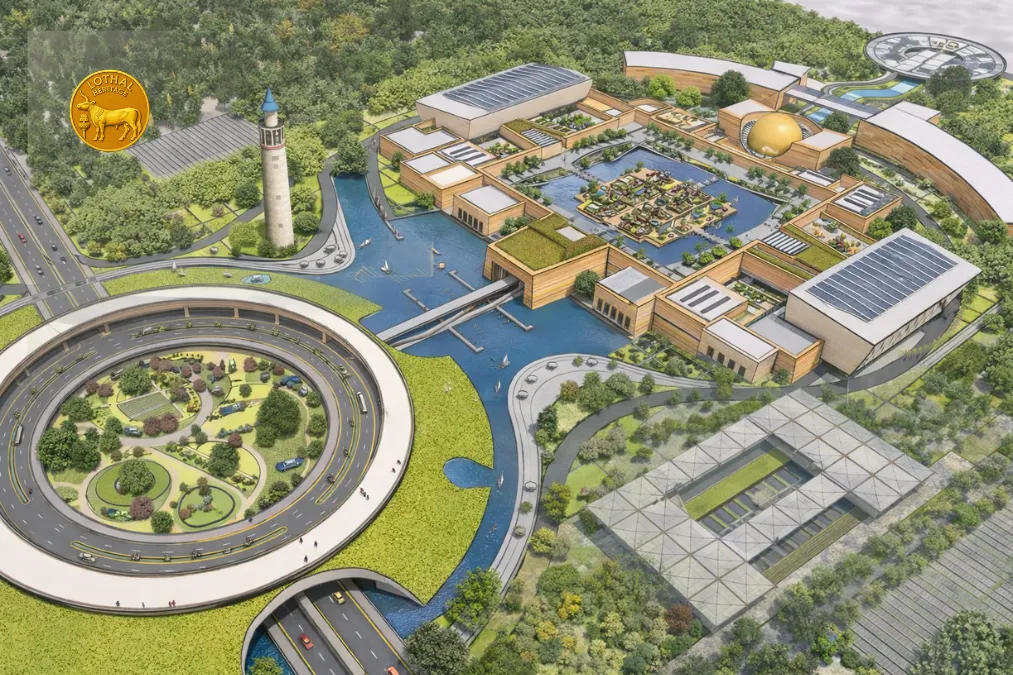
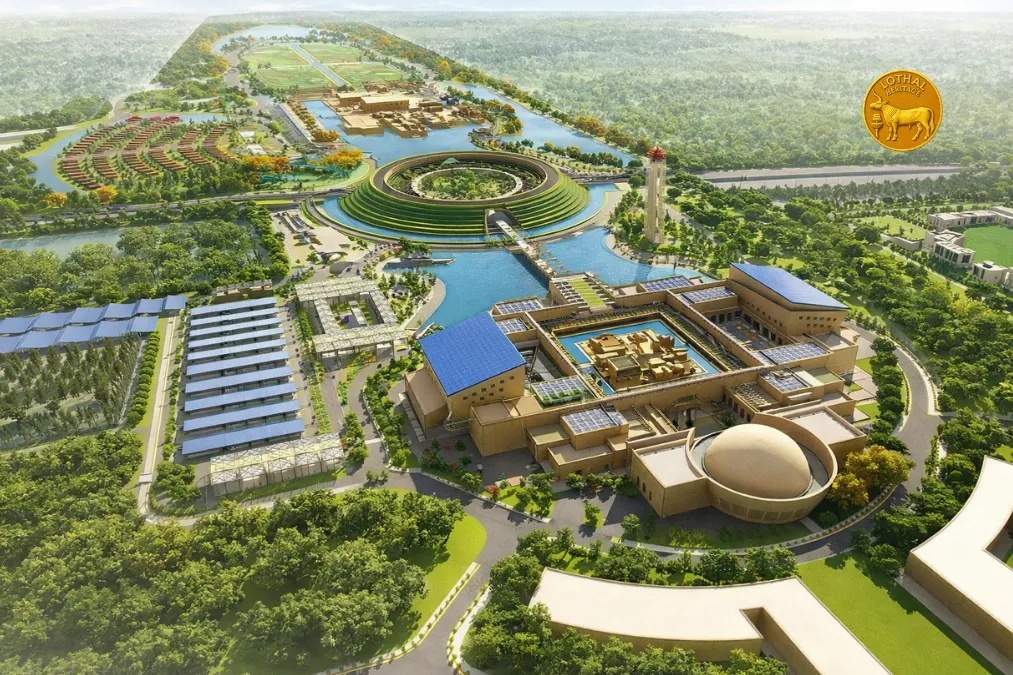
The upcoming National Maritime Heritage Complex has been planned as a massive, multidimensional cultural zone that combines history, science, architecture, education, and entertainment.
Authorities have confirmed that the complex will include:
1. 14 Immersive Galleries
Covering different eras, states, and aspects of maritime history—including trade, shipbuilding, navigation, oceanic traditions, and naval achievements.
2. A Lighthouse Museum
Highlighting India’s lighthouse network, maritime safety systems, and the evolution of navigational techniques through centuries.
3. Coastal State Pavilions
Each coastal state and Union Territory will have dedicated pavilions that showcase local maritime culture, heritage, food, crafts, and trade specialities.
4. Recreated Lothal City
A life-size reconstruction of the ancient Harappan port town, with walk-through streets, workshops, warehouses, and the iconic dockyard.
5. Four Theme-Based Parks
These include:
- A Monument Park
- A Navy & Defense Park
- A Climate Change Park
- A Nature Conservation & Adventure Park
Together, these attractions aim to offer education, recreation, and cultural insight for visitors of all ages.
6. A Maritime Technology and Innovation Zone
Showcasing ancient maritime technologies along with modern advancements such as shipbuilding, underwater archaeology, and marine engineering.
7. A Dedicated Research Centre
Focused on maritime archaeology, conservation, oceanic studies, and heritage documentation, enabling collaborations with universities and global institutions.
International Collaboration: Experts From 12 Countries Join the Mission
To ensure global excellence in design, conservation, and archaeological accuracy, India is partnering with experts from 12 nations, including:
- United Kingdom
- Italy
- Greece
- Japan
- South Korea
- Cambodia
- Vietnam
- Sri Lanka
- Malaysia
- And others involved in maritime heritage studies
International teams are expected to contribute to curatorial inputs, maritime artefact analysis, architectural research, and museum planning.
The collaboration is intended to place the National Maritime Heritage Complex among the world’s most advanced and accurate historical museums, comparable to prominent maritime museums in Europe, East Asia, and the Americas.
Government Approvals and Institutional Support
In October, the Union Cabinet granted in-principle approval for Phase 1B and Phase 2 of the National Maritime Heritage Complex. This approval ensures financial continuity, policy backing, and inter-ministerial coordination required for a project of such massive scale.
The Ministry of Ports, Shipping and Waterways, which is spearheading the development, stated:
“Setting up a maritime heritage complex at Lothal will honour the historical importance of this ancient port city and create an exceptional centre of maritime knowledge and tourism.”
Additionally, the Archaeological Survey of India, Ministry of Culture, and Government of Gujarat are playing key roles in site preservation, design curation, and infrastructural planning.
Why Lothal Is the Ideal Location for This Mega Project
Choosing Lothal for the National Maritime Heritage Complex is a symbolic decision deeply rooted in history.
Archaeological Importance
The presence of the world’s oldest known dockyard makes it a unique archaeological treasure.
Civilizational Relevance
Lothal’s role as a trade hub reflects India’s early global economic integration.
Geographical Advantage
Its proximity to Ahmedabad, Bhavnagar, and the Gulf of Khambhat offers strong tourist potential and logistical connectivity.
Authenticity
A maritime heritage complex built at the site of an original Harappan port lends unmatched authenticity and storytelling value.
The government expects millions of Indian and foreign tourists to visit annually once the complex is fully operational.
Boosting Local Economy, Employment, and Infrastructure
The Rs 4,000-crore government investment, backed by Rs 5,000+ crore in PPP partnerships, is expected to significantly uplift the region surrounding Lothal.
Estimated Benefits Include:
- Creation of thousands of jobs in construction, tourism, hospitality, and conservation
- Growth of local businesses including hotels, restaurants, transport providers, and craft markets
- Development of improved highways, public transport, and last-mile connectivity
- Increased global academic interest attracting scholars, archaeologists, and students
The government aims to turn Lothal into a maritime heritage destination comparable to internationally renowned sites such as Greece’s Piraeus Archaeological Museum or Italy’s Venice Maritime Museum.
Global Maritime Tourism Potential
With rising global interest in ancient civilizations and maritime history, the National Maritime Heritage Complex has the potential to become one of the world’s most visited heritage attractions.
Experts believe that the project can significantly increase India’s cultural tourism footprint globally, making Lothal a must-visit landmark for travellers from the US, UK, Europe, East Asia, and Australia.
Also read: Lothal Maritime Museum: Exploring the Maritime Legacy of the Indus Valley Civilization
A Cultural Revival Rooted in India’s Maritime Past
The redevelopment of Lothal-home to engineers, craftsmen, sailors, merchants, and navigators of the ancient world-represents a revival of India’s maritime roots that date back millennia.
The National Maritime Heritage Complex is expected to celebrate:
- India’s ancient shipbuilding techniques
- Early knowledge of tides and coastal engineering
- Harappan craftsmanship and trade networks
- Cultural exchanges with ancient civilizations
- Evolution of Indian seafaring from antiquity to the modern navy
This comprehensive portrayal of maritime history aims to inspire future generations and strengthen India’s cultural identity on the world stage.
Also read: Archaeological site museum lothal: Exploring India’s Ancient Maritime Legacy
Conclusion: A New Era for India’s Heritage Tourism
With construction underway and international collaborations in progress, the National Maritime Heritage Complex at Lothal is set to become a landmark of global scale. By 2029, visitors will be able to walk through reconstructed Harappan streets, explore world-class galleries, study maritime technologies, admire interactive exhibits, and experience 5,000 years of India’s maritime journey-all in one expansive, state-of-the-art complex.
The project signifies a powerful message: India’s maritime narrative did not begin recently-it began thousands of years ago at places like Lothal, where civilizations once connected through the ocean, trade flourished, and knowledge crossed borders.
The transformation of Lothal stands as a tribute to that ancient legacy and a promise to safeguard it for centuries to come.