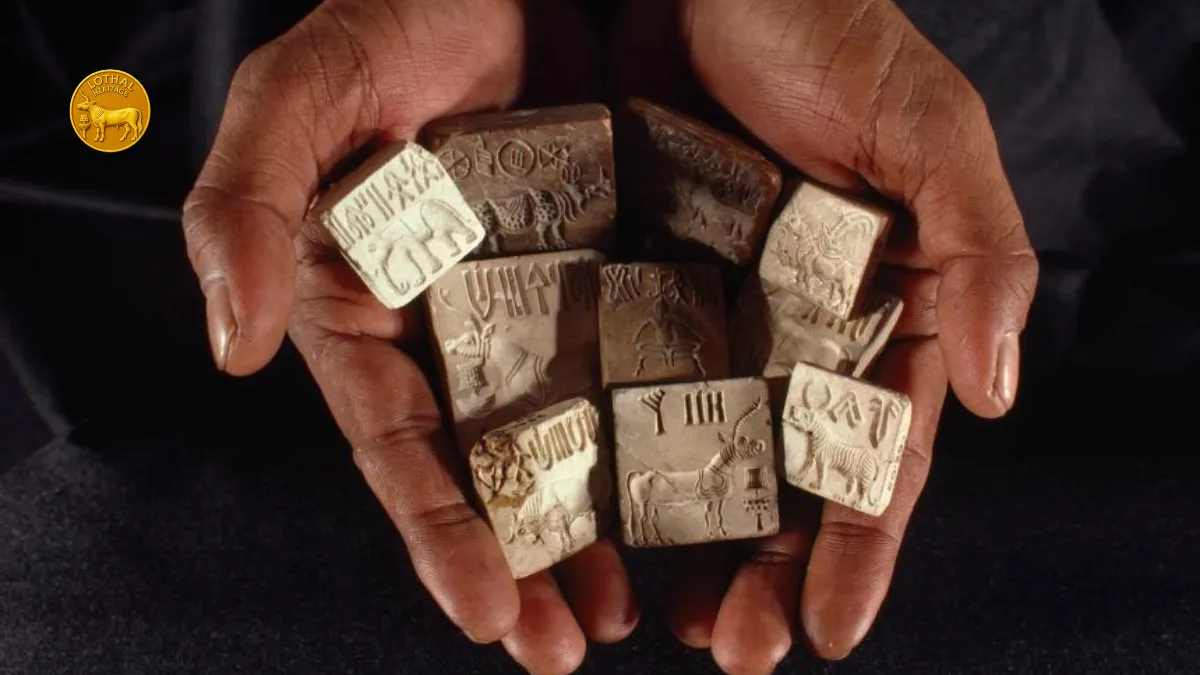
The seals of Harappan civilization stand among the most compelling discoveries of the ancient world, offering a window into the social, economic, and cultural fabric of a society that flourished more than 45,00 years ago. Found across major Indus Valley sites, these small yet intricately carved artifacts remain central to understanding how the Harappans lived, traded, worshipped, and communicated. Although the script on these seals is still undeciphered, their artistic precision and recurring motifs continue to provide valuable clues about a civilization known for its urban planning, craftsmanship, and long-distance commerce.
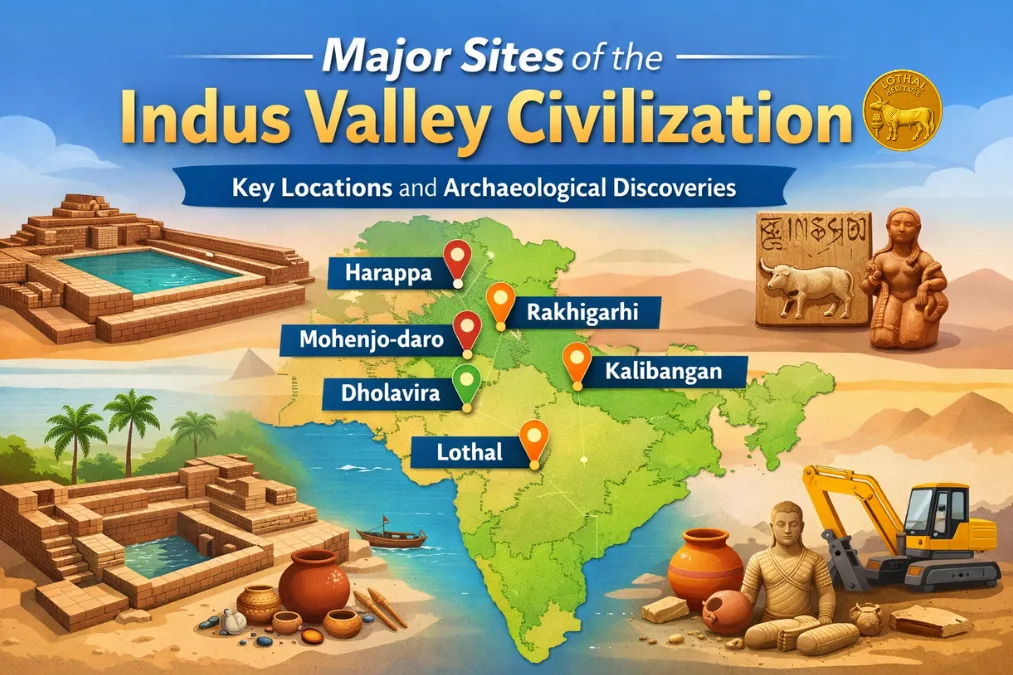
Archaeologists first encountered these seals in the early decades of the 20th century during systematic excavations at Harappa and Mohenjo-daro. Since then, discoveries at Dholavira, Lothal, Kalibangan, Rakhigarhi, and several smaller settlements have further expanded our knowledge. Each seal carries its own narrative-whether through symbolic animals, mythic figures, geometric forms, or inscriptions that likely represent names, titles, or administrative instructions. Their uniformity across thousands of examples reflects a remarkably standardized culture, hinting at shared beliefs and centralized systems.
One of the most striking features of the seals of Harappan civilization is the craftsmanship involved. Made primarily from steatite, a soft stone that becomes durable after firing, these seals demonstrate the high level of skill possessed by Harappan artisans. The engravings are precise and deeply cut, suggesting specialized tools and a well-established tradition of seal production. Beyond steatite, a smaller number of seals were crafted from terracotta, faience, copper, or ivory, indicating experimentation with different materials for specific purposes.
Origins and Function of the Indus Seals
For decades, experts have debated the purpose of the seals of Harappan civilization. While multiple theories exist, most scholars agree that these seals were multifunctional. They likely served as markers of identity, ownership, trade authorization, and religious symbolism. Some seals appear to be amulets worn for protection or status, while others bear evidence of routine stamping on clay tags or goods. The presence of seals in both domestic and commercial areas of excavation sites supports the idea that they were used in everyday transactions and administrative processes.
The symbols engraved on these seals also suggest connections with religious or ritualistic traditions. Many motifs, including the one-horned bull (commonly referred to as the unicorn), zebu bull, elephant, tiger, rhinoceros, and composite mythological creatures, may represent clan emblems or divine entities. Human and semi-human figures appearing in yogic or dynamic postures may reflect spiritual practices that existed long before they were codified in later Indian traditions.
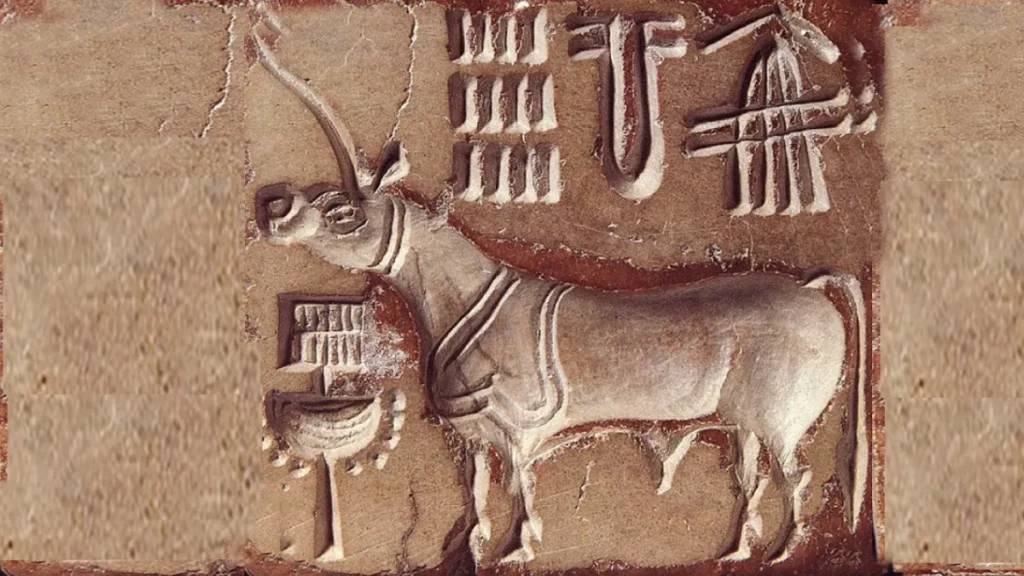
Table: Key Features of Common Harappan Seals
| Feature Category | Description |
|---|---|
| Material | Predominantly steatite; also terracotta, faience, copper, ivory |
| Shape | Mostly square; some rectangular, circular, and button-shaped |
| Motifs | Animals (unicorn, bull, elephant), mythic figures, geometric patterns |
| Script | Short inscriptions, undeciphered, typically 5–10 signs |
| Function | Trade tags, ownership marks, administrative tools, amulets |
| Sites Found | Harappa, Mohenjo-daro, Dholavira, Lothal, Rakhigarhi, Kalibangan |
Artistic Significance of the Seals of Harappan Civilization
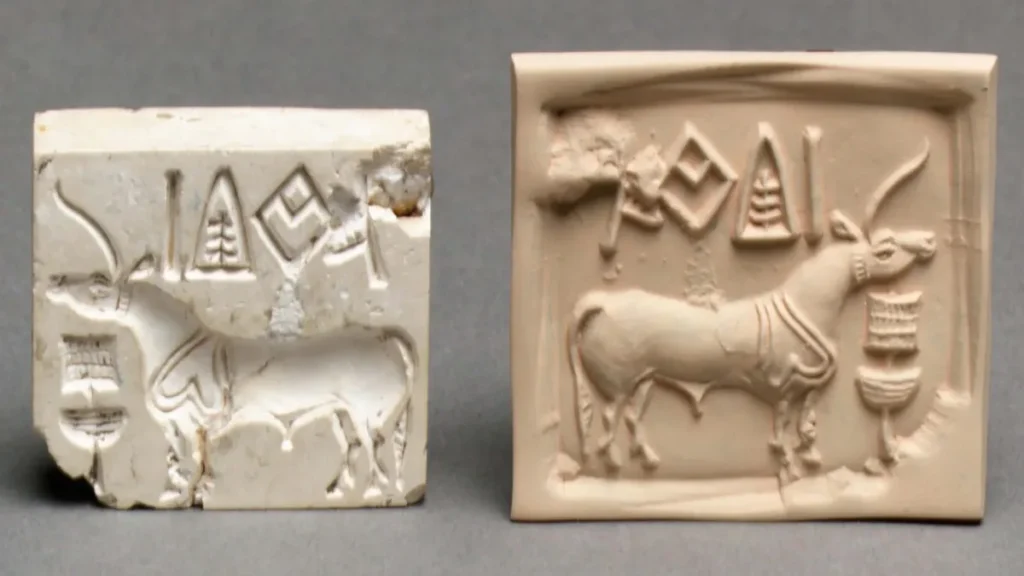
The aesthetic appeal of these seals is undeniable. Many showcase a deep understanding of proportion, symmetry, and realism. Despite their small size, the detailing of animal forms—such as the carefully carved horns, muscular structure, and posture-reveals the Harappans’ keen observation of nature. Each animal is presented in a standardized pose, usually in profile, accompanied by a short inscription.
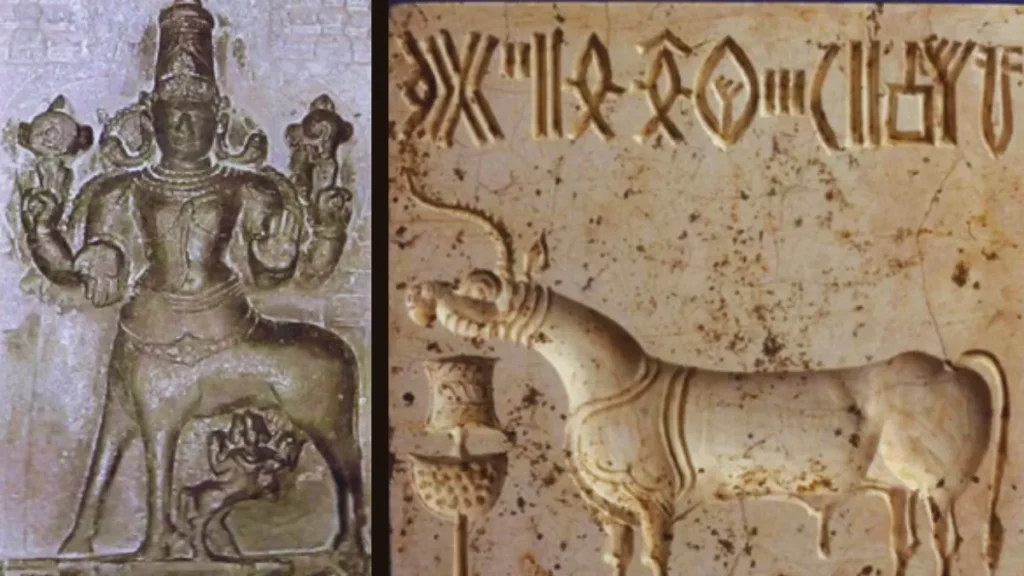
Among all motifs, the unicorn remains the most iconic. It appears on more than two-thirds of all seals found, making it a central symbol in the visual language of the Harappans. Scholars continue to debate its identity. Some interpret it as a mythical creature, while others believe it could represent a stylized form of a real animal that held symbolic importance. Its repeated depiction suggests an organized system of symbolic communication or perhaps an administrative category.
Other seals portray scenes that seem ritualistic. The famous “Pashupati” seal from Mohenjo-daro depicts a horned, possibly divine figure seated in a yogic posture surrounded by animals. This seal has generated extensive discussion due to its visual resemblance to later representations of Shiva, though such connections remain hypothetical due to the undeciphered script and absence of direct textual evidence.
The Role of Script on Harappan Seals
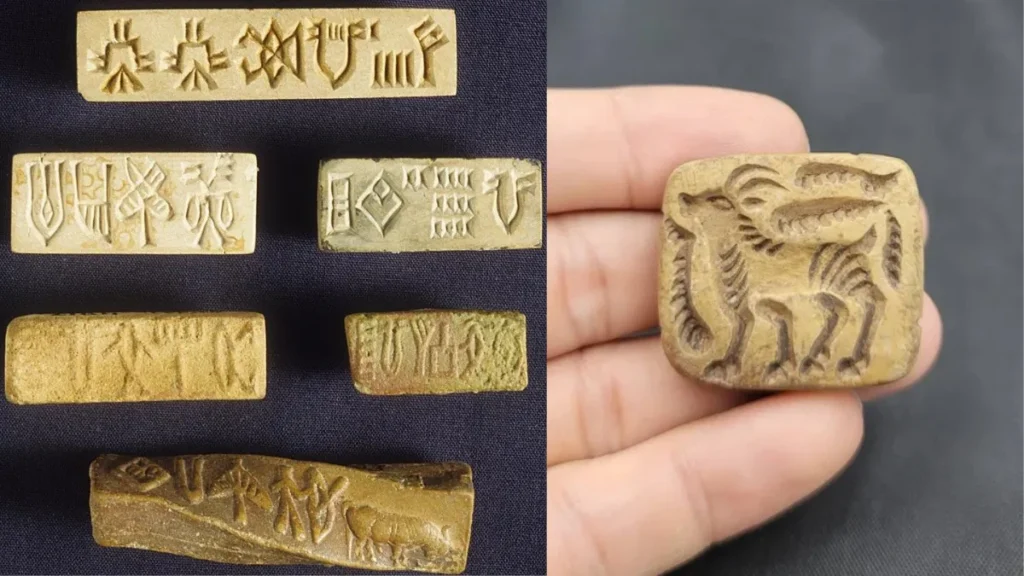
Short inscriptions are among the most intriguing aspects of the seals of Harappan civilization. Most inscriptions consist of a small sequence of signs, often placed above the main motif. These signs belong to a script that has defied all attempts at full interpretation. Despite numerous proposals—from Dravidian links to connections with early Indo-Aryan languages-no consensus has been reached.
The brevity of inscriptions suggests that the seals were not intended for long messages but for concise identification. This supports the theory that seals functioned as administrative or commercial tools. The consistency of signs across sites indicates widespread literacy within administrative classes and a standardized writing system practiced across a vast geographical area.
Attempts to decode the script continue, utilizing computational analysis, comparative linguistics, and new archaeological data. Until the script is understood, the seals will continue to hold an air of mystery, which only deepens their allure.
Cultural Themes Reflected in the Seals of Harappan Civilization
The cultural worldview of the Harappans is subtly reflected in the seals of Harappan civilization. Their recurring motifs highlight values such as harmony with nature, reverence for animals, respect for social order, and appreciation for craftsmanship. The presence of mythical creatures reveals imaginative symbolism, possibly linked to creation myths or supernatural beliefs.
These seals also imply a society familiar with ritualistic practices. Scenes involving worship-like poses, offerings, and deities suggest that spirituality was integrated into daily life. Unlike later civilizations with explicit textual records, Harappan religious thought must be inferred from material culture, and seals remain essential to this interpretation.
Furthermore, the uniformity of seal design across distant settlements points toward a strong cultural cohesion. Whether a seal was found in coastal Lothal or inland Banawali, its style, script, and motifs remained strikingly consistent, demonstrating shared standards and centralized norms.
Evidence of Long-Distance Trade
One of the most significant discoveries involving the seals of Harappan civilization is their presence beyond the Indian subcontinent. Indus-style seals and seal impressions have been found at archaeological sites in Mesopotamia, particularly in the ancient cities of Ur, Susa, and Kish. These finds corroborate literary references in Mesopotamian texts to a distant land called “Meluhha,” widely believed to represent the Indus region.
The discovery of such seals in foreign lands implies active participation in global trade networks. Harappans exported goods like beads, textiles, carnelian jewelry, timber, and possibly grain, while importing metals such as copper and tin. Seals likely played a vital role in labeling goods, authenticating shipments, and facilitating commercial communication with neighboring regions.
Their international presence also highlights the prestige associated with Harappan craftsmanship. Foreign merchants and local elites may have valued these seals not only as trade tools but as symbols of status or authenticity.
Technological Expertise in Seal Production
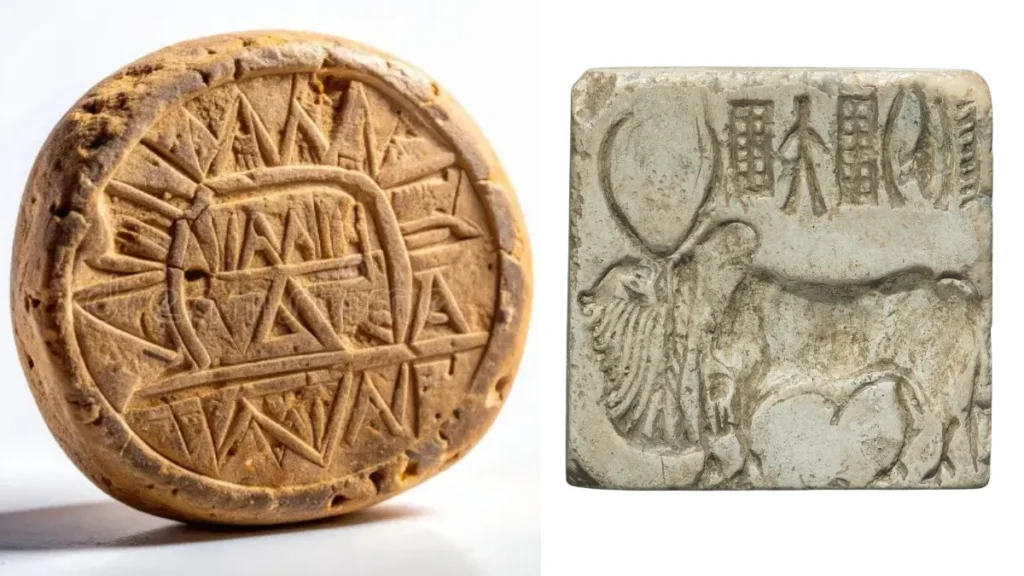
Crafting a Harappan seal required a precise and multi-step process. Artisans began by selecting steatite, carving it into a desired shape, engraving intricate designs, and finally firing it to harden the stone. This heating process transformed the color of the seal to a characteristic white glaze, making the engravings more pronounced and durable.
Some seals also show traces of pigment, suggesting that color may have been applied to enhance visibility. The mastery over materials and technique indicates a professional class of craftsmen and organized workshops dedicated to seal production.
The standard dimensions of most seals further emphasize how carefully calibrated Harappan craftsmanship was. The presence of standardized weights, measures, and seal designs collectively reflects the administrative sophistication of the civilization.
Also read: Harappan Civilization: Tracing the Legacy of an Ancient Urban World
Social and Political Insights from the Seals
The seals of Harappan civilization also offer glimpses into social hierarchy and governance. While there is no evidence of monarchs, empires, or armies, the widespread use of seals indicates a regulated system with defined authority. Individuals or groups using these seals may have held administrative positions, managed resources, or overseen trade.
The lack of military imagery on seals is another noteworthy aspect. Unlike Mesopotamian or Egyptian seals depicting kings, battles, or conquests, Harappan seals rarely show violence. This absence suggests that Harappan society may have prioritized commerce, urban development, and civic order over militarization.
The uniformity of the script and motifs also suggests a shared administrative system across the civilization’s extensive urban network. Whether or not the Harappans had centralized governance, their seals show consistency that implies close inter-city communication and cultural unity.
Also read: Lothal Maritime Museum: Exploring the Maritime Legacy of the Indus Valley Civilization
Continuing Mysteries and Future Research
Despite more than a century of study, the seals of Harappan civilization continue to pose unanswered questions. Scholars are still debating the identity of certain motifs, the meaning of specific signs, and the structure of the language behind the script. New excavations, technological advancements such as 3D scanning, and modern analytical tools promise deeper insights.
Future discoveries may uncover seal-making workshops, storage areas for stamped goods, or bilingual inscriptions that could finally unlock the script. Each new seal adds another piece to the puzzle, drawing us closer to understanding a civilization that once thrived across a vast landscape.
Also read: Archaeological site museum lothal: Exploring India’s Ancient Maritime Legacy
Conclusion
The seals of Harappan civilization remain one of the most defining legacies of the ancient Indus Valley. Rich in symbolism, artistic finesse, and cultural significance, they serve as both administrative tools and works of art. Although their script remains undeciphered, these seals continue to inform our understanding of Harappan society-its values, trade networks, technological skills, and spiritual life.
As archaeologists uncover more evidence and researchers develop new interpretative methods, these seals will undoubtedly continue to shape our knowledge of one of the world’s earliest urban civilizations. Their silent inscriptions and timeless motifs remind us that even the smallest artifacts can hold the greatest stories of the past.