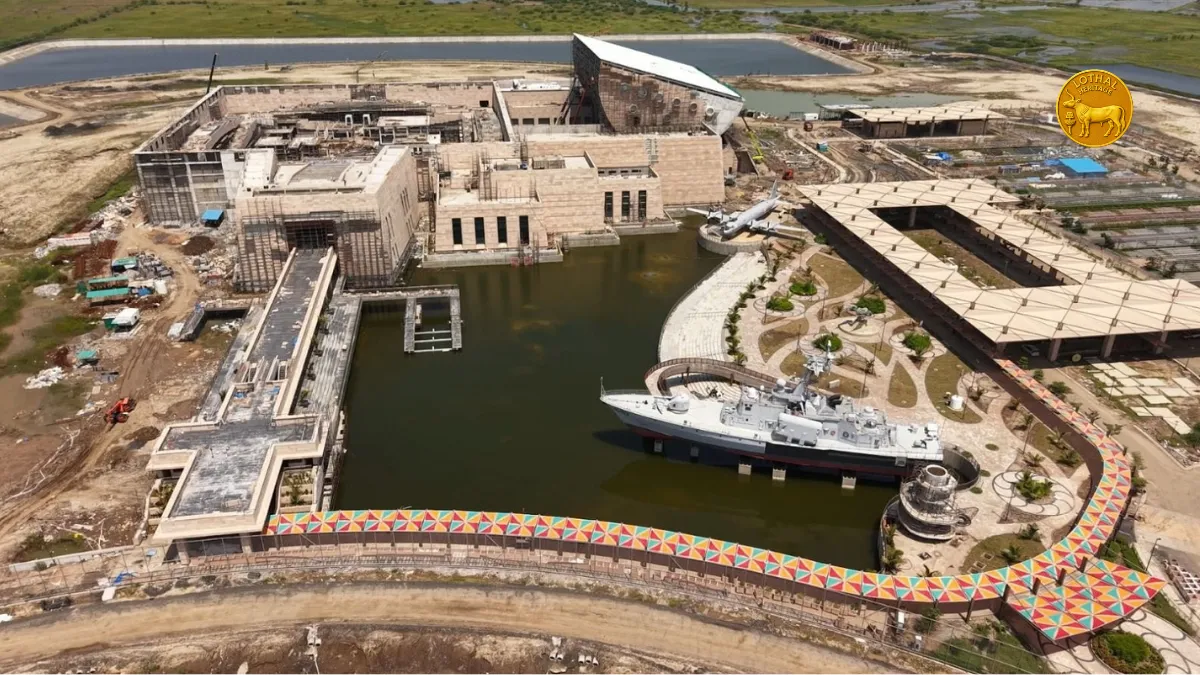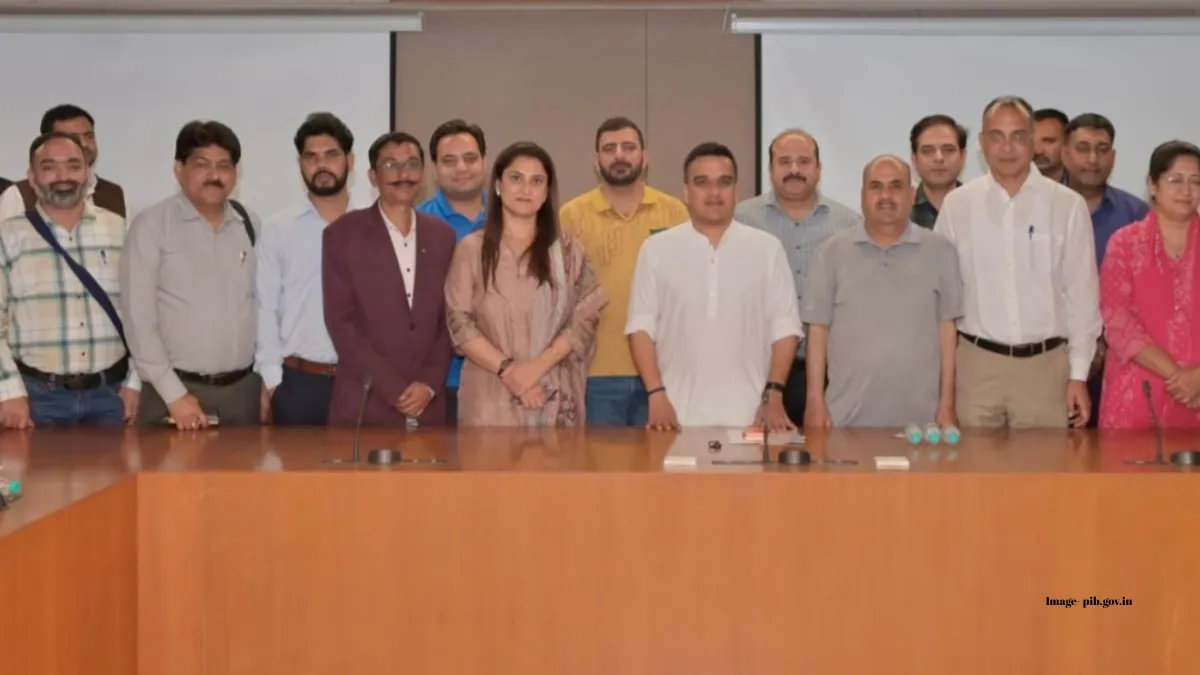
Lothal National Maritime Heritage Complex: The Deputy Chief Minister of Gujarat, Harsh Sanghavi, met with a visiting media delegation from Jammu on the second day of a multi-city tour organised by the Press Information Bureau. The interaction formed part of an official media outreach initiative designed to foster deeper understanding of Gujarat’s development model and highlight major infrastructure and heritage projects, including the ambitious Lothal National Maritime Heritage Complex.
Addressing journalists during the meeting, Sanghavi presented an overview of Gujarat’s economic growth, industrial strength, and governance framework. He underscored the state’s contribution to India’s manufacturing and export sectors, noting that despite covering only around six percent of the country’s geographical area and housing approximately five percent of its population, Gujarat accounts for nearly 18.3 percent of India’s manufacturing output. The state also contributes close to 30 percent of the nation’s total exports.
The Deputy Chief Minister further emphasised Gujarat’s strategic maritime advantage. According to official data shared during the interaction, ports in the state handle almost 40 percent of India’s total cargo traffic. This maritime capacity, he said, has played a pivotal role in strengthening Gujarat’s industrial ecosystem and attracting domestic and foreign investment.
Sanghavi described Gujarat as a policy-driven state supported by strong institutional mechanisms and administrative accountability. He highlighted that coordinated efforts between leadership, bureaucracy, and citizens have helped create employment opportunities and improve income levels. “Our focus has always been on structured planning and transparent governance,” he noted, adding that sustained policy continuity has been key to long-term economic expansion.
Focus on Sports Infrastructure and Youth Development
The Deputy Chief Minister also spoke extensively about Gujarat’s investments in sports infrastructure and athlete development. He credited the launch of the 2010 Khel Mahakumbh initiative under the leadership of Prime Minister Narendra Modi for laying the foundation of a vibrant sports culture in the state. The programme, which began during Modi’s tenure as Chief Minister, encouraged grassroots participation and systematic talent identification.
Looking ahead to the 2030 Commonwealth Youth Games, Sanghavi said Gujarat is placing renewed emphasis on athlete training, recovery systems, sports medicine, and the integration of artificial intelligence in performance tracking. Institutions such as Gujarat Sports University and Rashtriya Raksha University are playing a crucial role in advancing sports education and research.
In a significant development for inclusive sports, the state is also building a first-of-its-kind specialised institute dedicated to training and supporting para-athletes. The initiative is aimed at providing world-class facilities and equal opportunities for differently-abled sportspersons.
Renewable Energy and Environmental Initiatives
Touching upon sustainability efforts, Sanghavi highlighted Gujarat’s growing renewable energy capacity. He stated that approximately 65 percent of the state’s total energy production now comes from renewable sources, positioning Gujarat as a leader in clean energy adoption within India.
In addition, the Ahmedabad Municipal Corporation recently undertook a large-scale environmental campaign under the “Mission Million Trees” initiative, planting one million trees to expand the state’s green cover. The Deputy Chief Minister said such efforts reflect the government’s commitment to balancing economic development with environmental responsibility.
He also praised the concept of media exchange programmes, stating that cross-regional visits allow journalists to gain first-hand exposure to governance models and report more accurately on development initiatives.
As a gesture of cultural exchange, the visiting delegation presented Sanghavi with a traditional Basohli painting, symbolising the artistic heritage of Jammu and Kashmir. An aroma kit featuring products developed under the Aroma Mission was also gifted, showcasing the region’s progress in agri-based entrepreneurship.
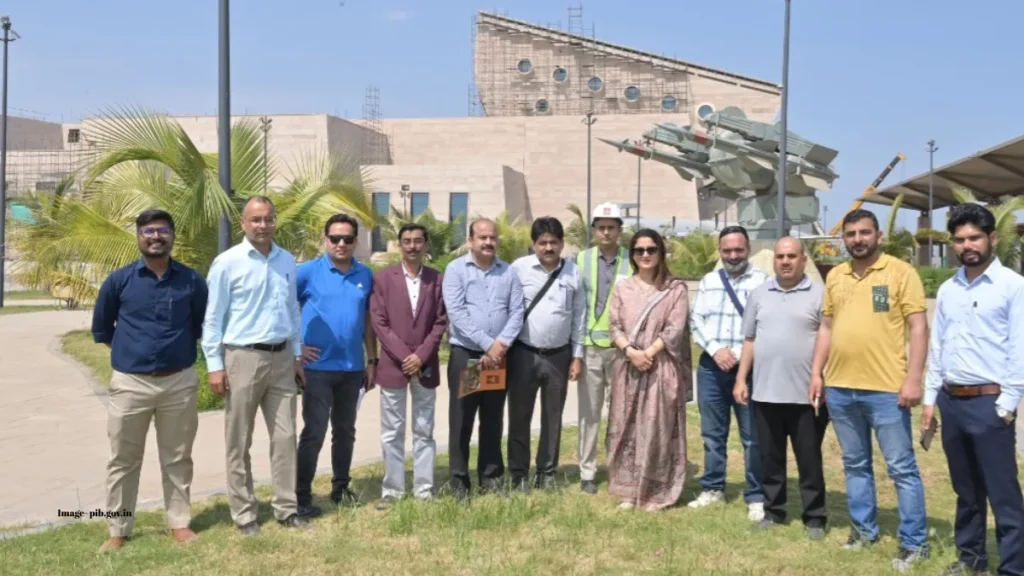
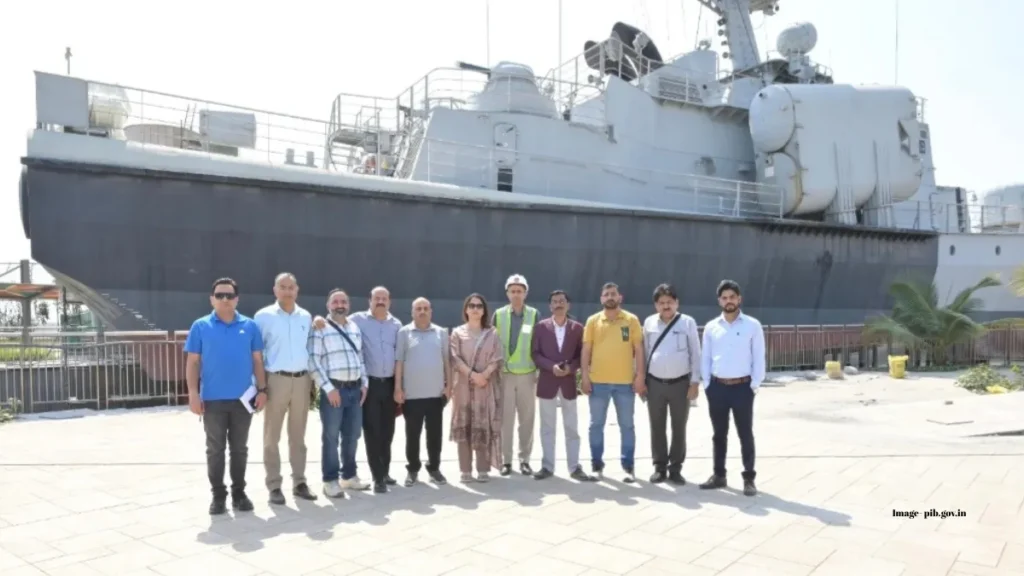
Media Delegation Explores Historic Lothal
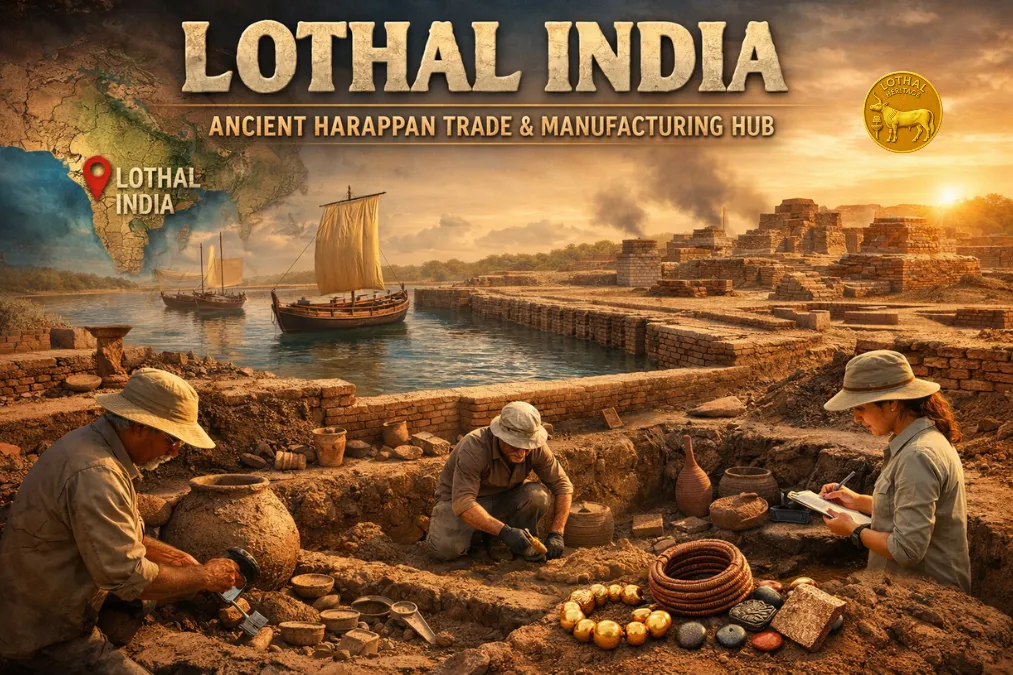
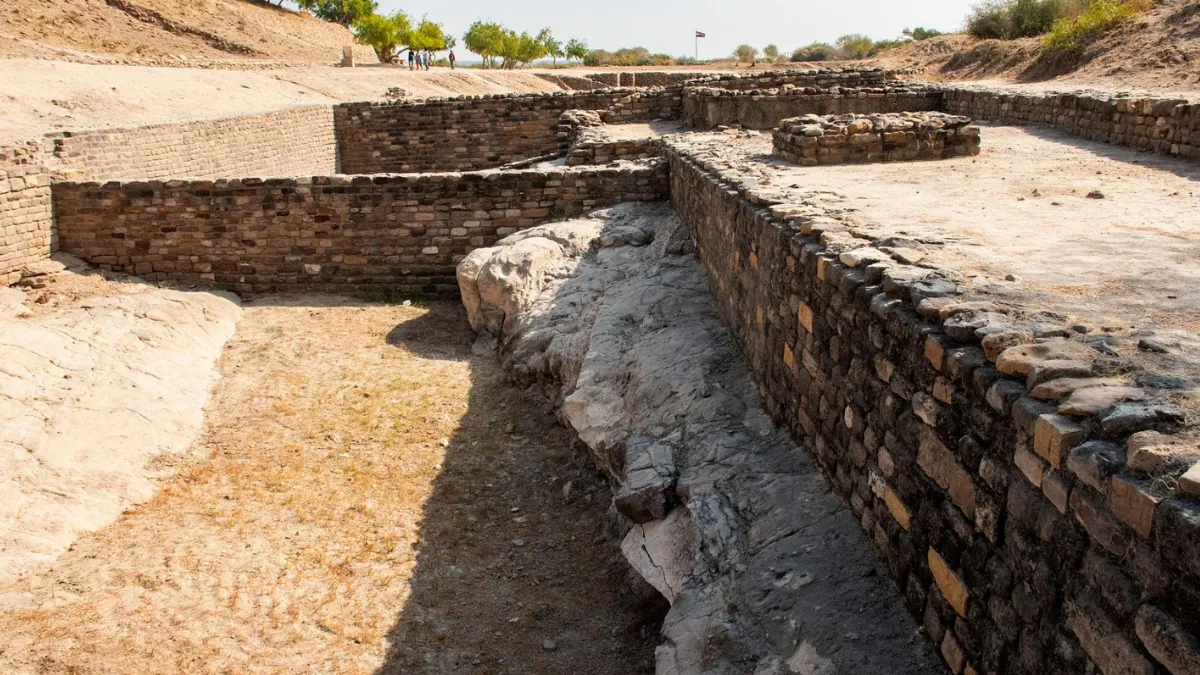
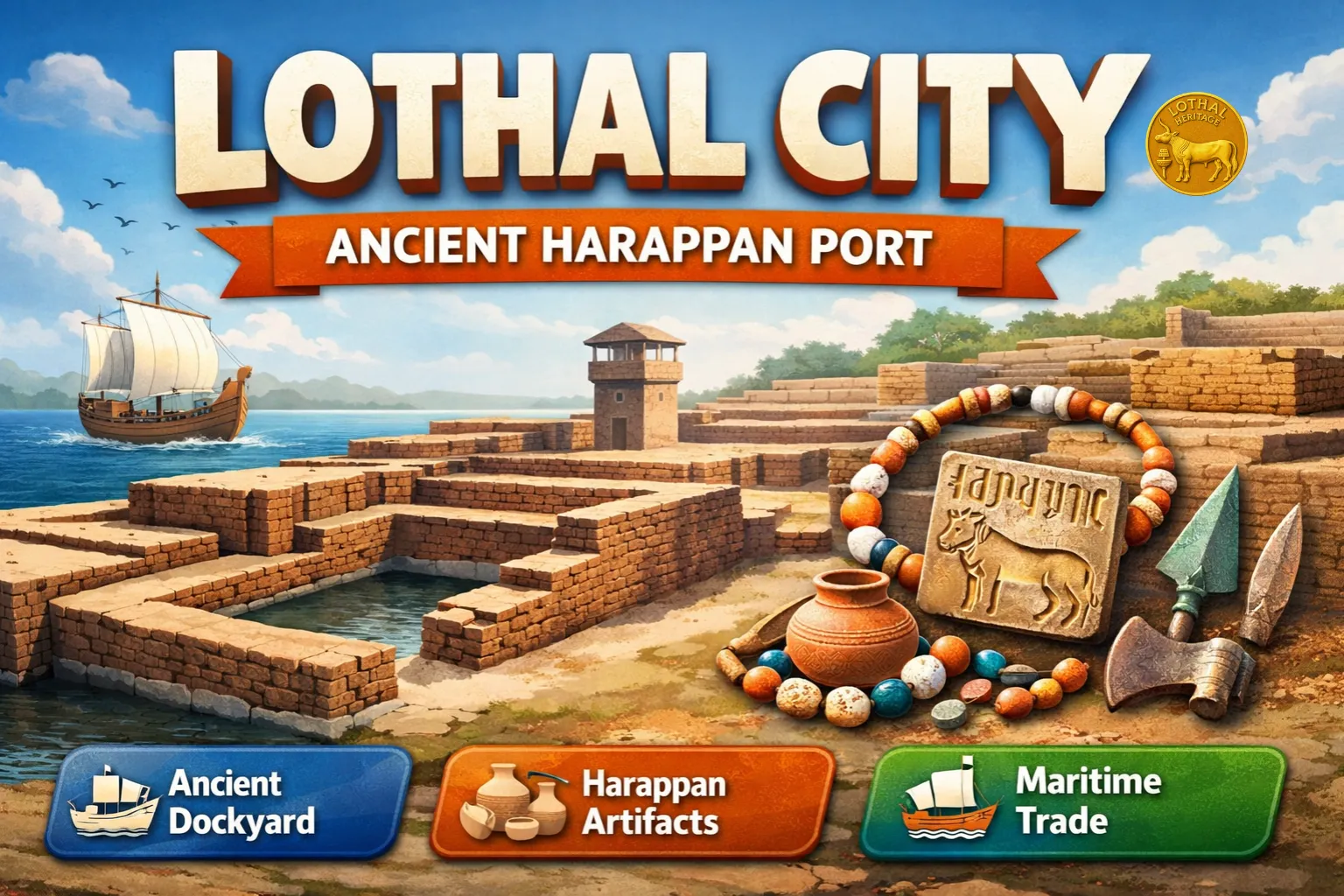
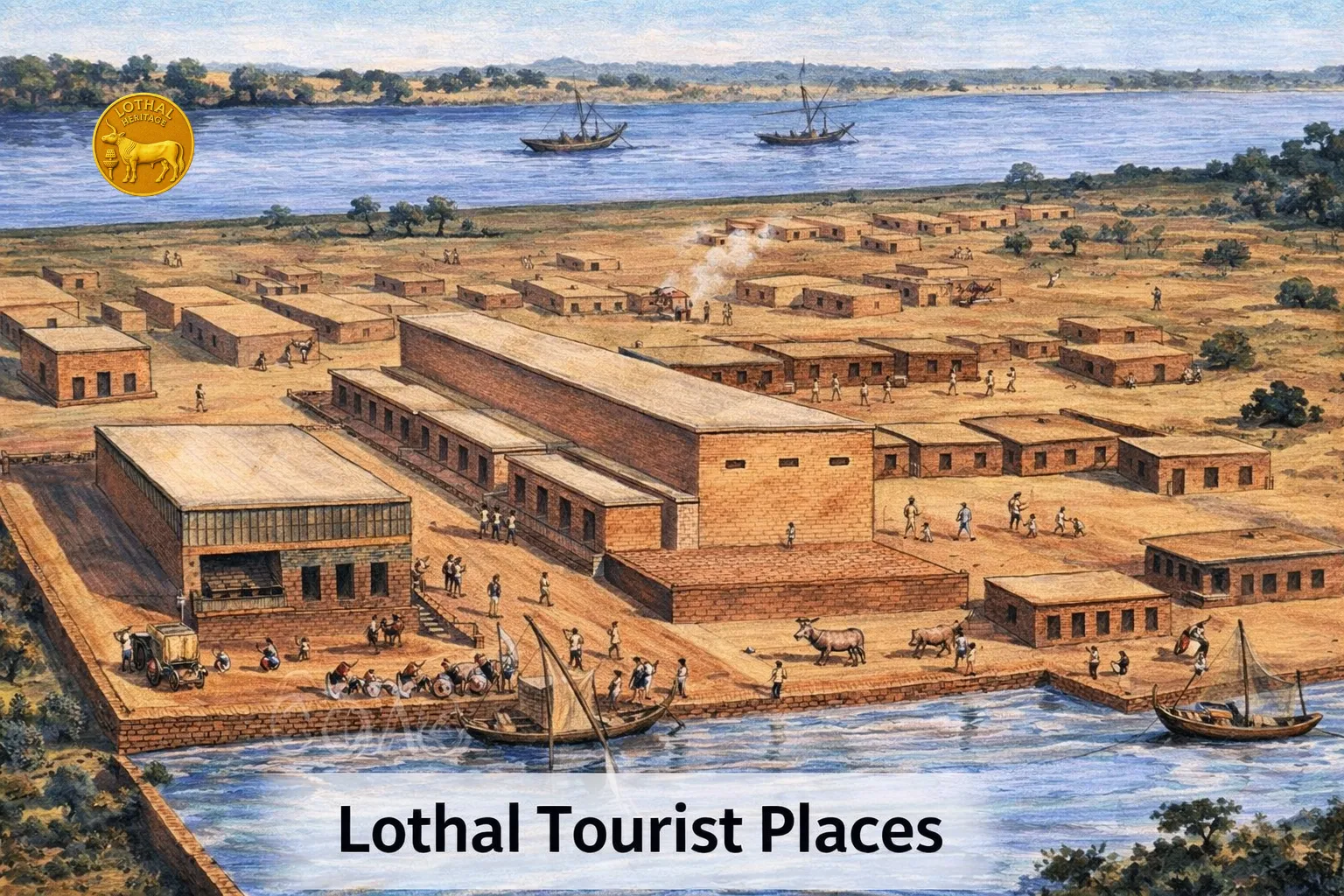
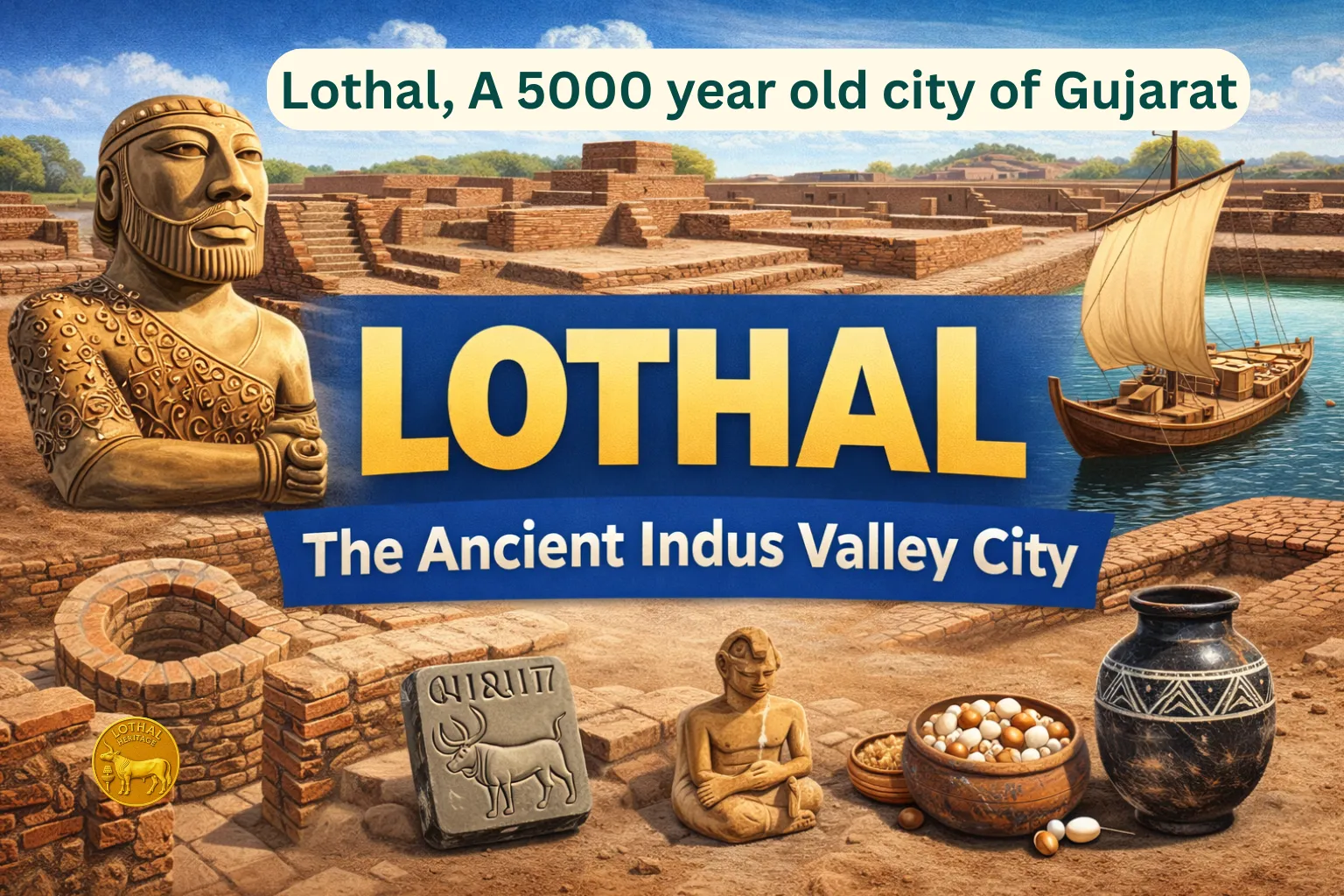
Earlier in the day, the Jammu media team toured the historic site of Lothal, one of the most prominent cities of the ancient Indus Valley Civilisation. Located in Gujarat, Lothal is globally recognised for its sophisticated dockyard, advanced drainage systems, and meticulously planned urban layout dating back more than 4,000 years.
The visit provided journalists with detailed insights into the archaeological significance of the site. Experts explained how Lothal once functioned as a thriving maritime trade hub, connecting the Indian subcontinent with distant civilisations through sea routes. Its dockyard, widely considered one of the world’s earliest known, stands as evidence of the region’s long-standing maritime expertise.
Vision Behind the Lothal National Maritime Heritage Complex
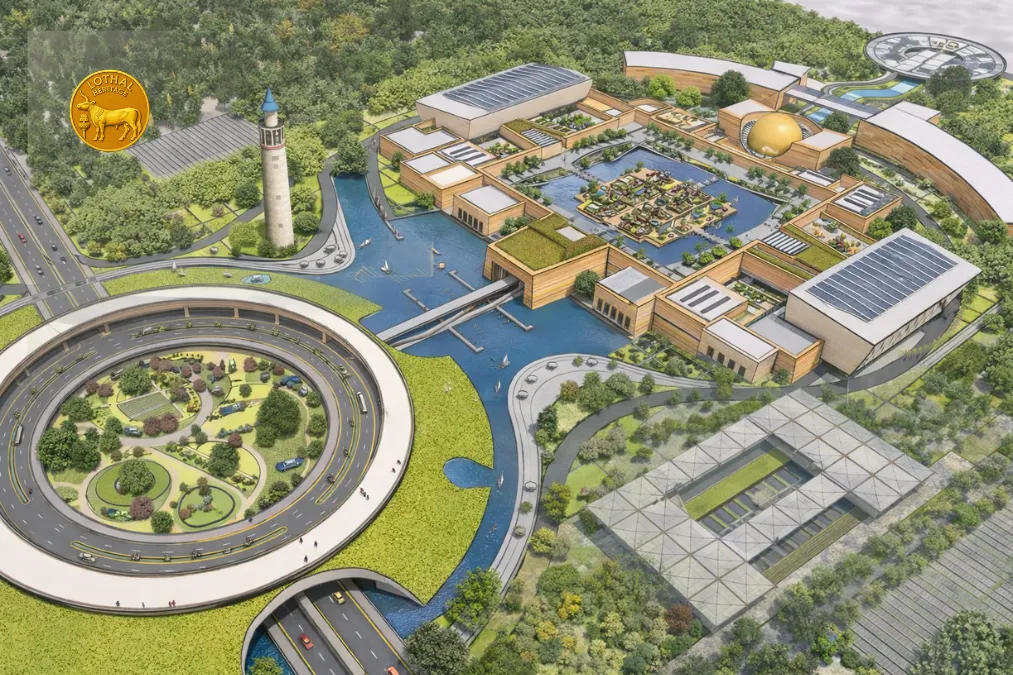
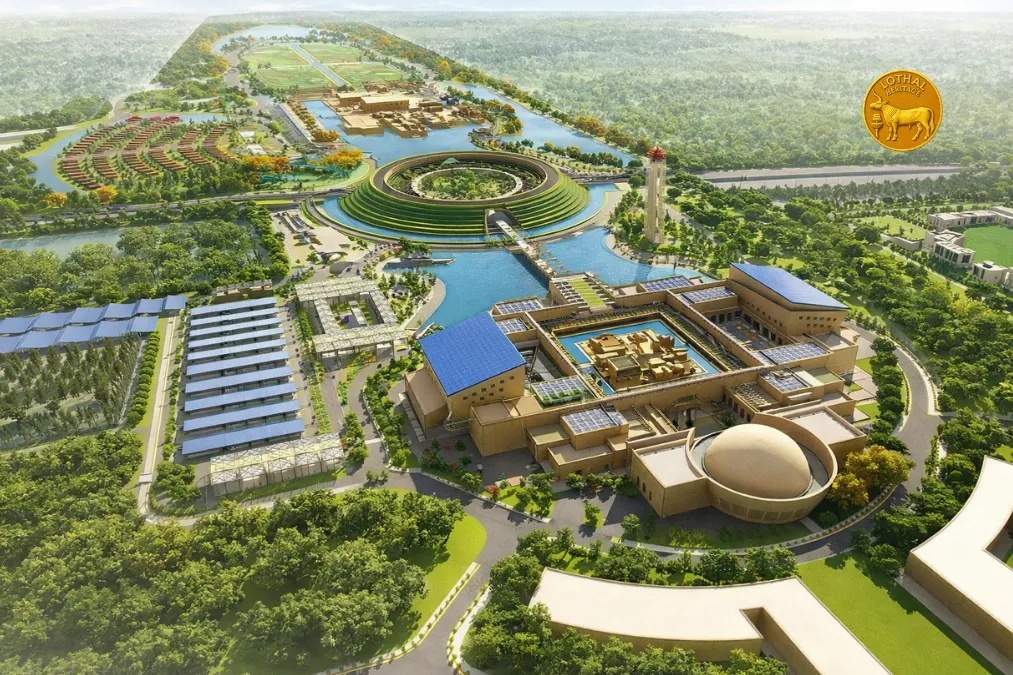
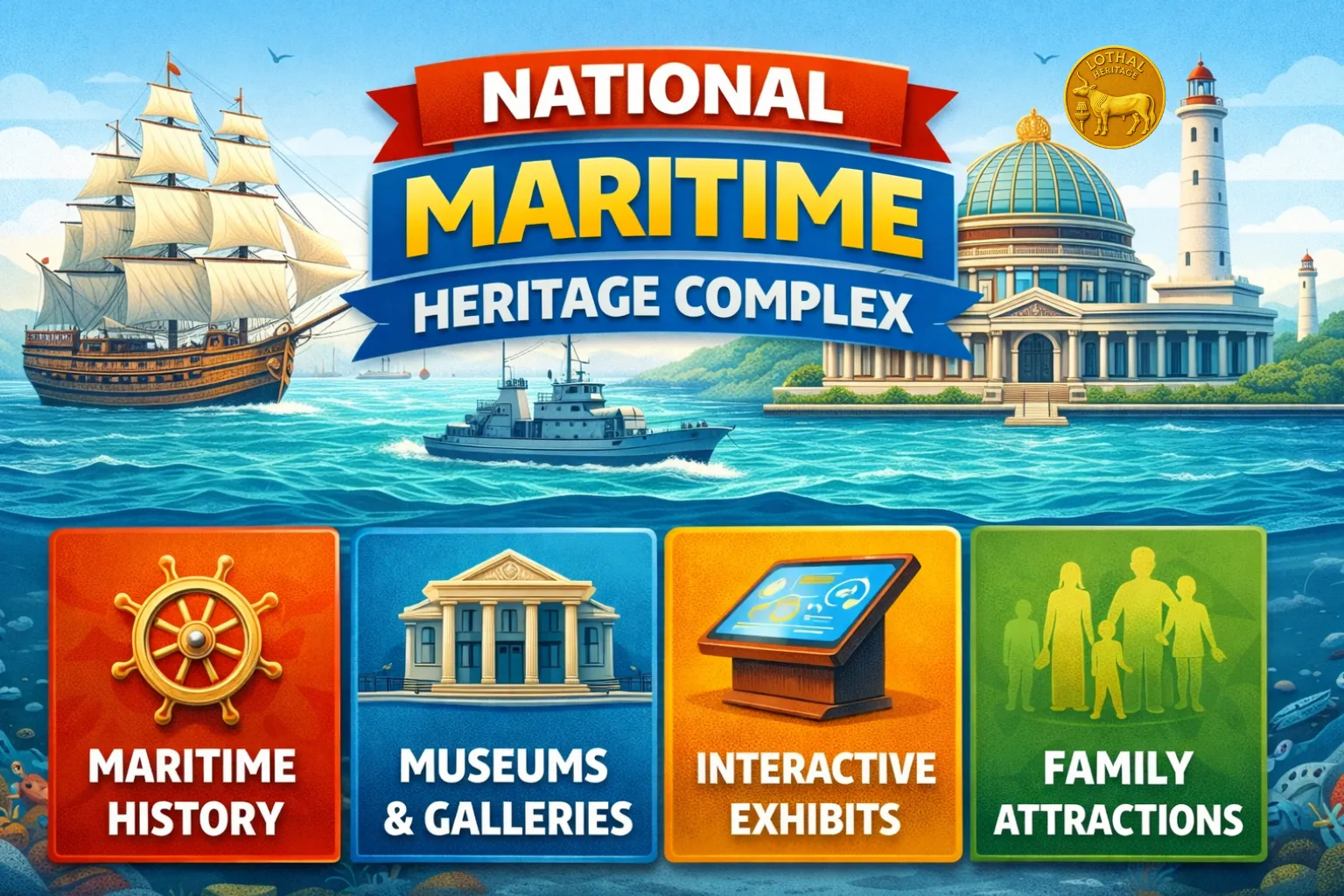
Following the heritage tour, the delegation visited the upcoming Lothal National Maritime Heritage Complex, a flagship project envisioned to celebrate and preserve India’s maritime legacy. The complex is being developed near the ancient site to create a world-class centre dedicated to maritime history, research, and tourism.
Prof. Vasant Shinde, Founding Director General and In-charge of Galleries for the project, briefed the journalists on the scope and long-term vision of the Lothal National Maritime Heritage Complex. He explained that the initiative seeks to combine academic research, cultural preservation, and immersive visitor experiences under one integrated platform.
The project has already initiated collaborations with 25 countries and signed Memoranda of Understanding with several nations, including the United Arab Emirates, Portugal, Germany, Netherlands, Vietnam, and Thailand. These partnerships aim to strengthen international cooperation in maritime archaeology, heritage preservation, and museum curation.
The total estimated investment for the Lothal National Maritime Heritage Complex stands at approximately ₹5,000 crore. Once completed, the facility will feature state-of-the-art museums, thematic galleries, research centres, and experiential zones tracing India’s maritime journey from ancient dockyards to modern naval advancements.
Also read: Lothal Excavation 2025–2026: Gold Particles Discovered as Archaeologists Resume Dig After 65 Years
Integrated Regional Development and Tourism Boost
Authorities also informed the delegation that the Lothal Area Development Authority has been constituted to ensure holistic regional planning inspired by Harappan town-planning principles. The broader development strategy includes the creation of a comprehensive tourist circuit connecting nearby heritage sites, thereby enhancing visitor engagement and economic activity.
To position Lothal as a global maritime tourism destination, plans are underway to develop hotels, theme parks, and hospitality infrastructure under the Public-Private Partnership (PPP) model. Officials believe that once operational, the Lothal National Maritime Heritage Complex will not only attract scholars and history enthusiasts but also boost employment and local enterprise in the region.
A Bridge Between Past and Future
The visit concluded with discussions on how heritage preservation and modern infrastructure can coexist to drive sustainable development. By integrating archaeological conservation with tourism, research, and international collaboration, Gujarat aims to transform Lothal into a symbol of India’s enduring maritime strength.
As the media delegation wrapped up its tour, members acknowledged that the exposure provided deeper insight into Gujarat’s governance model, industrial achievements, and cultural ambitions. With projects like the Lothal National Maritime Heritage Complex taking shape, the state is positioning itself at the crossroads of history and innovation — linking its ancient maritime roots to a globally connected future.