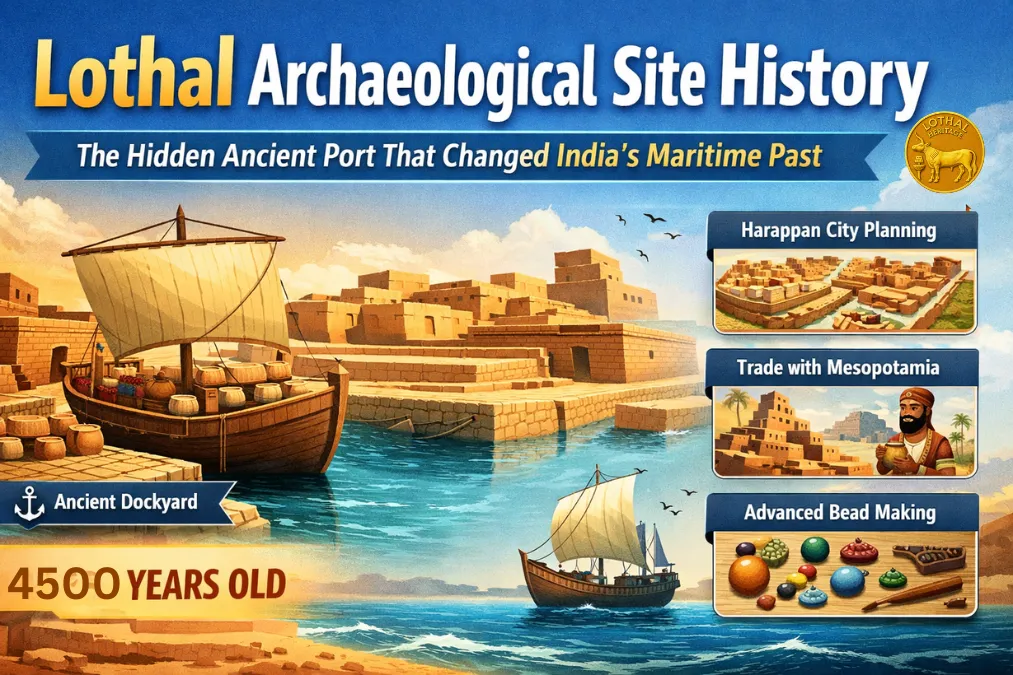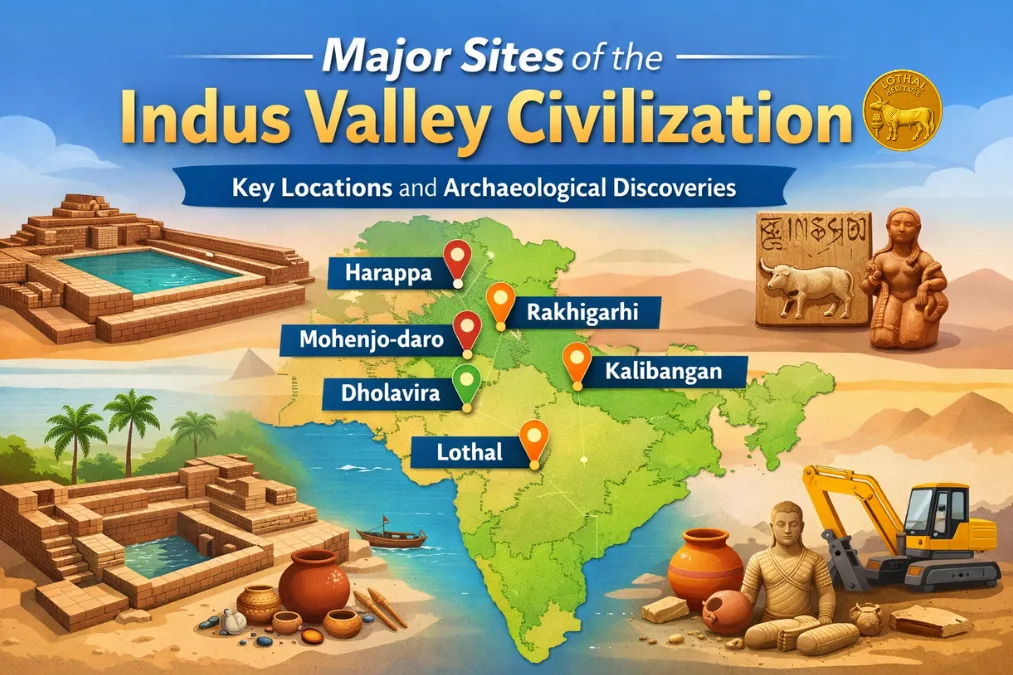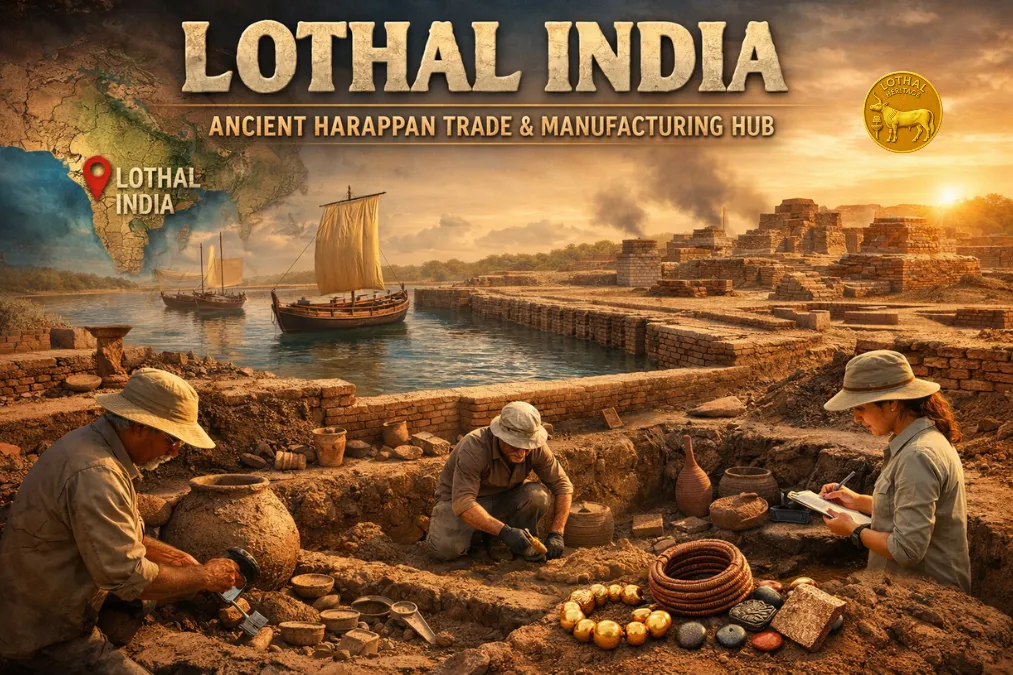
What is Lothal is a question that opens the door to one of the most fascinating chapters of ancient human history. Situated in the present-day state of Gujarat in western India, Lothal stands as one of the most significant archaeological discoveries of theIndus Valley Civilization (also known as the Harappan Civilization). Its ruins reveal remarkable achievements in urban planning, maritime trade, engineering, and craftsmanship, offering invaluable insight into a society that flourished more than 45,00 years ago.
Lothal’s importance goes far beyond its physical location. It represents a thriving port city that once connected the Harappan world to distant lands through active sea trade. Its well-designed dockyard, intricate drainage system, and evidence of industrial workshops highlight an organised and technologically advanced community. For historians and researchers, answering what is Lothal also means understanding how ancient societies adapted to geography, climate, and economic demands with remarkable innovation.
Understanding the Origins: What Is Lothal in the Context of the Indus Valley Civilization
The question of what is Lothal cannot be answered without placing it within the broader framework of the Indus Valley Civilization. The Harappans were known for their planned cities, structured streets, standardised weights, and flourishing trade networks. Lothal, believed to have been established around 2400 BCE, played a central role in this network due to its strategic proximity to the Gulf of Khambhat.
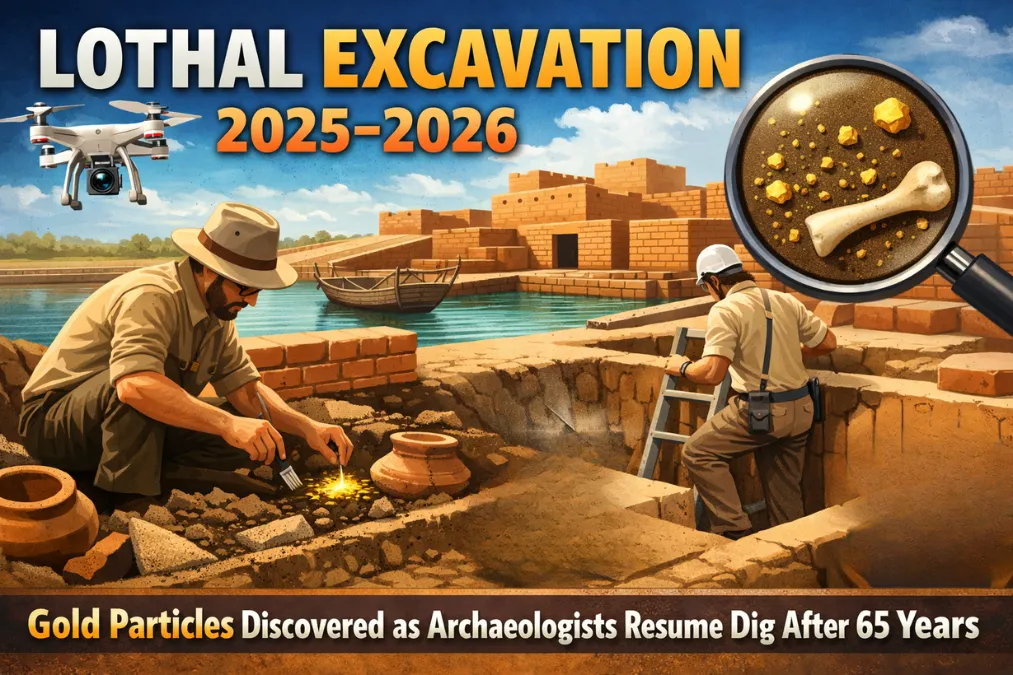
Archaeologists discovered Lothal in 1954, and extensive excavations revealed a city built on a mound with distinct residential, industrial, and commercial zones. What makes Lothal unique is its combination of urban architecture and maritime infrastructure, a rare blend for its time. This discovery brought global attention to India’s ancient maritime history.
A Glimpse Into the Layout: Planned Urban Excellence
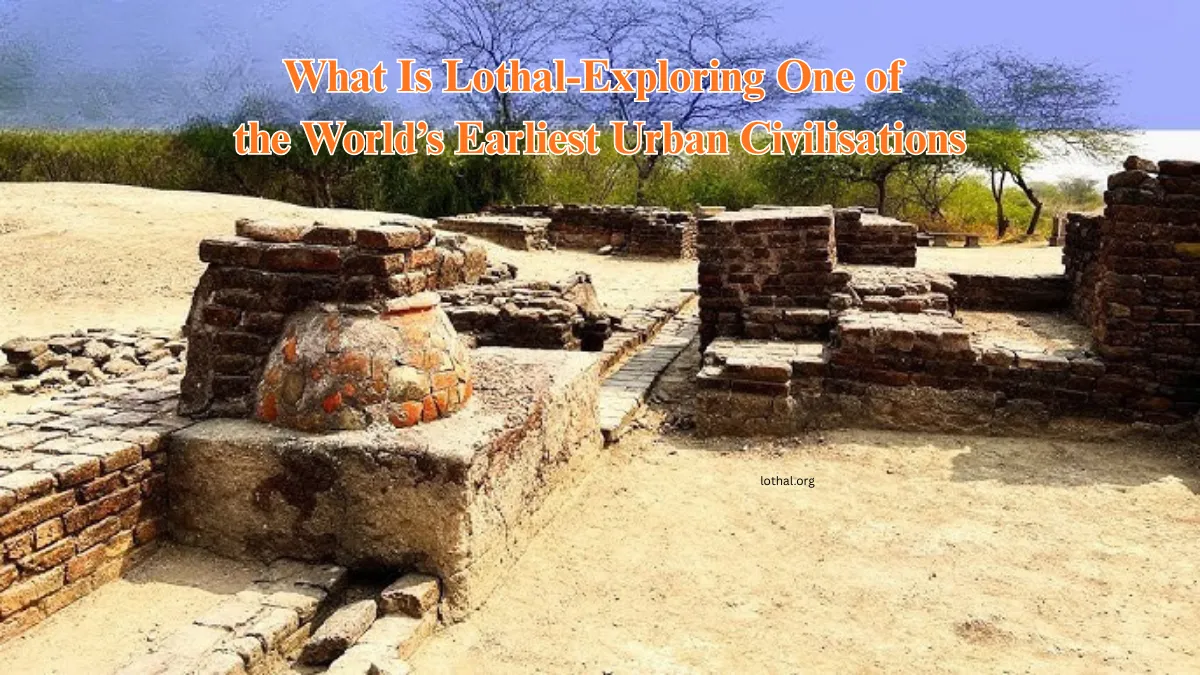
To address what is Lothal from an architectural standpoint, the city offers a perfect example of meticulous planning. The settlement followed a grid-like layout with straight streets and well-defined blocks. Houses were constructed using standardised burnt bricks, featuring bathrooms, private wells, and efficient sewage outlets.
Stormwater and wastewater were channelled through covered drains, ensuring hygiene and preventing flooding. Such sophisticated planning reveals that Lothal was more than a trading port—it was a thriving urban centre with a high quality of life for its residents.
The Dockyard: A Landmark of Ancient Maritime Engineering
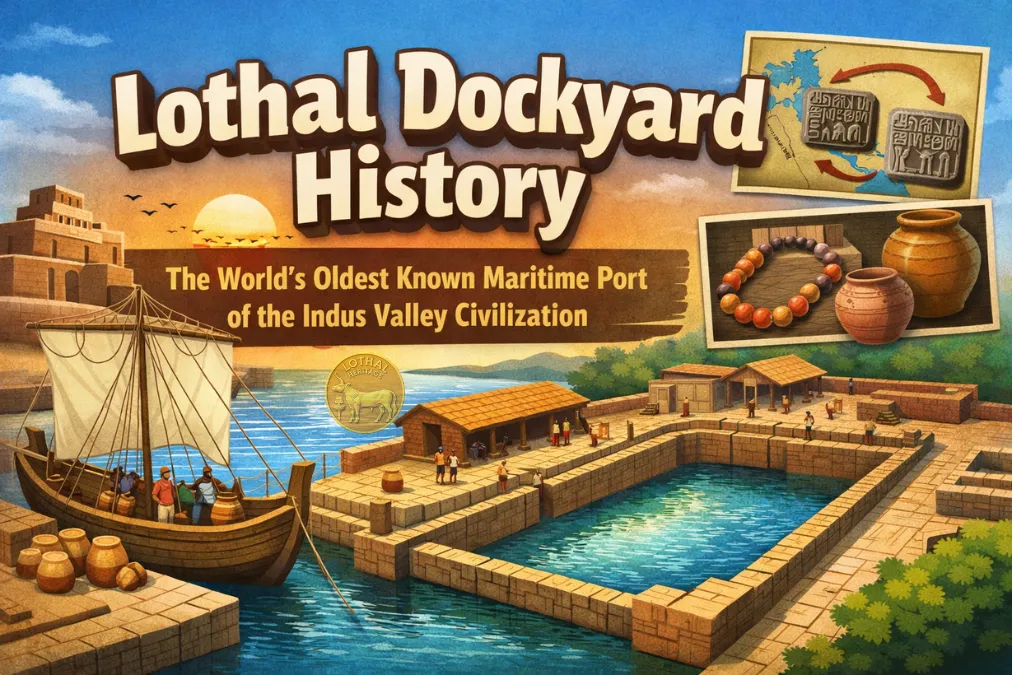
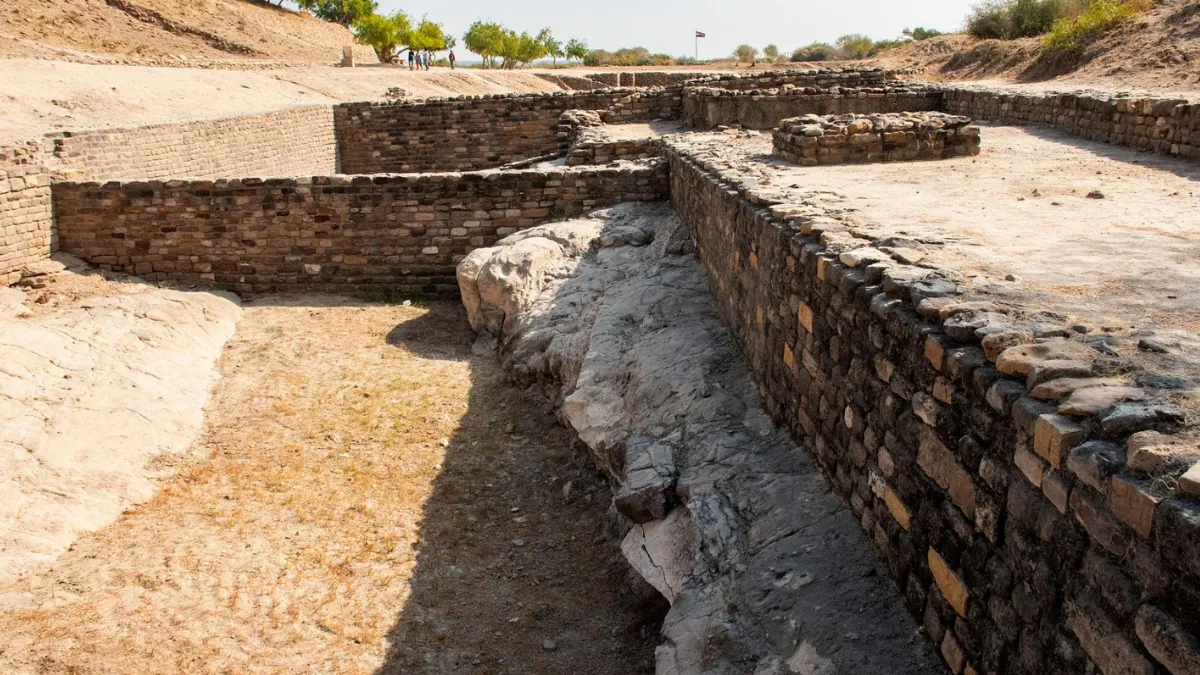
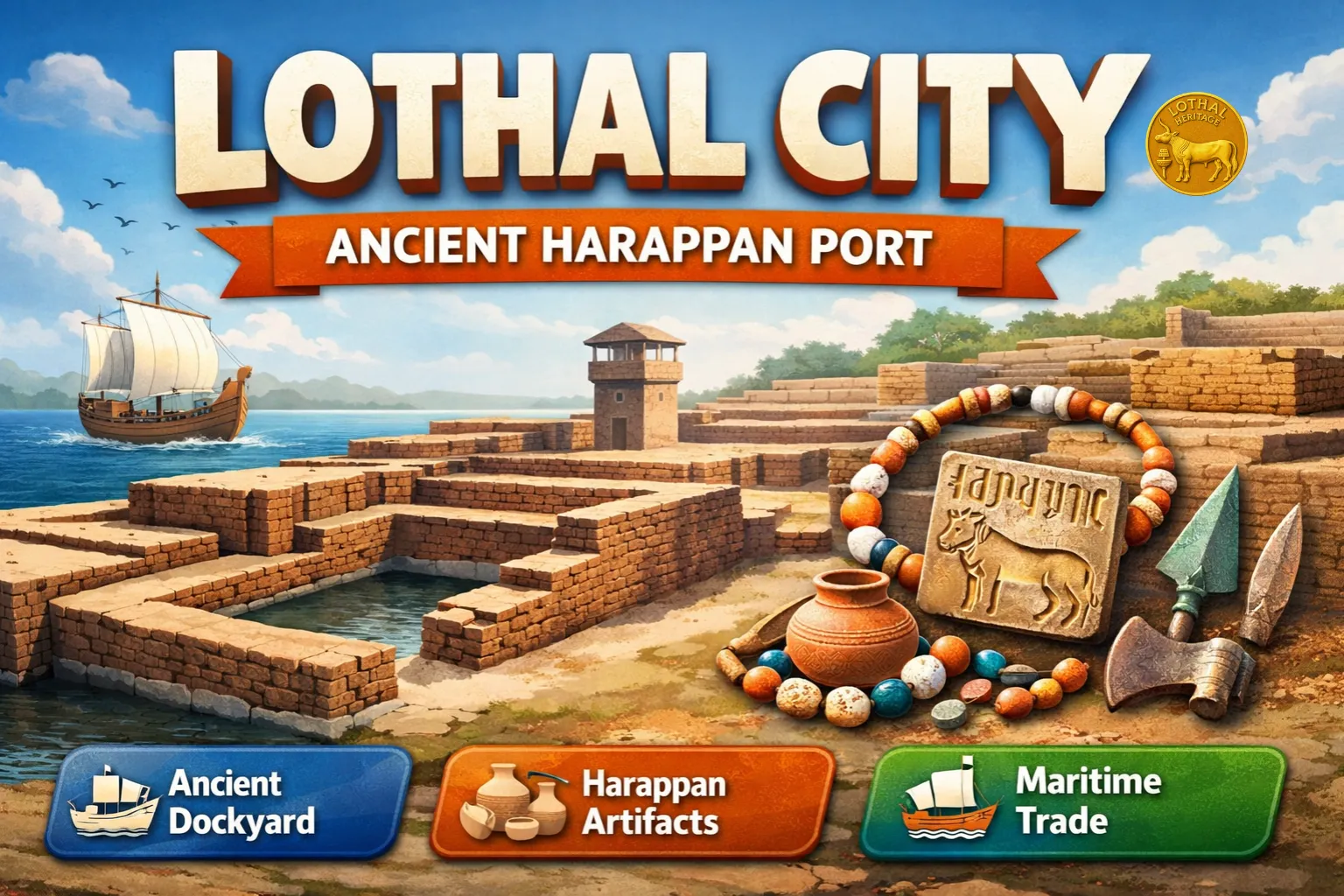
A major part of understanding what is Lothal revolves around its famous dockyard, one of the oldest known in the world. This massive structure, built with precise dimensions, was designed to manage varying tidal flows from the nearby river and sea.
The dockyard had:
- Strong brick walls
- An inlet channel for water flow
- A spillway for overflow control
This engineering marvel suggests that Lothal was a major port that supported trade with Mesopotamia, Bahrain, and other regions. Artefacts such as foreign seals further strengthen this theory. The presence of a bustling maritime hub at such an early stage in history highlights the ingenuity of the Harappan people.
Industrial Workshops and Craftsmanship
When exploring what is Lothal, one discovers that it was not just a centre of trade but also a hub of skilled craftsmanship. Archaeologists found workshops where artisans produced beads, ornaments, shell objects, pottery, and tools.
The bead-making industry was especially significant. Semi-precious stones like carnelian and lapis lazuli were shaped, polished, and exported to faraway regions. The precision of these beads continues to impress historians and scientists.
The city also had a unique warehouse near the dockyard, where goods were stored before shipment. This warehouse, built on elevated platforms, prevented damage from moisture and flooding.
Cultural and Social Significance
To fully answer what is Lothal, one must also consider its cultural contributions. The discovery of seals, figurines, pottery designs, and tools suggests a community rich in artistic expression and social organisation.
The famous terracotta models, game boards, and ritual objects offer clues about daily life, social hierarchy, and belief systems. Although definitive evidence of religious practices remains limited, the artefacts suggest reverence for nature and craftsmanship.
Read also: What happened to Lothal? Tracing the Rise and Decline of an Ancient Port City
Table: Key Facts About Lothal
| Feature | Description |
|---|---|
| Location | Gujarat, India (near Gulf of Khambhat) |
| Civilization | Indus Valley / Harappan Civilization |
| Estimated Period | Around 2400–1900 BCE |
| Key Discovery | World’s earliest known dockyard |
| Major Industries | Bead-making, shell work, pottery |
| Excavation Year | 1954 onwards by ASI |
| Significance | Maritime trade hub, urban planning excellence |
Decline of Lothal
Understanding what is Lothal also involves knowing why this advanced city eventually declined. Scholars believe that natural disasters, including floods and changes in river courses, played a major role. Repeated flooding damaged buildings, disrupted trade routes, and forced residents to migrate.
Additionally, the gradual decline of the broader Indus Valley Civilization contributed to Lothal’s abandonment. Despite attempts to rebuild and maintain the city, the challenges proved overwhelming.
Read also: Lothal History: The Rise, Brilliance, and Legacy of an Ancient Harappan Port City
Legacy and Modern Importance
The legacy of Lothal is profound. It stands as evidence that ancient India was home to some of the world’s earliest maritime activities and sophisticated urban systems. Answering what is Lothal helps modern scholars appreciate the capabilities of early civilisations in engineering, trade, and cultural development.
Today, Lothal is a protected archaeological site managed by the Archaeological Survey of India. A museum nearby displays artefacts such as beads, tools, seals, pottery, and models that recreate the ancient city’s layout. Efforts are ongoing to preserve the ruins and promote the site as a significant part of world heritage. With the proposed National Maritime Heritage Complex, Lothal is expected to gain greater recognition globally.
Read also: Lothal City: A Remarkable Example of Advanced Urban Planning in Ancient India
Why Lothal Still Matters
What is Lothal is not just a historical question—it is a reminder of human innovation long before modern technology. The city represents:
- Advanced understanding of geography and water systems
- Organised trade networks
- Skilled craftsmanship
- Urban wisdom that balanced functionality with sustainability
Studying Lothal helps modern planners and historians explore ancient methods of flood control, waste management, and port construction.
Read also: Lothal, A 5000 year old city of Gujarat.
Conclusion
What is Lothal is a question that leads to a deeper appreciation of the Indus Valley Civilization’s brilliance. From its masterfully designed dockyard to its vibrant craft industries, Lothal reflects a society that valued precision, planning, and progress. Its story is one of resilience, innovation, and connectivity, demonstrating how ancient communities shaped global trade and cultural development.
Even thousands of years later, the ruins of Lothal stand as a testament to human ingenuity—an enduring symbol of India’s early contributions to world civilisation.