What was Kalibangan famous for? Kalibangan was famous for being one of the most important cities of the ancient Indus Valley Civilization and for providing clear evidence of early planned urban life, advanced agriculture, and unique religious practices in prehistoric India. Located in present-day Rajasthan, Kalibangan holds a special place in Indian history because it helped historians understand how people lived, farmed, worshipped, and organized cities more than 5,000 years ago.
Kalibangan is not just an archaeological site; it is a key to understanding the early development of human civilization in the Indian subcontinent. The discoveries made here have changed the way historians look at the Indus Valley Civilization and its spread beyond river valleys into semi-arid regions.
Where Is Kalibangan Located?
Kalibangan is located in the Hanumangarh district of Rajasthan, on the banks of the ancient Ghaggar River, which is often associated with the mythical Saraswati River mentioned in ancient Indian texts. This location is important because it shows that Indus Valley settlements were not limited only to the Indus River region.
The site lies close to the India-Pakistan border and represents the eastern edge of the Indus Valley Civilization. Its location helped archaeologists understand how ancient people adapted to different environmental conditions, especially in dry and semi-desert areas.
Historical Background of Kalibangan
Kalibangan dates back to around 3500 BCE and remained inhabited until about 1750 BCE. It belongs to both the Pre-Harappan and Harappan phases of the Indus Valley Civilization. This makes Kalibangan extremely important because it shows a clear transition from early rural settlements to well-planned urban centers.
The site was discovered in 1953 by Italian Indologist Luigi Pio Tessitori, and later excavated extensively by the Archaeological Survey of India under the leadership of B.B. Lal and B.K. Thapar. Their work revealed structures, artifacts, and city layouts that were crucial in understanding ancient Indian history.
What Was Kalibangan Famous For in the Indus Valley Civilization?
Planned Urban Settlement
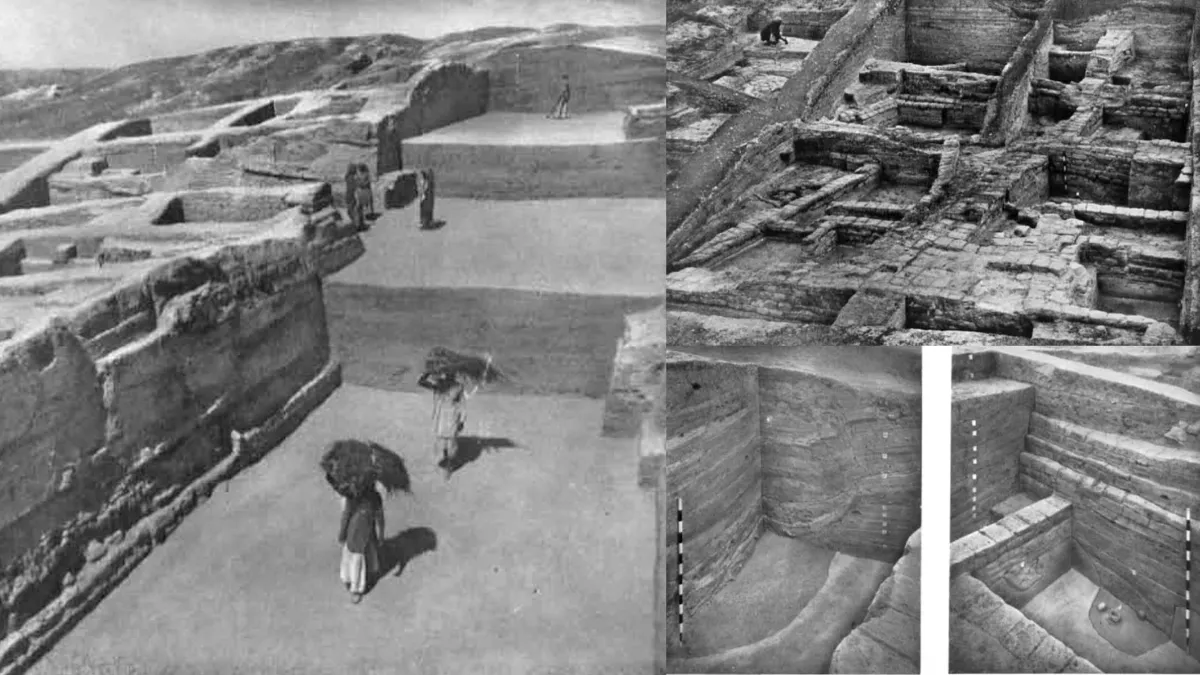
One of the main reasons Kalibangan was famous was its well-planned urban layout. The city was divided into two main parts: the citadel and the lower town. Both sections were fortified with mud-brick walls, showing a strong sense of city planning and security.
The streets were laid out in a grid pattern, intersecting at right angles. Houses were built with baked and sun-dried bricks, and most homes had access to wells and drainage systems. This level of planning shows that Kalibangan had a well-organized administration and a deep understanding of urban management.
Advanced Drainage and Sanitation System
Kalibangan was famous for its sophisticated drainage system, which was similar to other major Indus cities like Harappa and Mohenjo-daro. Covered drains ran along the streets, and waste water from houses was properly directed into these drains.
The presence of soak pits and inspection holes shows that people paid great attention to cleanliness and public hygiene. This was remarkable for such an early period and proves that the Indus Valley Civilization was far ahead of its time in urban sanitation.
Kalibangan and Early Agriculture
Evidence of the World’s Oldest Ploughed Field
One of the most unique reasons what was Kalibangan famous for is the discovery of the world’s earliest known ploughed agricultural field. Archaeologists found clear furrow marks preserved in the soil, showing that farming was done in a systematic way.
The fields revealed a cross-ploughing pattern, which suggests that two different crops were grown at the same time. This early form of multi-cropping demonstrates advanced agricultural knowledge and efficient land use.
Crops Grown in Kalibangan
Kalibangan farmers cultivated crops such as wheat, barley, mustard, and possibly pulses. The presence of granaries and storage areas shows that surplus food was stored, indicating a stable and organized economy.
This agricultural success supported a large population and helped Kalibangan become a prosperous settlement despite its dry surroundings.
Unique Fire Altars and Religious Practices
Fire Worship at Kalibangan
Another important reason what was Kalibangan famous for is the discovery of several fire altars. These fire altars were found both in private houses and public areas, suggesting that fire worship was an important part of daily and community life.
These altars are among the earliest archaeological evidence of ritual fire worship in the Indian subcontinent. Many historians believe this practice may be linked to later Vedic traditions, although this remains a subject of debate.
Religious Beliefs and Rituals
The fire altars indicate that religion played a central role in the lives of Kalibangan’s people. Along with fire worship, the discovery of animal bones and ritual pits suggests that sacrifices or ceremonial offerings may have been performed.
Unlike other Indus sites, Kalibangan has fewer seals depicting animals or deities, which makes its religious practices unique and different from cities like Mohenjo-daro.
Pottery and Artifacts Found at Kalibangan
Distinctive Pottery Styles
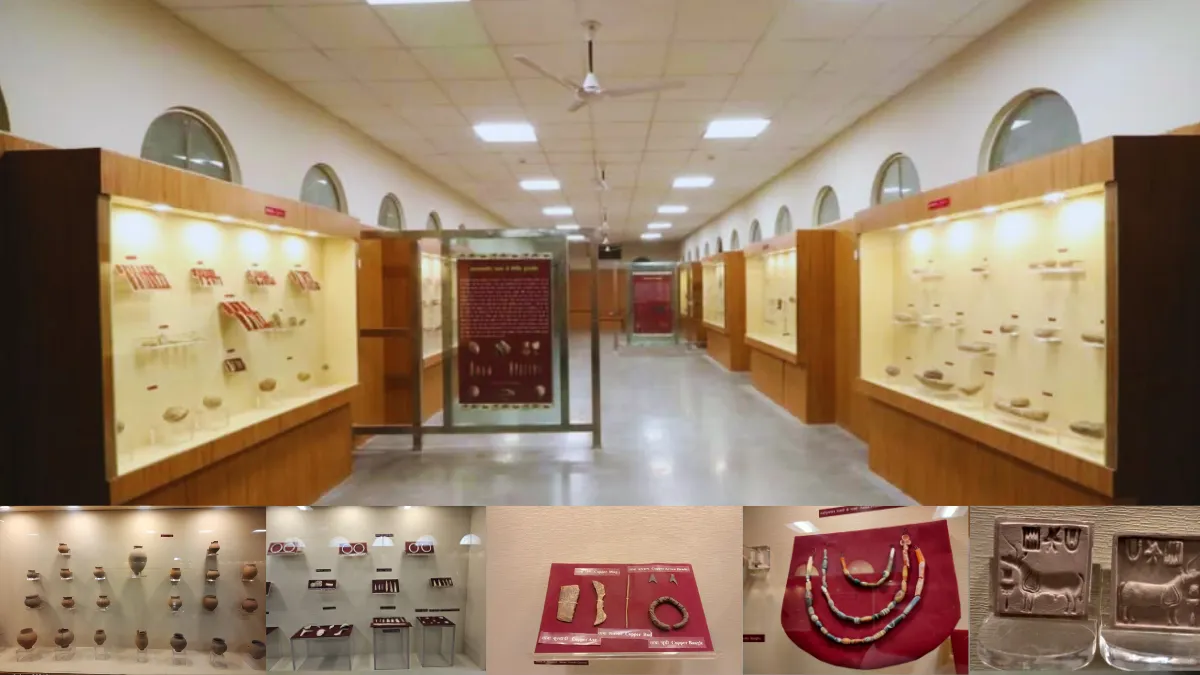
Kalibangan was famous for its distinctive pottery, especially during the Pre-Harappan phase. The pottery often featured black and red designs, geometric patterns, and simple motifs. These styles helped archaeologists distinguish Kalibangan culture from other Indus settlements.
The evolution of pottery styles over time also helped historians understand the cultural development of the region.
Tools, Ornaments, and Daily Use Objects
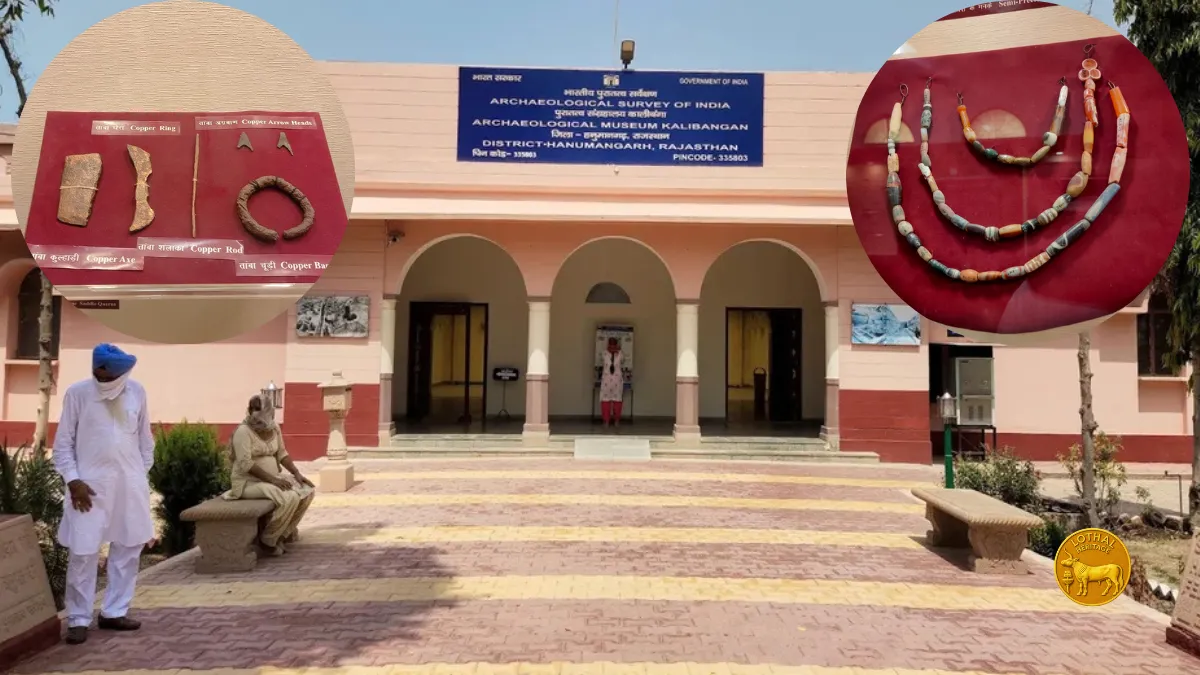
Excavations at Kalibangan revealed tools made of copper, bronze, stone, and bone. Items such as bangles, beads, combs, and toys show that people enjoyed decoration and daily comfort.
The presence of weights and measures indicates trade activities and a regulated economic system. These findings prove that Kalibangan was not an isolated village but an active participant in regional trade networks.
Kalibangan’s Role in Trade and Economy
Kalibangan’s strategic location allowed it to connect with other Indus Valley cities and nearby regions. Trade routes likely passed through the area, linking Rajasthan with Punjab, Gujarat, and Sindh.
Goods such as pottery, beads, metals, and agricultural products were exchanged. The standardized weights found at the site suggest that trade was conducted in an organized and fair manner.
Decline of Kalibangan
Environmental Changes
One of the main reasons for the decline of Kalibangan is believed to be environmental changes. The drying up or shifting of the Ghaggar River would have caused water shortages, making agriculture difficult.
As water sources became unreliable, people may have been forced to abandon the city and move to more fertile regions.
Gradual Abandonment
There is no clear evidence of violent destruction at Kalibangan. Instead, archaeological layers suggest a gradual decline and abandonment. This supports the idea that natural factors, rather than invasion or conflict, led to the city’s end.
Importance of Kalibangan in Indian History
Understanding the Spread of the Indus Valley Civilization
Kalibangan helped historians understand that the Indus Valley Civilization extended far beyond the Indus River. Its presence in Rajasthan proves that ancient people adapted their lifestyle to different environments.
This discovery changed earlier beliefs that Indus culture was limited to river-rich areas only.
Also read: Kalibangan Ticket Price Online Booking: Entry Fees, Museum Access, and Visitor Insights
Contribution to Archaeology and Education
Kalibangan is now considered one of the most important archaeological sites in India. It is frequently mentioned in history textbooks and competitive exams because of its unique features, especially the ploughed field and fire altars.
The site continues to attract researchers and students who want to learn more about ancient Indian civilization.
What Was Kalibangan Famous For Compared to Other Indus Sites?
When comparing Kalibangan with other Indus Valley cities, its uniqueness becomes clear. While cities like Mohenjo-daro are famous for their Great Bath and Harappa for their granaries, Kalibangan stands out for its agricultural evidence and fire worship.
The combination of urban planning, farming innovation, and religious practices makes Kalibangan different from any other Indus site.
Also read: Archaeological Museum Kalibangan Timings and Ticket Price: History, Location and How to Reach
Conclusion: What Was Kalibangan Famous For and Why It Still Matters
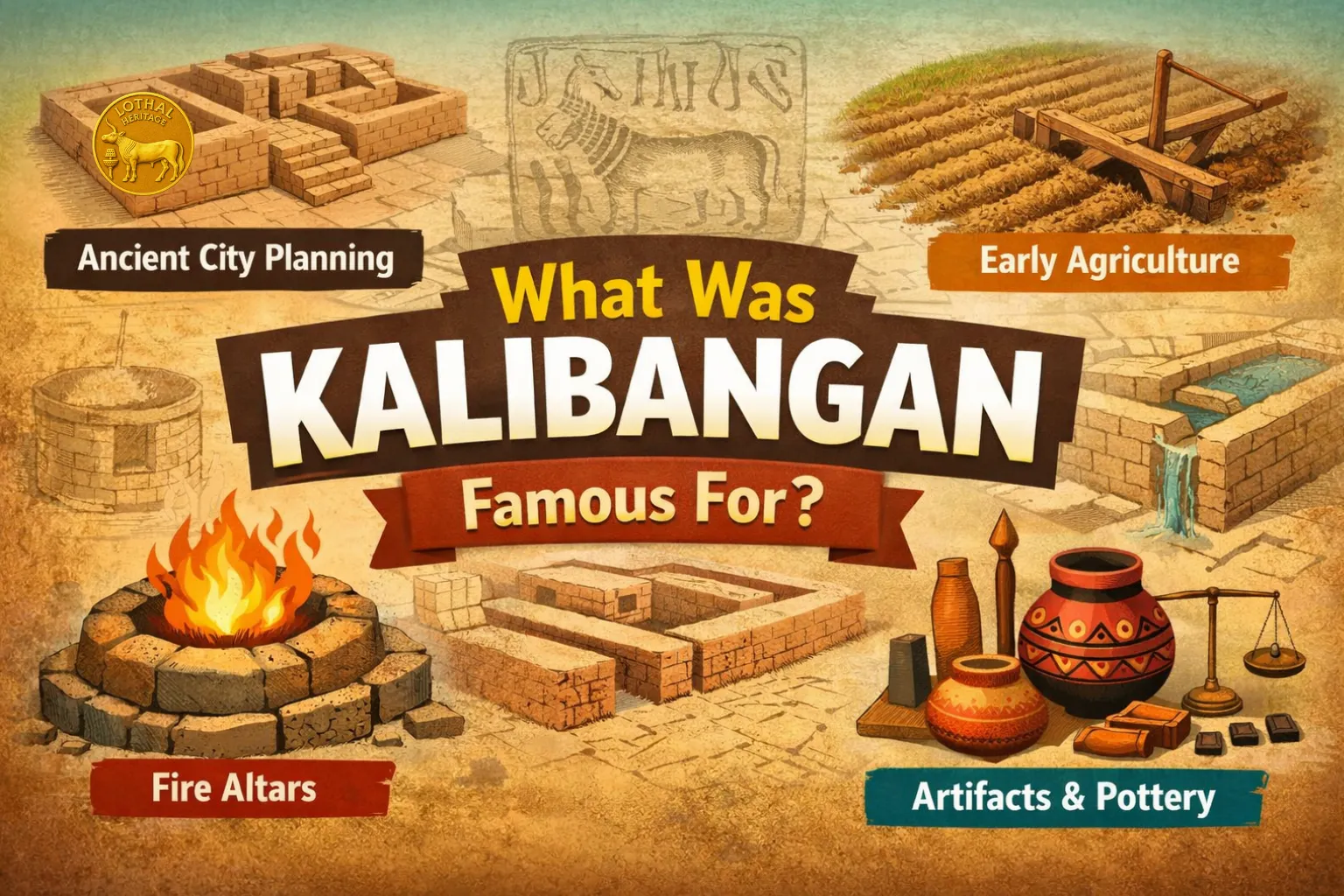
So, what was Kalibangan famous for? Kalibangan was famous for its planned city layout, the world’s earliest known ploughed field, unique fire altars, advanced drainage system, and its role in expanding our understanding of the Indus Valley Civilization. These discoveries have made Kalibangan a key site in Indian history.
Even today, Kalibangan matters because it shows how ancient humans lived in harmony with nature, developed agriculture, practiced religion, and built organized cities. Its legacy continues to shape our knowledge of early civilization and reminds us of India’s rich and ancient past.