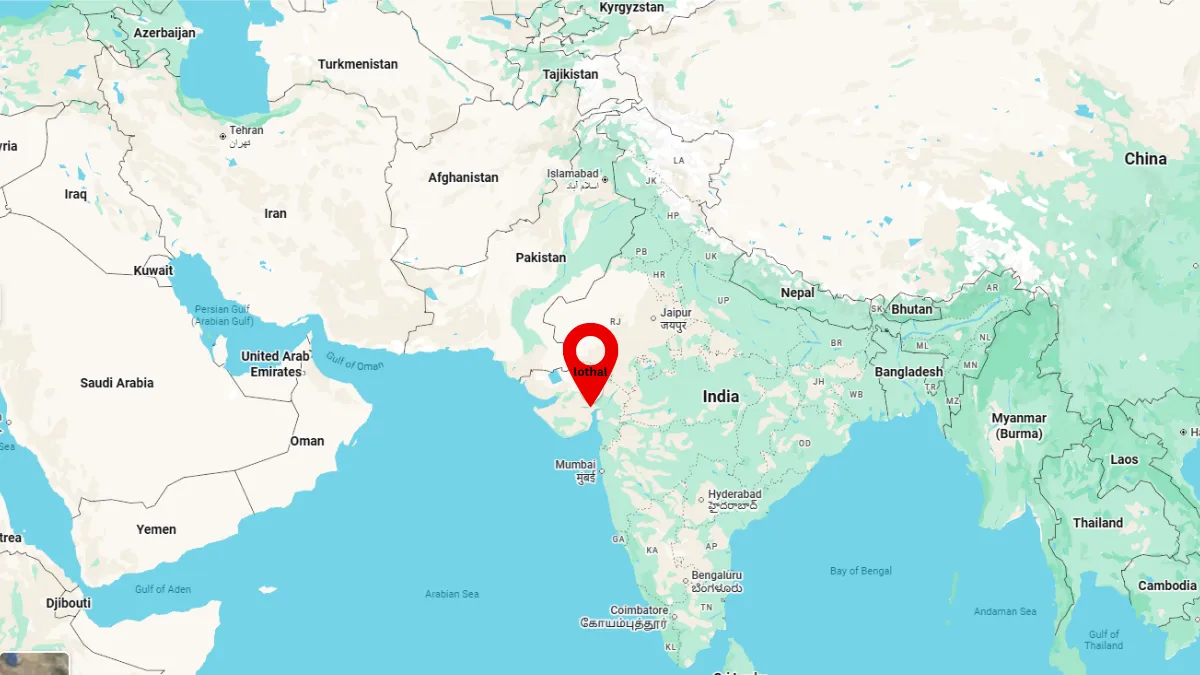
Where Is Lothal: Tucked about 80 kilometres southwest of Ahmedabad lies one of the most extraordinary archaeological discoveries of the 20th century. For decades, historians, travellers, and researchers have asked where is Lothal and why this site remains one of the crown jewels of the ancient Indus Valley civilisation. Today, the once-bustling city stands silent, yet its excavated remains narrate a story more fascinating than many modern ports.
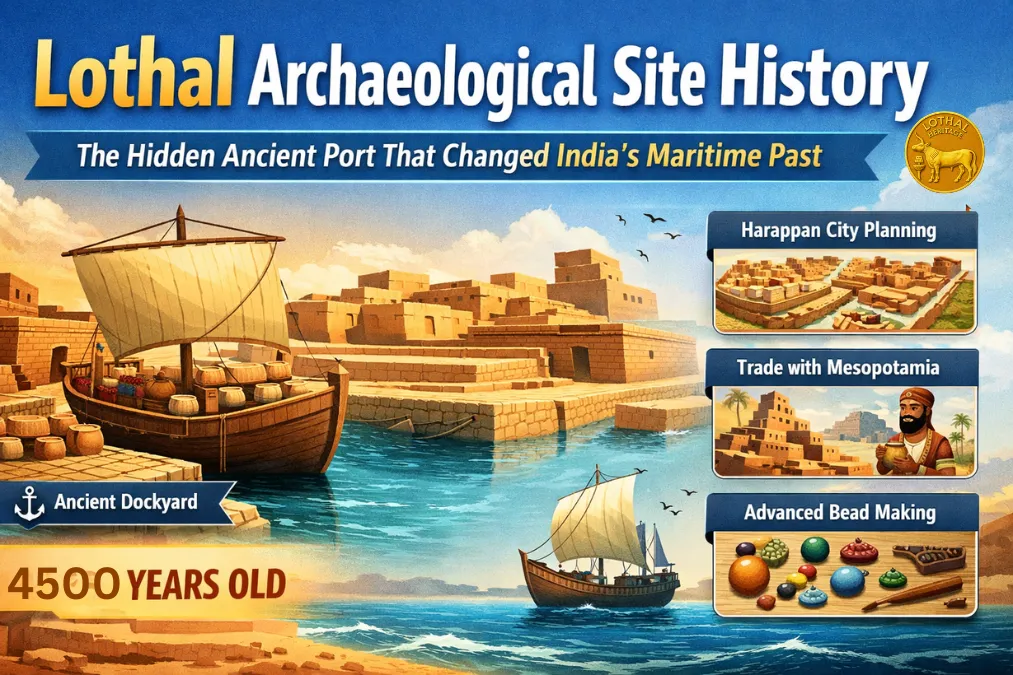
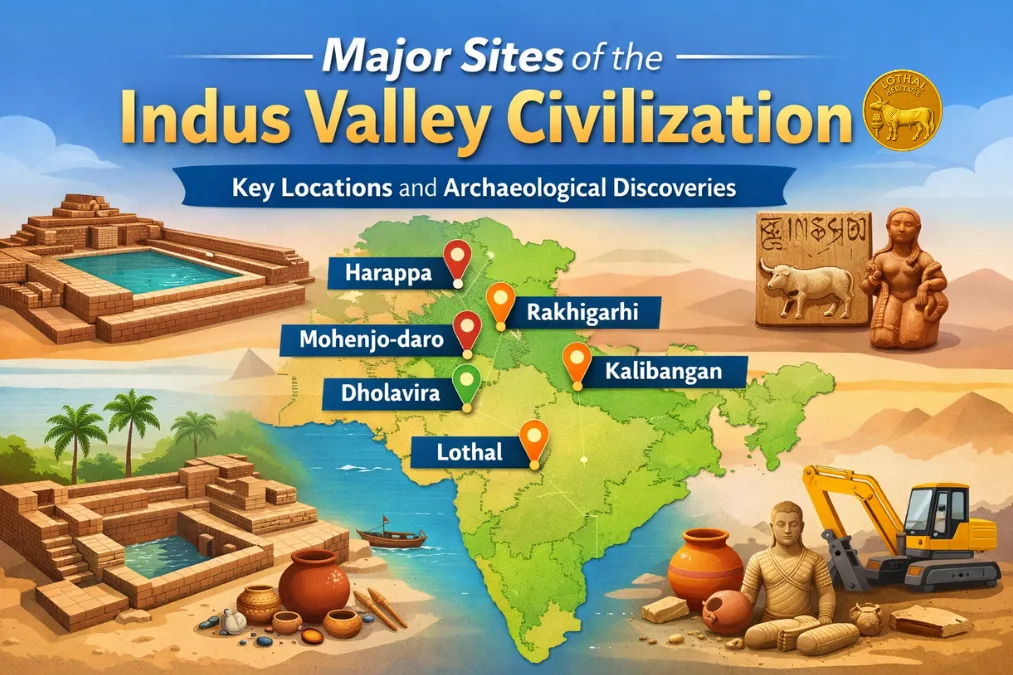
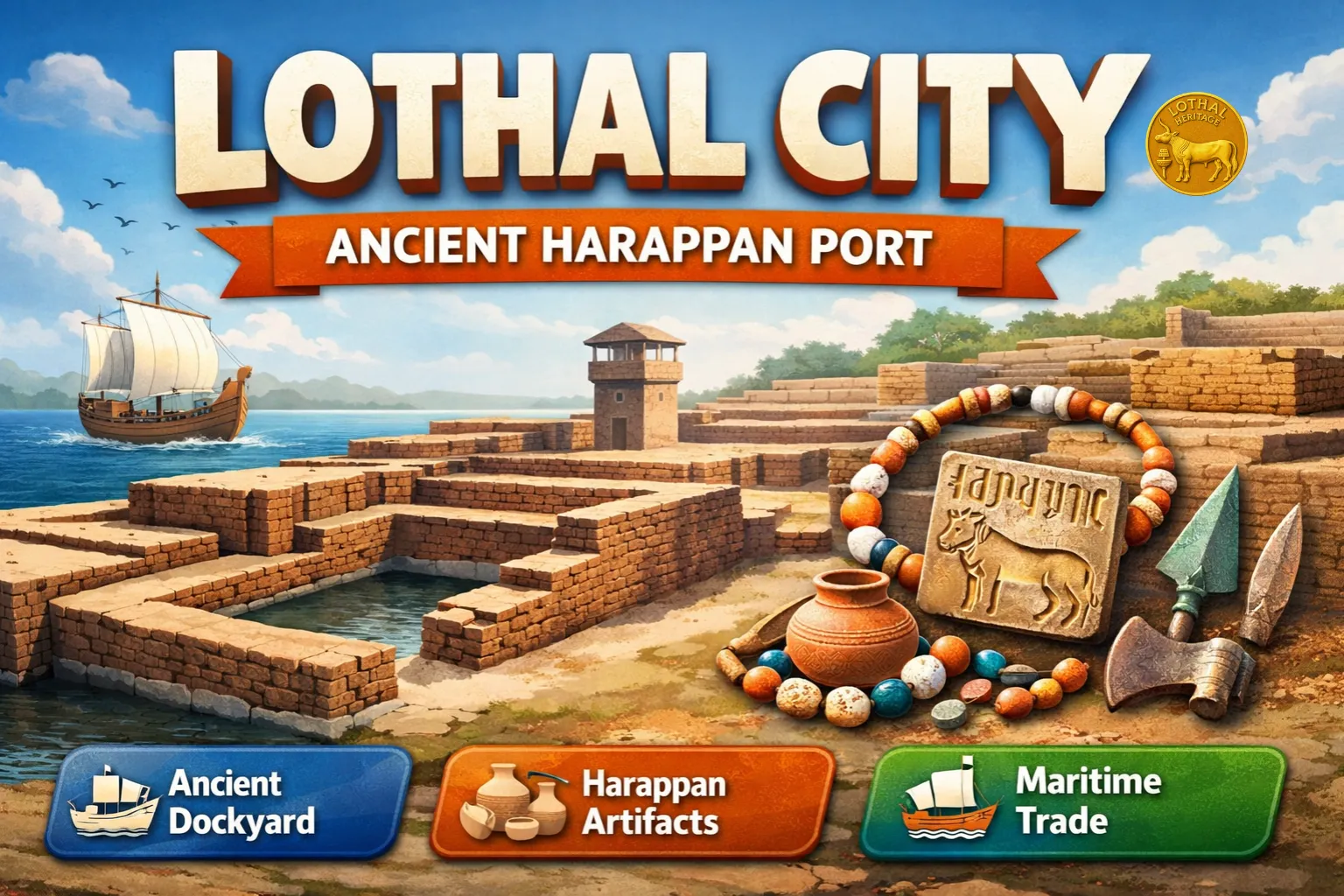
Spread across the plains of Gujarat, Lothal is believed to have been one of the most sophisticated urban centres of the IndusValley civilisation-a civilisation that flourished around 2600–1900 BCE and extended deep into what is now Pakistan. What sets Lothal apart in South Asian and world history is its pioneering maritime infrastructure. Excavations have revealed the world’s earliest known artificial dock, linked to an ancient course of the Sabarmati River, establishing the city as a powerhouse of international trade nearly 4,500 years ago.
As India proposes Lothal for UNESCO World Heritage status, interest in the site has surged. Travellers, students, historians, and global tourists now flock here to walk through an ancient township that once hosted markets, warehouses, workshops, and one of the first known dockyards anywhere on Earth.
A Glimpse Into an Ancient Global City
When British and Indian archaeologists first began studying the Indus Valley civilisation in the early 20th century, Harappa and Mohenjo-daro dominated the conversation. But that changed dramatically after a long, meticulous excavation at Lothal between 1955 and 1960, led by the Archaeological Survey of India (ASI). What emerged from the soil was not just a town but an intricately planned maritime settlement, far more advanced than previously imagined.
Visitors today can walk through the clearly marked sections of the site, including:
The Acropolis
The elevated citadel area, home to the ruling class and administrative elite. Built with baked bricks and reinforced structures, it showcases the city’s organised political system.
The Lower Town
A sprawling residential area with uniformly planned houses, wide streets, and public facilities. The drainage system here demonstrates how urban sanitation was a priority even thousands of years ago.
The Bead Factory
Lothal was famous for its precision bead-making industry. Craftspeople produced ornamental beads prized across Mesopotamia, Egypt, and Persia, indicating far-reaching trade networks.
Warehouses and Granaries
Massive storage areas reveal that Lothal was not just a port city but a commercial hub where goods were processed, catalogued, and shipped to foreign markets.
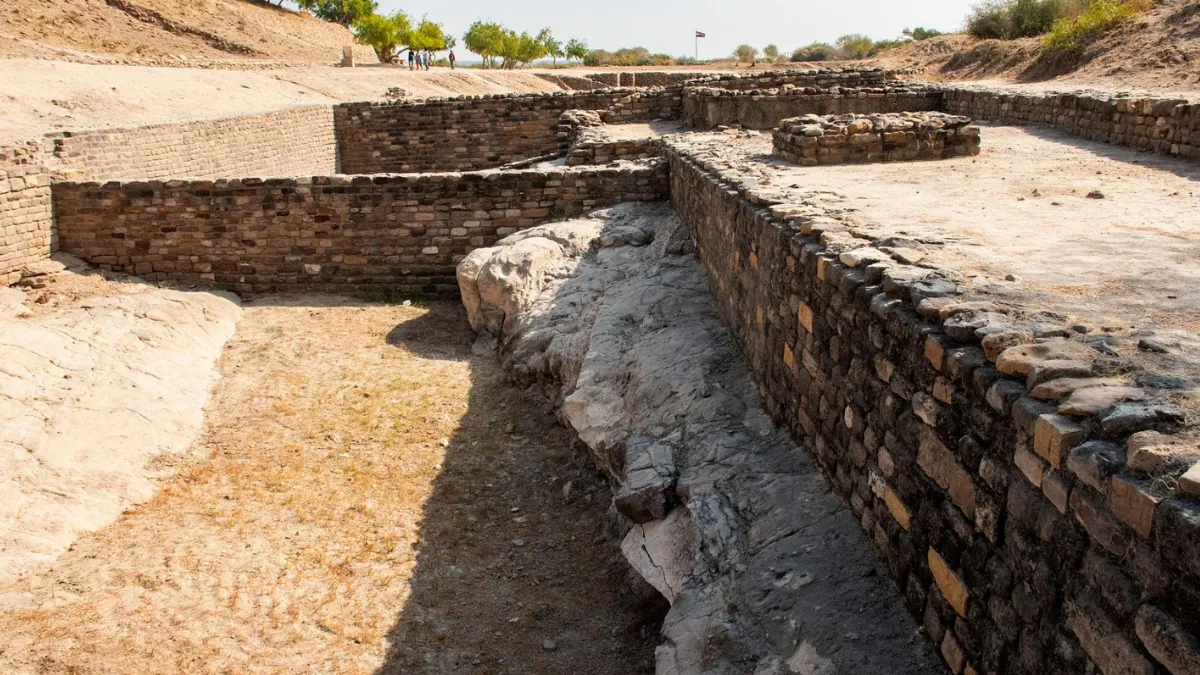
The Dockyard
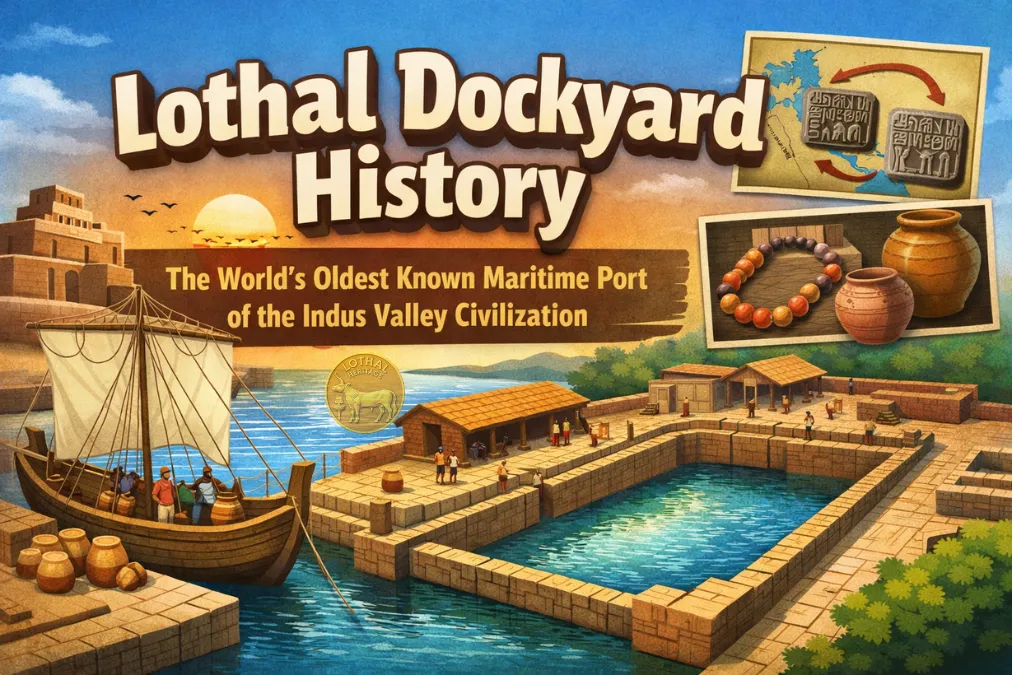
The star attraction of Lothal — the world’s oldest known artificial dock — remains its most significant contribution to maritime archaeology. The dockyard includes inlet channels and water management systems that highlight extraordinary engineering expertise.
Drainage and Water Systems
A grid-like drainage network, often compared to modern city planning, remains one of the most iconic features of Indus Valley civilisation sites. Lothal’s system stands exceptionally preserved.
Why the World Wants Lothal Recognised by UNESCO
India has nominated the Lothal archaeological site for UNESCO World Heritage status due to its unique historical, scientific, and cultural value. Few ancient civilisations demonstrate such advanced maritime architecture, industrial planning, and civic organisation from such an early period.
The nomination emphasises:
- Lothal is the oldest known dockyard ever discovered.
- It reflects the earliest known port-based international trading system.
- The city displays extraordinary craftsmanship and industrial activity.
- Its urban planning and drainage system highlight a remarkably advanced civilisation.
If accepted, Lothal will join the ranks of global heritage sites that illustrate the evolution of human society.
What Archaeologists Discovered-A City Ahead of Its Time
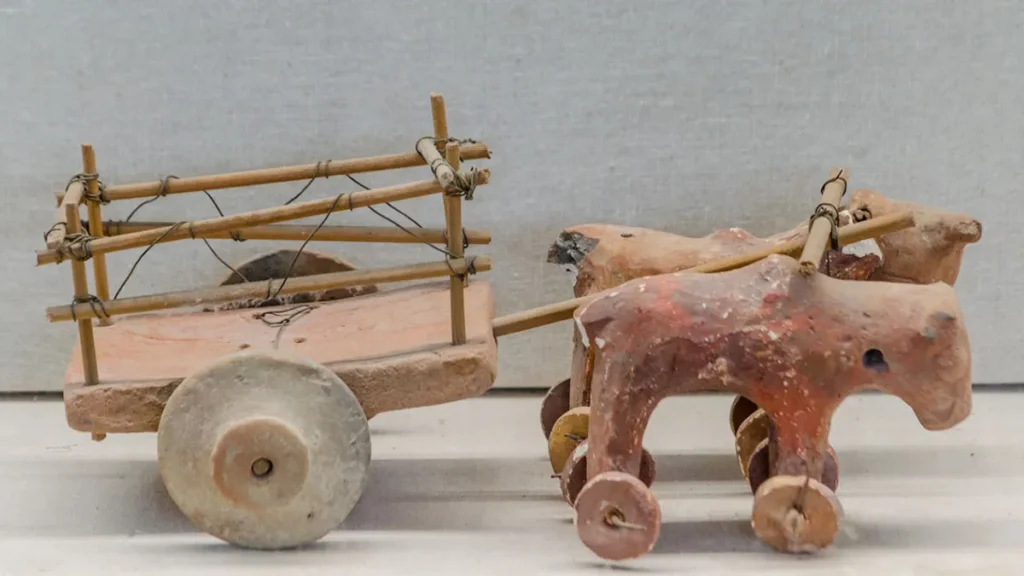
Excavations at Lothal produced one of the largest collections of Indus Valley artefacts found anywhere in India. The massive number of antiquities uncovered has given scholars deeper insight into how the civilisation functioned.
Major discoveries include:
- Canals and dockyards showing early water-based engineering.
- Seals and sealings indicating administrative and trade documentation systems.
- Jewellery and ornaments — beads, terracotta figures, and semi-precious stones.
- Pottery and household objects that reveal daily life and social customs.
- Religious symbols and ritual objects, providing clues about spiritual practices.
- Tools and equipment that demonstrate expertise in metalwork, bead making, and ceramics.
The Archaeological Museum located near the excavation site, open from 10 a.m. to 5 p.m. except on Fridays, displays many of these artefacts. For travellers trying to understand the depth and complexity of ancient India, this museum becomes an essential stop.
A Name That Echoes Through Time
Local folklore and linguistic analysis suggest that the name “Lothal” is derived from two Gujarati words: “loth” and “thal,” meaning “the mound of the dead.” Archaeologists believe this name reflects the mound-like remains discovered before excavation began.
However, despite its haunting name, Lothal was far from a desolate settlement. Historical evidence suggests that the city thrived around 3700 BCE and played a central role in the region’s economy for centuries.
Lothal and the Ancient Trade Route
One of the most compelling aspects of Lothal is its position along an ancient river system believed to be part of the trade route connecting Sindh (now in Pakistan) to Saurashtra in Gujarat. The dockyard enabled ships to travel inland, load goods, and sail toward Mesopotamia, Egypt, Persia, and possibly even farther.
This trade network supports the argument that the Indus Valley civilisation was not isolated but deeply connected to other ancient cultures through commerce and communication.
How to Reach Lothal: A Practical Travel Guide
Travellers searching online for where is Lothal will be relieved to learn that the site is straightforward to access from Ahmedabad, a major city in western India.
By Road
Lothal is approximately 80 km from Ahmedabad.
A comfortable road trip takes around 1.5 to 2 hours depending on traffic and route.
By Train
Five daily passenger trains operate from Ahmedabad’s Gandhigram station to the Lothal-Bhurkhi station, which is just 6 km from the archaeological site.
From there, visitors can catch a local bus or hire an auto-rickshaw.
Travellers who prefer convenience can also book a return taxi from Ahmedabad.
By Air
The nearest airport is Sardar Vallabhbhai Patel International Airport, Ahmedabad, located around 80 km from the site.
After landing, visitors can take a cab or rented vehicle to reach Lothal.
Also read: Lothal: Home to the World’s Earliest Known Dock and a Living Testament to India’s Maritime Legacy
Why Lothal Matters Today
While the ancient city disappeared thousands of years ago, its legacy continues to shape our understanding of human innovation. Lothal is not merely an archaeological site — it is a testament to humanity’s early mastery of maritime trade, city planning, and industrial craftsmanship.
In an age where globalisation defines our everyday lives, Lothal serves as proof that international trade is far from a modern concept. The people who lived here were master navigators, brilliant engineers, and skilled artisans who connected India with some of the world’s oldest civilisations.
Also read: Lothal: The Ancient Port City That Redefined Early Maritime Trade
The Future of Lothal
The Indian government and international bodies hope to transform the region into a major global heritage destination. With ongoing conservation work, digital documentation, and tourism initiatives, Lothal is gaining new life as a historical landmark.
Archaeologists continue to study the site, believing that many more secrets lie beneath the ground. As technology advances, future excavations may reveal new details about how this ancient port functioned and how its people lived.
Also read: What Is Lothal: Exploring One of the World’s Earliest Urban Civilisations
Conclusion: A Journey to the Dawn of Maritime Civilisation
The question “where is Lothal” opens the door to a much deeper story — one of the world’s earliest and most advanced port cities. Located southwest of Ahmedabad, Lothal stands as a bridge connecting modern India to a civilisation that mastered trade, engineering, and urban planning thousands of years before the modern world emerged.
For historians, Lothal is a cornerstone of South Asian archaeology. For travellers, it is a rare chance to stroll through a perfectly planned ancient township. And for the world, it is a reminder that great cities do not always rise from grand monuments — sometimes they emerge quietly from the earth, carrying with them the echoes of forgotten empires.